

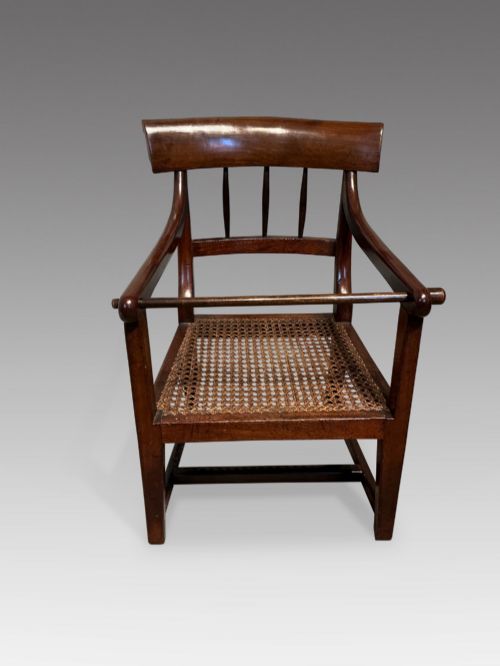
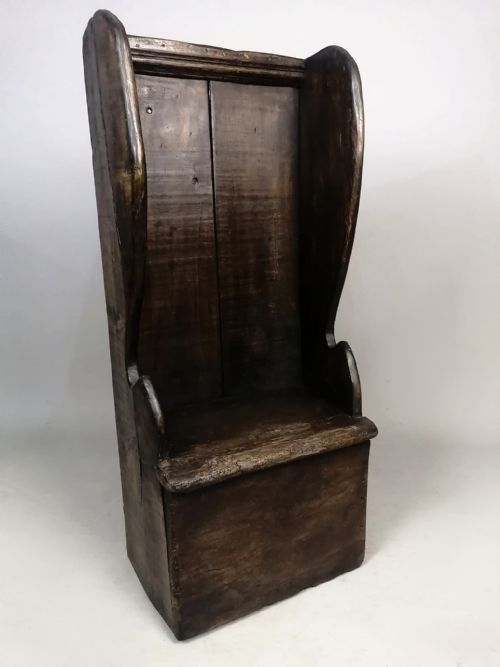


Period Child Seat
A period child seat brings domestic history into a room, offering miniature craftsmanship from centuries past in mahogany, oak, and fruitwood.
Period Child Seat
A period child seat encompasses various historical forms designed for young members of the household, ranging from low nursery chairs to elevated high chairs. Buyers encountering these pieces on the market will find examples spanning from the seventeenth century through the Victorian era, reflecting the changing domestic requirements of each epoch.
The assortment includes specialised forms such as ladderback high chairs, rocking chairs, lambing chairs, and armchairs on stands. Mahogany and oak dominate the formal examples, while fruitwood, ash, and elm appear frequently in vernacular country pieces.
Makers adapted full-sized furniture styles for children, producing miniature Georgian mahogany chairs, Regency armchairs, and Victorian ebonised seating. These scaled-down domestic objects demonstrate how households integrated children into daily life using durable materials built to withstand active use.
Materials and construction methods
Cabinetmakers and country joiners utilised hardwoods such as mahogany, oak, fruitwood, ash, and elm to construct sturdy frames capable of supporting a child. Turning, carving, and joinery techniques mirrored adult furniture production of the same period, whether in formal city workshops or rural vernacular settings.
Seating surfaces utilised traditional materials including woven rush, cane, fabric, and buttoned leather, sometimes supported by internal frames or wooden slats. Brass fittings occasionally appear on castors or specialised high chair mechanisms, adding structural reinforcement and decorative detail.
Period Child Seat Retail Price Guide 2026
Typical asking prices for period child seat among the pieces listed under this phrase on Sellingantiques today, from the lower quarter to the upper quarter. They describe what is for sale here now, not the wider market.
The object types associated with this category range from standard low chairs and armchairs to specialised high chairs, rocking chairs, and lambing chairs.
Assessing quality in miniature seating
The distinction between standard domestic items and superior examples lies in the fidelity of proportion and the sophistication of the timber. Finer pieces display careful joinery, select grain patterns in mahogany or fruitwood, and accomplished turning on legs and arms.
Proportion dictates visual success, as skilled makers maintained the architectural integrity of full-scale styles rather than simply shrinking dimensions at random. Original surfaces, untouched upholstery details, and integrated stands elevate the standing of a piece within historical categories.
The Period Child Seat Glossary
- Vernacular
- Furniture made by local craftsmen using regional timbers rather than following high-style urban fashions. These pieces often employ ash, elm, or fruitwood.
- Ladderback
- A chair back featuring multiple horizontal wooden slats between the upright posts. This traditional construction appears frequently on country high chairs.
- Lambing chair
- An enclosed wooden armchair designed to keep out draughts, featuring a hooded or high-sided back. Miniature versions provide cozy seating for children.
- High chair
- An elevated seat designed to bring a young child up to table height. Period examples often incorporate safety bars or detachable bases.
- Ebonised
- Timber treated with a dark finish to imitate ebony. This technique appears on Victorian decorative seating.
Period Child Seat: Frequently Asked Questions
How do I date a child seat?
Dating a child seat involves examining the wood species, construction techniques, and stylistic markers that align with recognised furniture periods. For instance, seventeenth-century examples often feature fruitwood vernacular frames, while Georgian pieces commonly utilise mahogany with stylistic nods to Chippendale or Hepplewhite designs.
Turned components, joinery methods, and upholstery styles also provide clues to the decade or century of manufacture. Comparing the piece to dated full-sized furniture from the same region helps confirm its chronological placement.
Were these seats used daily?
Yes, these small chairs and high chairs were practical items built for the upbringing of children in historic households. Their robust construction in hardwoods like ash, elm, and oak was necessary to withstand regular use by active children.
Over the centuries, many sustained structural repairs or alterations as they passed through generations. Signs of wear on footrests and seats often indicate their active history within a domestic setting.
How should I display a child seat?
A period child seat works well placed in a living room, hallway, or study as an architectural accent piece. Because of their compact scale, they fit easily into corners or on side tables where their historical details can be appreciated.
Keeping them away from direct sunlight and stable humidity protects vulnerable materials like antique leather, cane, and polished mahogany. Allowing adequate space around the piece highlights its distinct proportions.