
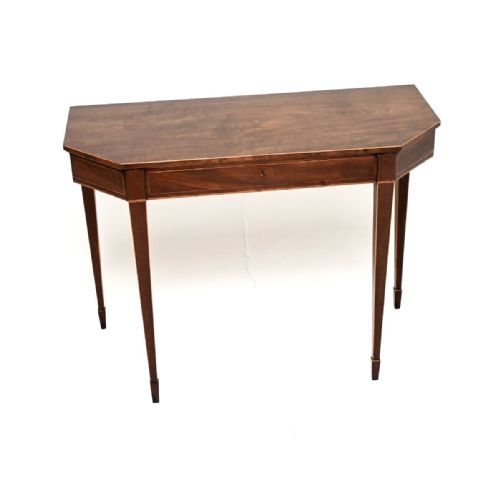
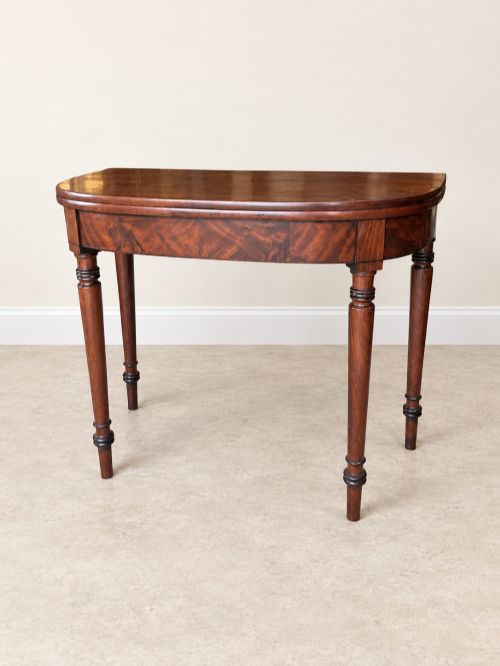
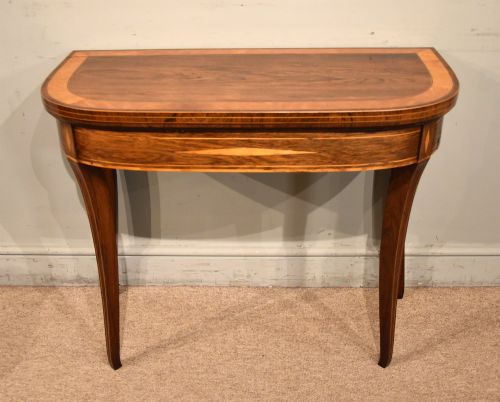
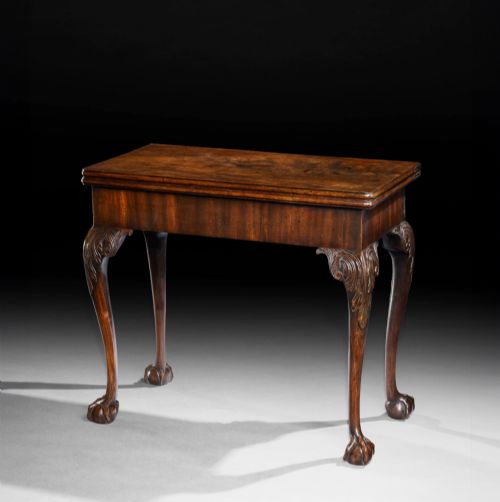


Period Card Table
When you search for a period card table, you are looking at fold-over and games tables spanning the Georgian to Victorian eras designed for social play and display.
Period Card Table
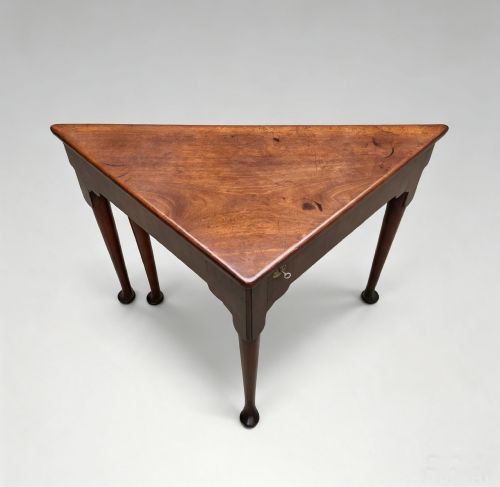
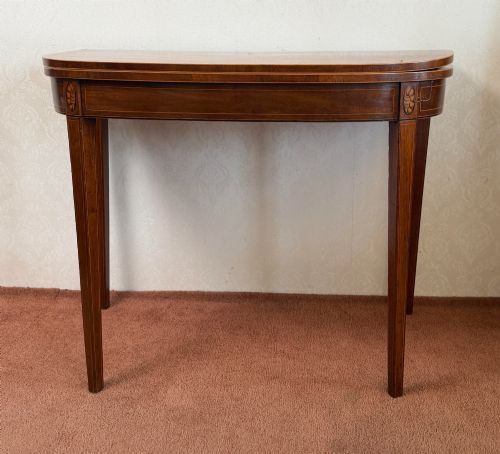
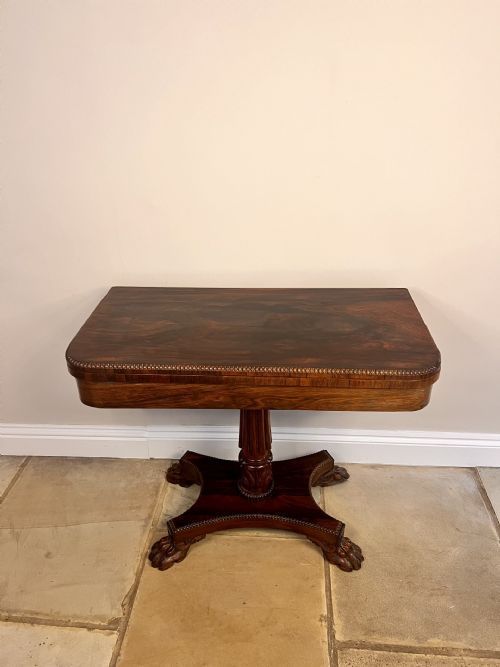
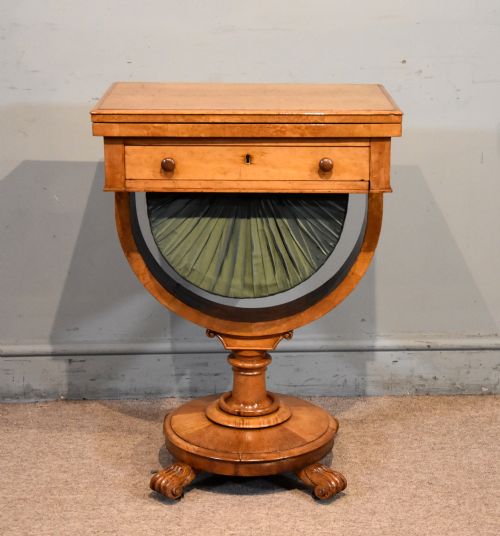
The versions you meet most frequently on this page date from the Regency and George III eras, rendered in mahogany or rosewood with D-shaped, rectangular or demi-lune tops. Earlier examples from the George II period often employ concertina actions and ball and claw feet, whilst later Victorian iterations lean towards burr walnut and turned pillar bases.
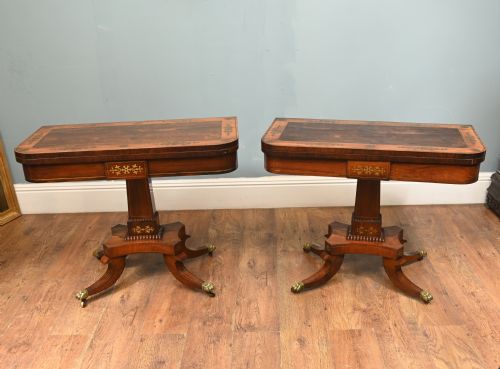
Makers utilised versatile timber constructions to allow tables to transform swiftly from compact wall furniture into stable playing surfaces. Many survive as pairs, reflecting the symmetrical arrangement of formal 18th and 19th-century drawing rooms.
Materials and construction
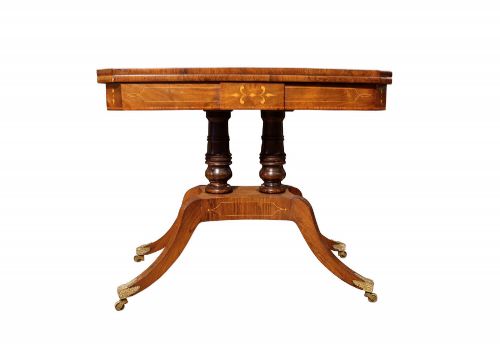
Cabinet makers built the structural frames from solid mahogany or oak, applying fine veneers of rosewood, satinwood or flame mahogany to the visible surfaces. Cross-banding in contrasting timbers such as ebony or boxwood frames the edges of the fold-over tops.
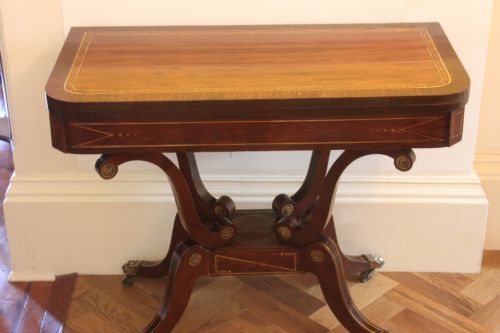
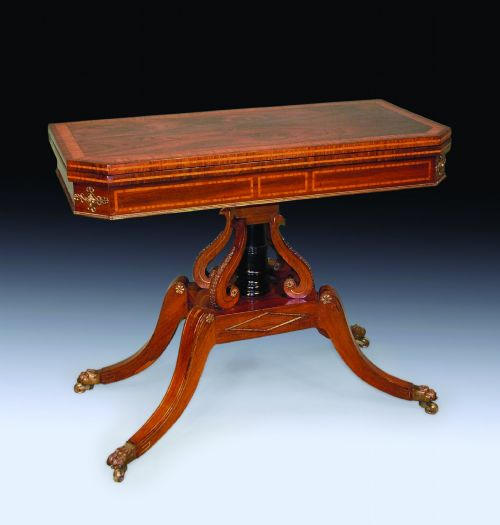
Inlay and brass work define the decorative vocabulary of Regency and Sheraton pieces, incorporating brass stringing, inlaid medallions and cast ormolu sabots. Pedestal bases frequently feature carved wooden elements like dolphins or lyres supported on splayed legs with brass castors.
Several tables conceal small interior wells once reserved for storing ivory gaming counters, guineas and tallow candles.
Markers of distinction
The selection of timber grain dictates the visual weight of the piece, with book-matched flame mahogany or richly figured rosewood sitting at the upper end of craftsmanship. Figuration on the top surface should flow evenly when the table is opened.
Mechanisms separate standard workshop output from finer productions, seen in the smooth operation of concertina actions that support all four corners equally when extended. Crispness in the brass inlay, carving on pedestal mounts and original castors further distinguish superior examples.
Giles Grendey·William Trotter·Hepplewhite·Gillows of Lancaster·Gillow and Co
The Period Card Table Glossary
- Concertina action
- A table frame hinged at the corners that expands outward on an accordion-like folding mechanism to support the opened top on four legs rather than a swinging rear leg. This engineering allows equal weight distribution across the playing surface.
- Demi-lune
- A half-moon shape with a curved front and a straight back edge designed to sit flush against a wall. These tables often feature drop leaves or folding tops.
- Cross-banding
- A narrow strip of veneer laid perpendicularly to the main grain along the border of a tabletop. It creates a contrasting visual frame.
- Stringing
- Thin inlaid lines of light or dark wood, such as boxwood or ebony, embedded into channels on the surface of the timber for linear decoration.
- Sabot
- A metal sleeve, usually brass, fitted to the foot of a furniture leg for protection and ornamentation.
Period Card Table: Frequently Asked Questions
What is a period card table?
A period card table is a piece of antique furniture with a hinged top designed to fold out for card games and social gatherings.
When not in use, the top folds flat and the piece sits compactly against a wall as a side or console table.
How were card tables used?
These tables served as the centrepiece for evening entertainment, providing a stable surface for card games, chess and writing.
Interior spaces utilised them for tea service or display when closed, adapting quickly to the social needs of the household.
How do I live with a card table?
Living with these tables involves placing them in drawing rooms, hallways or living spaces where the polished timber tops can be appreciated.
Care should be taken to avoid placing them in direct sunlight or near heat sources to protect the delicate rosewood or mahogany veneers.
How do I tell periods apart?
Georgian and George III tables often feature straight tapered legs, satinwood cross-banding and subtle stringing details.
Regency and later 19th-century examples transition towards heavier rosewood grain, brass inlay, pedestal bases with castors, and bold scrollwork.