



Period Candle Sticks
Period candle sticks bring real warmth to a room, offering the heavy weight and honest manufacture of earlier centuries.
Period Candle Sticks
When you search for period candle sticks, you encounter lighting designed before electricity changed domestic interiors forever. These items include simple single holders and matched pairs intended to illuminate tables, desks, and mantelpieces.
The examples available here span the eighteenth and nineteenth centuries, taking in Georgian, Regency, and Victorian eras. Brass forms dominate the selection, alongside rarer pieces in bronze, mahogany, and porcelain.
Most items you meet on this page are domestic brass candlesticks made for everyday use in British homes. Alongside standard sticks, you will find chamber sticks designed for carrying upstairs and more elaborate garniture sets.
Materials and Construction
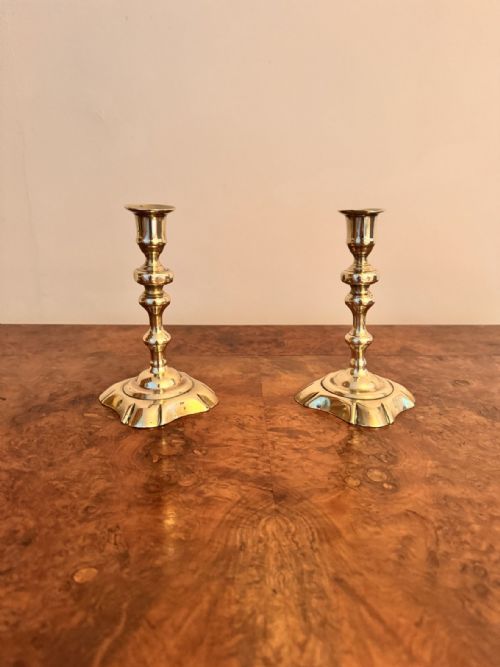
The earliest metal sticks in the selection rely heavily on cast brass, often shaped with hexagonal or petal-shaped bases that provide stability. Makers of the mid-eighteenth century utilised seamed construction methods for ejector sticks, incorporating internal mechanisms to push out remaining wax.
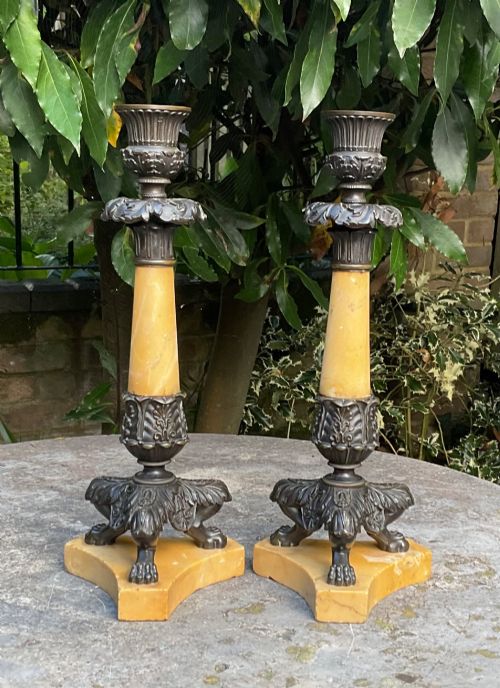
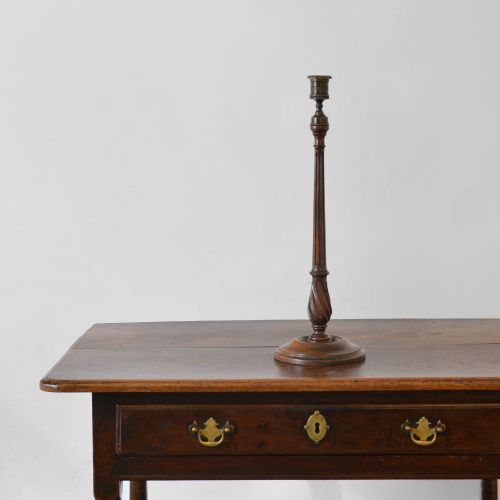
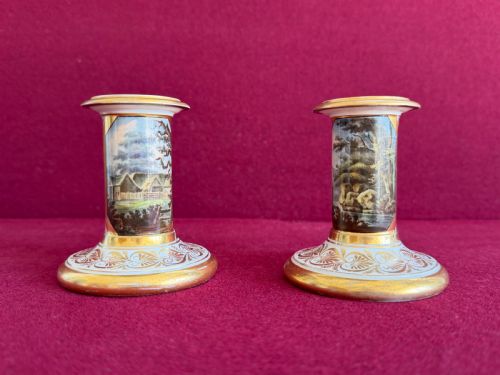
Later Georgian and Regency examples introduce mixed media, combining patinated bronze with marble bases for greater decorative impact. Cabinetmakers also turned to native hardwoods like mahogany, while porcelain factories such as Worcester produced highly finished glazed pieces.
Period Candle Sticks Retail Price Guide 2026
Typical asking prices for period candle sticks among the pieces listed under this phrase on Sellingantiques today, from the lower quarter to the upper quarter. They describe what is for sale here now, not the wider market.
Seamed ejector sticks let eighteenth-century servants banish stubborn wax stubs with a discreet push of a side lever.
Judging Quality
Quality in these objects rests upon the crispness of the casting and the proportion of the stem to the base. Superior brass examples show sharp detail in the knops and mouldings without the smoothing down that comes from aggressive cleaning over generations.
The best pairs maintain their original components, including matching sockets and uncompromised bases. Material choice also elevates a piece, as seen in the skilful combination of cast bronze with polished marble or the fine hand-painting found on porcelain bodies.
Barr Flight and Barr
The Period Candle Sticks Glossary
- Ejector candlestick
- A brass stick fitted with an internal sliding plate and side stem to push out the stub of a burned candle. This clever device became common during the mid-eighteenth century.
- Chamber stick
- A low candlestick set within a wide pan and fitted with a loop handle for carrying about the house. These were essential for lighting the way to bed before fixed household lighting.
- Baluster
- A moulded column shape that swells near the base, frequently seen on brass stems from the Victorian period. The profile mimics architectural stone supports.
- Garniture
- A set of ornamental vessels for a mantelpiece, often comprising matching candlesticks and vases. They were arranged symmetrically in formal rooms.
- Patinated bronze
- A dark, treated copper alloy finish that develops a warm surface tone through age and handling. It distinguishes finer Regency and nineteenth-century decorative items from plain brass.
Period Candle Sticks: Frequently Asked Questions
How do I date an old brass stick?
Dating relies on manufacturing techniques, base shapes, and stem profiles. Early eighteenth-century examples often feature solid cast construction and hexagonal or petal-shaped bases.
Later Victorian versions show heavier baluster turning and different brass compositions. Comparing the construction seams and wear patterns helps confirm the period.
Were these items always sold in pairs?
Many formal candlesticks were produced as matched pairs to sit symmetrically on dining tables or mantelpieces. Single survivors also appear frequently because individual items were separated or lost over centuries of domestic use.
Chamber sticks and travel lighting were typically made as single pieces rather than sets.
Can I still burn candles in them?
These items were designed strictly for tallow or beeswax candles of specific diameters matching the sockets. Modern taper candles often require slight trimming or a small base plug to stand securely.
Care must be taken to catch drips before they reach antique metal or wood surfaces.
How should I clean old brass?
Routine dusting with a soft cloth is usually sufficient to maintain the surface. Traditional collectors generally avoid harsh chemical polishes that strip away the dark oxidation and historic surface character accumulated over centuries.