






Period Brass Inlay Box
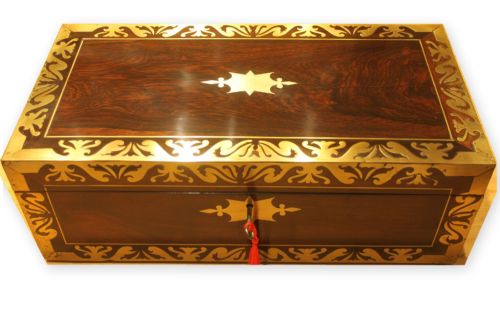
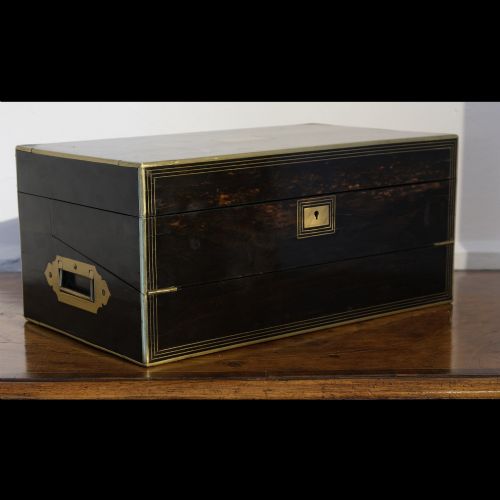
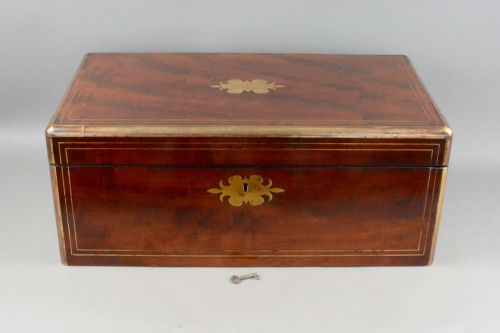
A period brass inlay box brings Regency warmth and geometric precision into a room through rich rosewood and dark coromandel.
Period Brass Inlay Box
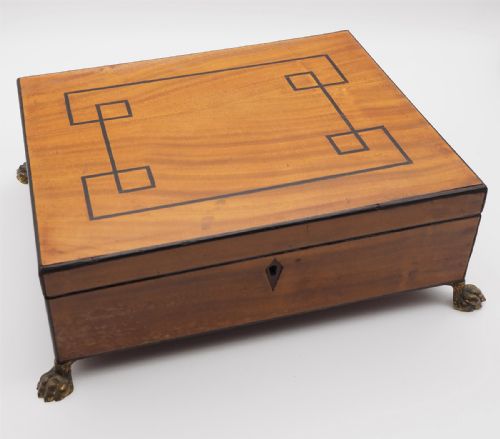
The objects on this page lean heavily towards tea caddies, writing slopes, and work tables. Rosewood and mahogany serve as the primary timbers, decorated with bright brass lines and cut details.
Regency pieces dominate the selection, showing the characteristic taste for dark exotic woods contrasted against shining metal work. Occasional variations include satinwood, ebony, and coromandel constructions.
How they were made
Cabinet makers constructed these boxes using dense timbers such as rosewood, mahogany, and coromandel as the foundation. Artisans then channelled the wood surface by hand to recess thin sheets of cut brass.
The metal inlay forms geometric borders, stringing, and figurative motifs that follow the contours of the lid and sides. Once fitted, the brass and timber were levelled and polished to a smooth finish.
Period Brass Inlay Box Retail Price Guide 2026
Typical asking prices for period brass inlay box among the pieces listed under this phrase on Sellingantiques today, from the lower quarter to the upper quarter. They describe what is for sale here now, not the wider market.
Listings feature woods including rosewood, mahogany, ebony, coromandel, and satinwood paired with brass.
What varies in quality
Quality rests in the precision of the brass work and the choice of timber figure. Finer examples display tight, complex brass inlays embedded flush with highly grained rosewood or coromandel surfaces.
Plain mahogany or simpler box forms sit at the other end of the scale, relying on basic construction rather than intricate metal detailing or exotic veneers.
The Period Brass Inlay Box Glossary
- Writing slope
- A portable desk with a hinged sloping lid that opens to reveal a writing surface and compartments for ink and pens. These boxes often feature fitted interiors and secret drawers.
- Tea caddy
- A container designed to store tea leaves securely away from moisture and air. Interiors frequently include lidded canisters made from wood or metal.
- Teapoy
- A small stand or table holding tea caddies, often supported on a central pillar with tripod legs. They belong to the Regency period and provide storage for multiple tea varieties.
- Coromandel
- A dense, heavy timber from Asia featuring dark brown grain with dramatic black stripes. Cabinet makers utilised it for high-end nineteenth century boxes.
- Stringing
- Thin lines of contrasting wood or metal inlaid into the surface of a box to create decorative borders. This technique defines Regency furniture and box decoration.
Period Brass Inlay Box: Frequently Asked Questions
What did people store in a brass inlay box?
These boxes served practical domestic functions, holding dry tea leaves, writing materials, or personal jewellery. Interiors were divided specifically for each purpose, featuring glass mixing bowls in tea caddies or sloping surfaces for letters.
Larger versions accommodated portable desks for correspondence during travel. Work boxes held sewing equipment and threads for needlework.
How do I identify a Regency period box?
Regency pieces rely on dark exotic woods like rosewood and coromandel combined with precise brass stringing. The silhouettes follow classical proportions popular in the early nineteenth century.
Details such as cut brass inlay and fitted compartments help distinguish these pieces from later Victorian reproductions.
Where should I place a tea caddy at home?
A tea caddy works well on a side table, chest, or desk where the top can be easily viewed. Because the decoration centres on the lid, placing it at a lower height reveals the brass inlay pattern.
Keep wooden boxes away from direct heat sources and strong sunlight to protect the polish and prevent timber movement.
What is the difference between a writing slope and a work box?
A writing slope opens to form an angled writing surface lined with leather or velvet. Inside, you find slots for pens, inkwells, and paper storage.
A work box remains flat on top and opens to reveal shallow trays and compartments designed for sewing tools, threads, and small accessories.