

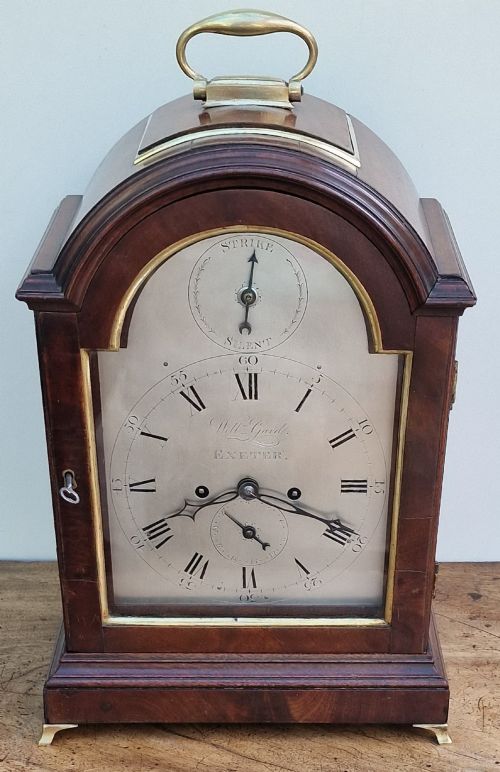
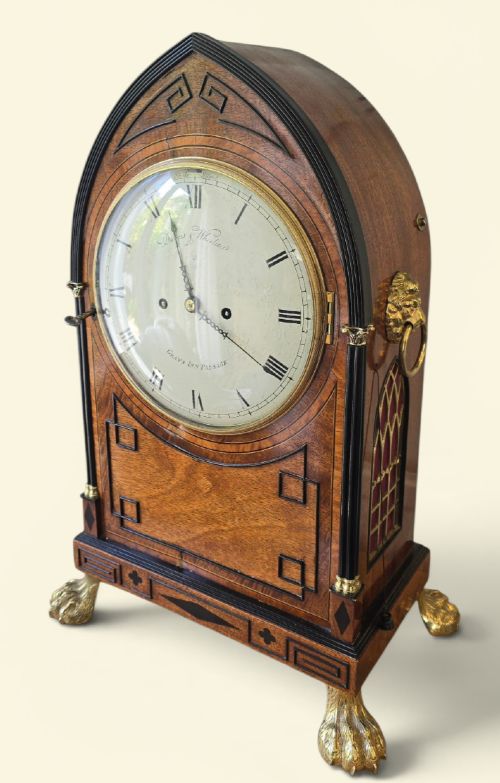


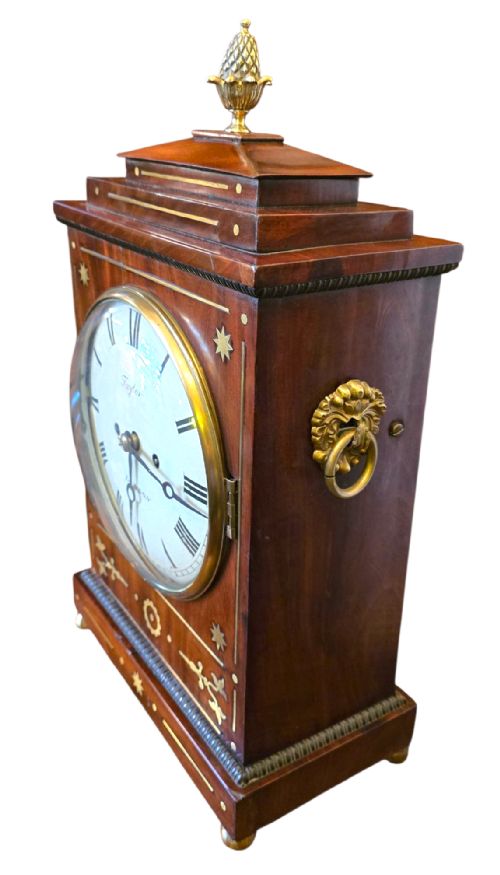


Period Bracket Clock
A period bracket clock brings historic horology and substantial mahogany or rosewood cases into a room, offering both precise mechanics and striking decor.
Period Bracket Clock
A period bracket clock is a portable timepiece designed originally for a bracket or table, though many now sit firmly on mantelpieces and sideboards. These clocks range from compact 17th century examples to elegant Regency models and later military or mid-century designs.
The pieces appearing on this page span several distinct eras, with Georgian and Regency examples forming the bulk of the selection. Alongside traditional mahogany cases, buyers encounter ebony, rosewood, and bronze iterations featuring fusee movements.
Makers from London and the regions, including figures like William Gard and Desbois & Wheeler, shaped these domestic timekeepers. The forms vary from lancet tops and chamfered cases to basket tops and Gothic revivals.
What varies in quality
The refinement of the cabinetmaking sets individual examples apart, particularly in the precision of brass inlay and the carving of wood cases. Superior clocks display crisp detailing on ormolu mounts and well-proportioned architectural lines.
Movement sophistication also dictates value, with complex verge or chain fusee mechanisms commanding greater attention from horological enthusiasts. Original components and signed dials by noted makers elevate the standing of a piece considerably.
Period Bracket Clock Retail Price Guide 2026
Typical asking prices for period bracket clock among the pieces listed under this phrase on Sellingantiques today, from the lower quarter to the upper quarter. They describe what is for sale here now, not the wider market.
A cheerful cherub reaches persistently for birds trapped inside a tree on one particularly lively bronze dial.
William Gard Exeter·Desbois and Wheeler·William Speakman·Taylor of London·William Clement·Seikosha Seiko·Baetens London·Fatton Eleve De Breguet
The Period Bracket Clock Glossary
- Fusee
- A conical pulley used in mechanical clocks to maintain an even pull as the mainspring unwinds. This device compensates for the dropping tension of the spring over time.
- Verge escapement
- An early type of clock escapement mechanism that controls the release of the gear train. It works alongside a pendulum or balance wheel to regulate the beat.
- Ormolu
- Gilded bronze decorative mounts applied to clock cases during the 18th and 19th centuries. The technique involves creating a mercury and gold amalgam.
- Chamfer top
- A clock case design where the edges of the top are bevelled or angled. This style softens the silhouette of wooden table and bracket clocks.
- Lancet top
- A pointed, arched upper case profile resembling a Gothic church window. This shape is particularly common on Regency period examples.
Period Bracket Clock: Frequently Asked Questions
What is a bracket clock?
A bracket clock is a portable mechanical timekeeper originally built with a sturdy handle or flat base to rest upon a wall bracket or table. They emerged in the 17th century and evolved through the Georgian and Regency eras into prominent decorative objects.
Unlike tall grandfather clocks, these smaller pieces were designed to be moved between rooms in wealthy households. Their enclosed wooden cases protected delicate fusee movements from dust and drafts.
How do I wind a fusee clock?
Winding a fusee bracket clock requires a matching key inserted into the dial winding hole to tension the mainspring gently. Care must be taken not to overwind the movement, stopping as soon as resistance increases.
Most traditional examples require weekly winding to keep the 8-day movement running accurately. Consulting the specific mechanics of your clock ensures the fusee chain or cord engages properly.
Where should I place a bracket clock?
These clocks sit best on level surfaces such as mantelpieces, side tables, or dedicated wall brackets away from direct sunlight and dampness. A stable foundation prevents vibrations that can disrupt the pendulum or balance wheel.
Because many feature brass inlay and polished mahogany or rosewood cases, stable room temperatures protect the timber from warping. Placing them at eye level also allows clear viewing of the enamel dial and time.
How do I identify a Regency clock?
Regency bracket clocks often feature dark rosewood or mahogany cases accented with intricate brass inlay or gilt bronze mounts. They frequently utilise single chain fusee movements and distinct silhouettes like Gothic arches or chamfered tops.
Signatures on the dial from London makers of the early 19th century further confirm the period. The combination of classical architectural styling and refined metalwork defines this specific era.