

Period Bookcase
A period bookcase brings architectural presence and organised depth to a room, offering timeless storage for collections and volumes.
Period Bookcase
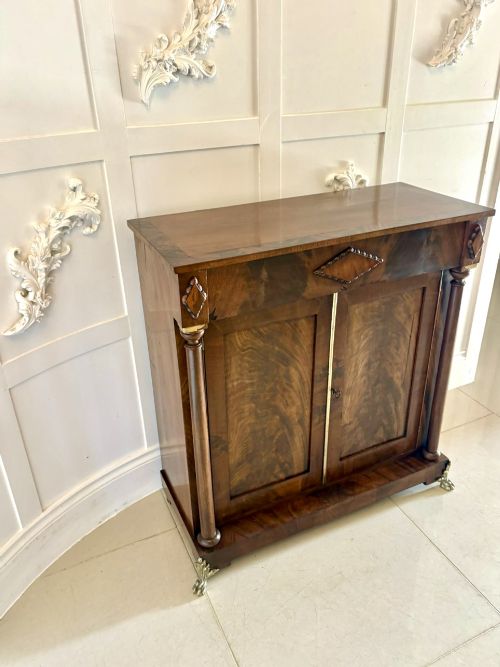
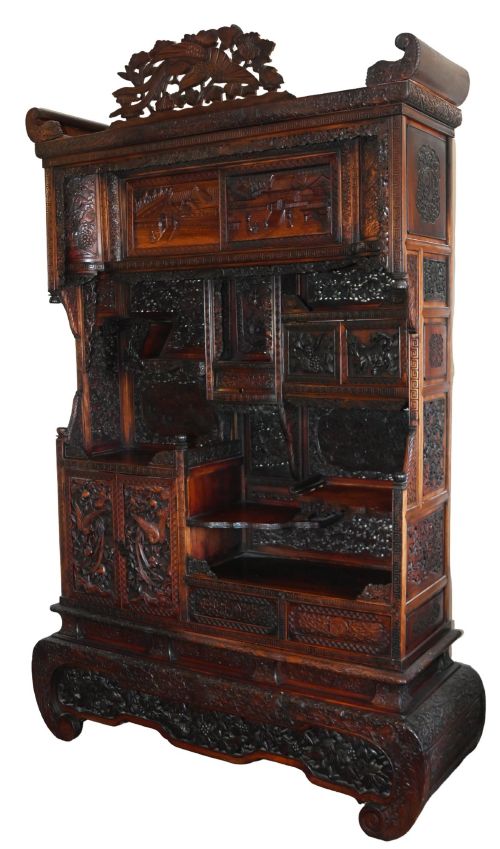
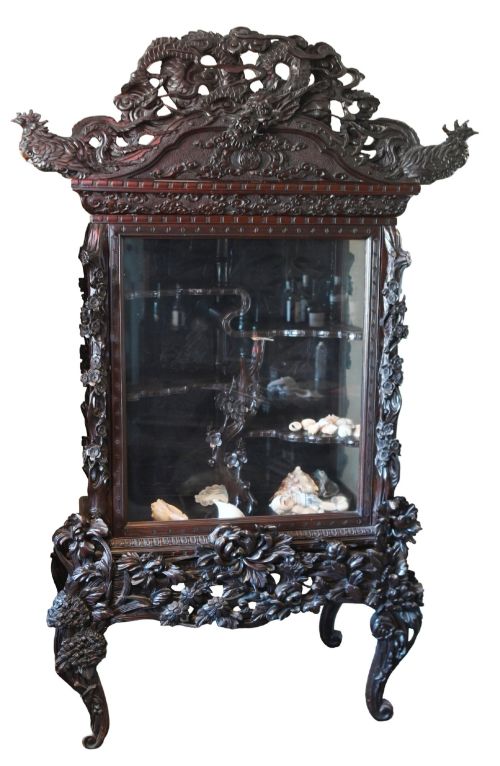
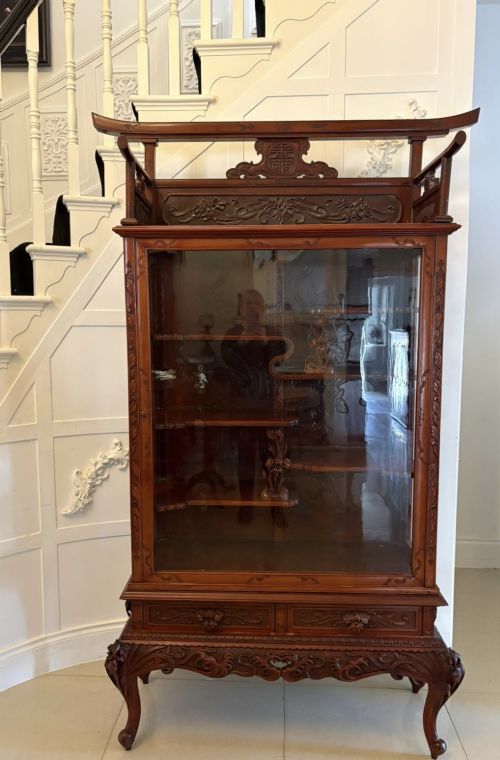
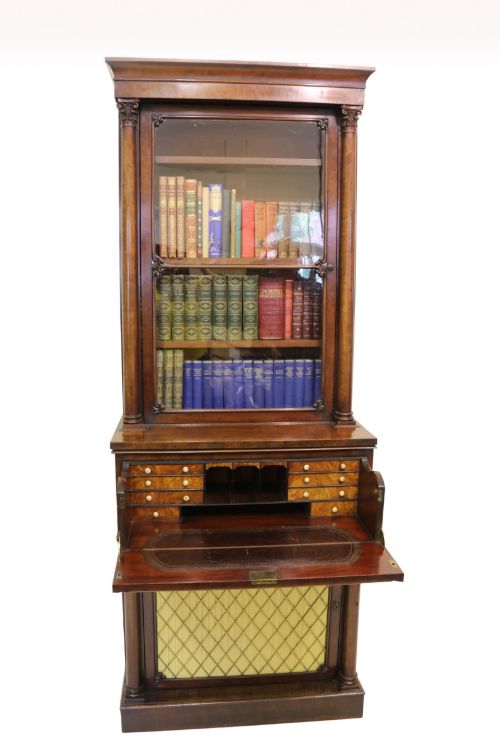
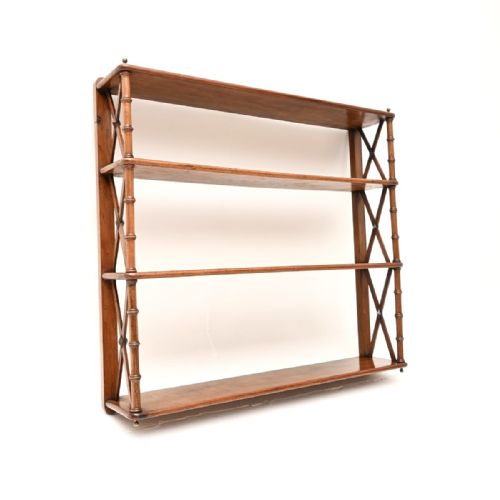
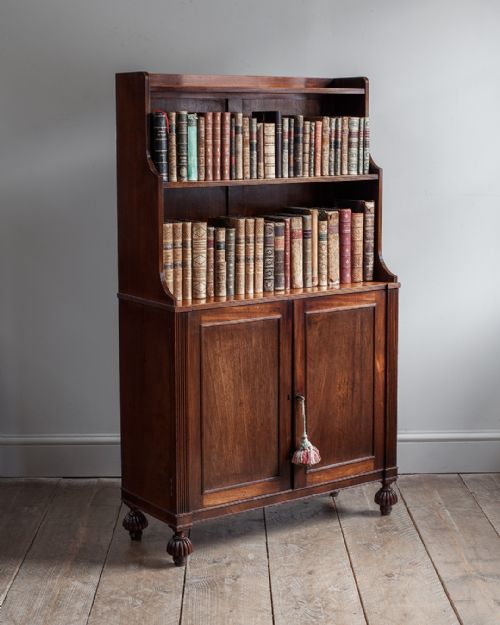
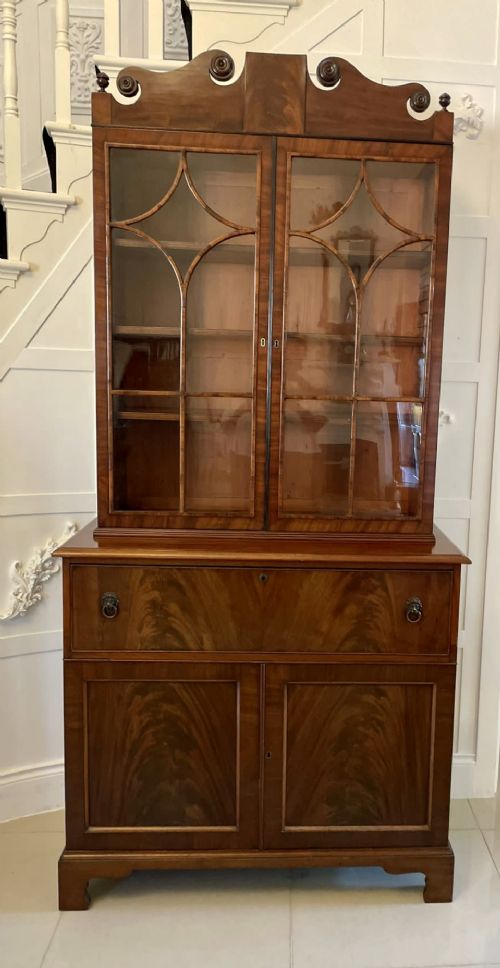
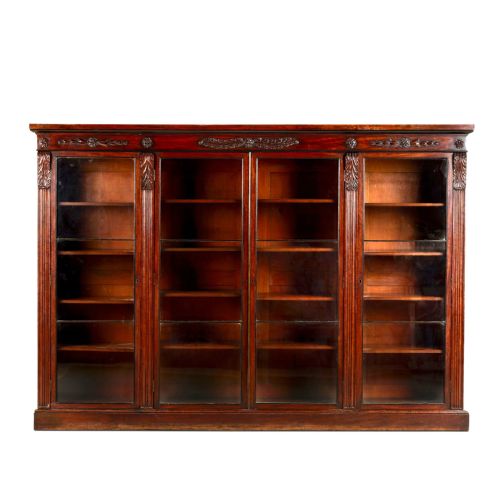
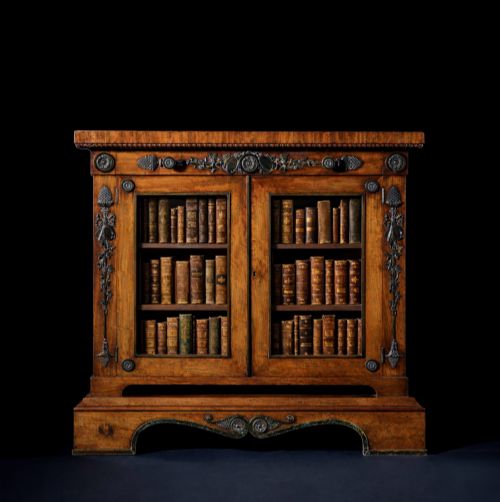
A period bookcase encompasses timber furniture designed to hold books and display objects across the eighteenth, nineteenth, and early twentieth centuries. These pieces range from tall architectural cupboards and bureau bookcases to open waterfall shelves, low credenzas, and glazed display cabinets.
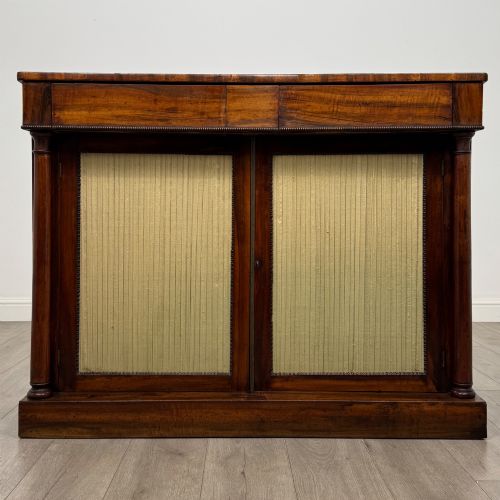
The versions most frequently encountered on this page belong to the Regency and Georgian eras, alongside later Victorian and Edwardian examples. They often feature fitted writing drawers, brass grilles, silk panels, or open tiers suited to both formal libraries and everyday sitting rooms.
How they were made
Cabinetmakers constructed these pieces primarily from solid hardwoods like mahogany, walnut, and oak, frequently applying flame mahogany veneer or rosewood to prominent surfaces. Satinwood, amboyna, and gonçalo Alves also appear in select refined examples, providing contrasting grain patterns.
Construction techniques involve traditional joinery paired with decorative elements such as brass mounts, carved hardwood details, glass door panels, and fabric linings. Makers utilised specific turning, inlay, and framing methods appropriate to each stylistic movement, from Chippendale to Sheraton and Regency designs.
Listings feature pieces spanning the eighteenth, nineteenth, and early twentieth centuries, constructed in mahogany, walnut, rosewood, oak, and exotic hardwoods.
What varies in quality
The standard of a period bookcase depends on the precision of its timber selection, such as figured mahogany or burr walnut matching symmetrically across doors and drawers. Finer examples display meticulous hand-carving, well-balanced proportions, and integrated original hardware rather than later replacements.
Structural integrity and the sophistication of internal cabinetry also distinguish superior pieces. Bureau sections with fitted pigeonholes, secret compartments, and smoothly sliding writing surfaces indicate a higher tier of original craftsmanship.
Gillows of Lancaster·Thomas Chippendale
The Period Bookcase Glossary
- Secretaire bookcase
- A cabinet incorporating a pull-down writing drawer fitted with small drawers and pigeonholes above lower shelving or cupboard doors. This dual function provided a compact desk space within a standard book storage unit.
- Waterfall bookcase
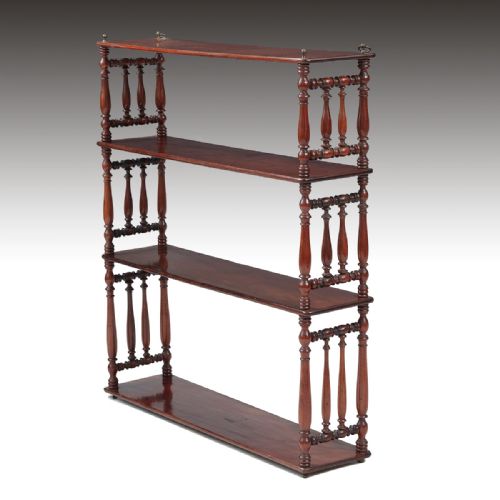
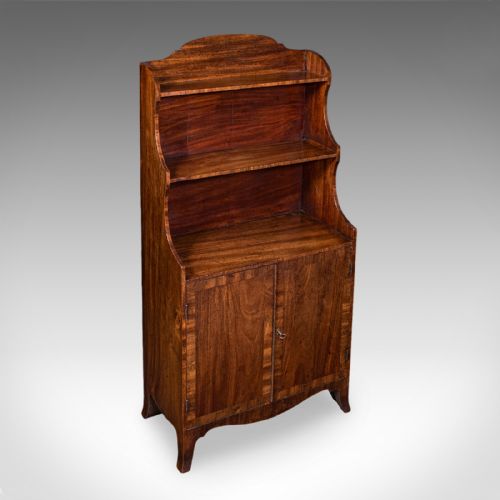
- A set of open shelves diminishing in depth from bottom to top, creating a stepped profile resembling a cascade. These pieces became particularly popular during the Regency period.
- Chiffonier
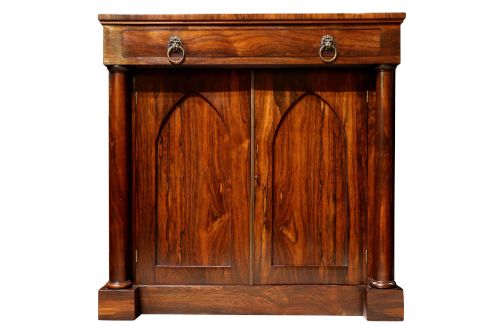
- A low sideboard or cabinet featuring enclosed cupboards below, sometimes fronted with fabric panels or brass grilles, and occasionally surmounted by a small shelf tier. They served utility and display functions in nineteenth-century interiors.
- Brass grille
- An openwork metal mesh fitted into cabinet doors in place of wood or plain glass, allowing ventilation while protecting contents. This feature is frequently seen on Regency and Georgian library furniture.
- Whatnot
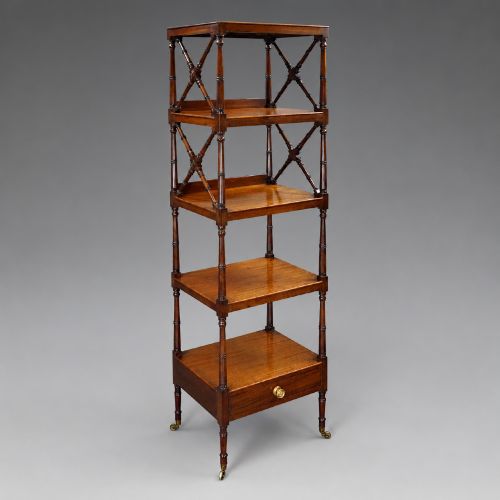
- A freestanding piece of furniture consisting of multiple open shelves supported by pillars, used for displaying ornaments and small books. They appear in various timber types across the nineteenth century.
Period Bookcase: Frequently Asked Questions
What is a secretaire bookcase?
A secretaire bookcase combines a bookshelf with a pull-down desk drawer, revealing internal compartments for writing materials.
This form allowed owners to write letters and manage papers without needing a separate standalone desk in the room.
How do I identify a Regency bookcase?
Regency bookcases often feature classical proportions, brass inlay, rosewood or mahogany veneers, and sometimes brass grilles on the doors.
They reflect early nineteenth-century design influences drawn from ancient Roman and Greek architecture.
Where were open bookcases used?
Open bookcases were typically placed in libraries, studies, or morning rooms for easy access to frequently read volumes.
Unlike glazed cabinets, they kept books entirely unshielded for immediate retrieval.
What timber was used most often?
Mahogany is the predominant timber found across these pieces, favoured for its rich colour and stable grain during the Georgian and Regency periods.
Walnut, rosewood, and oak also appear regularly depending on the specific decade and stylistic preference.