
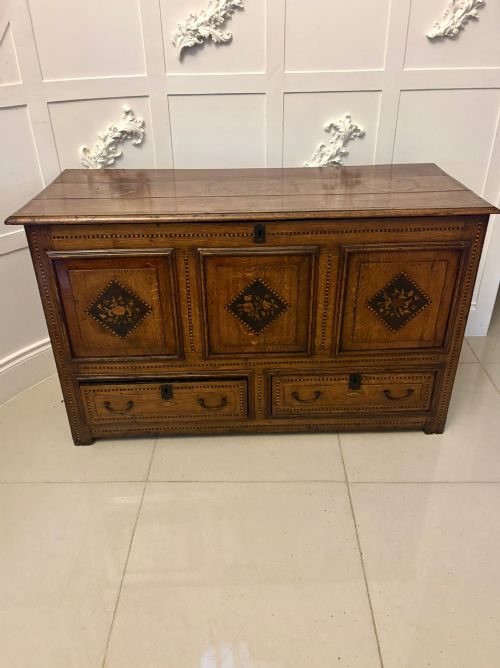


Period Blanket Box
A period blanket box grounds a room with centuries of utility, offering deep storage within heavy timber boards.
Period Blanket Box
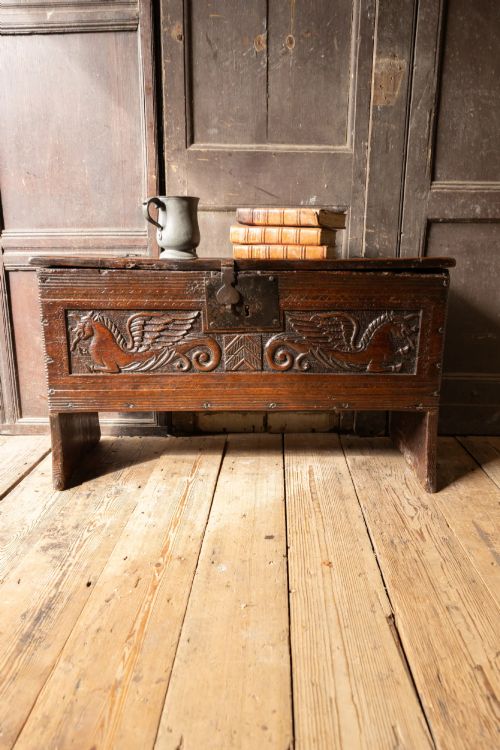
A period blanket box encompasses robust storage furniture built primarily across the sixteenth, seventeenth, and eighteenth centuries. These items served functional domestic roles before modern wardrobes existed, holding textiles, linens, and valuables.
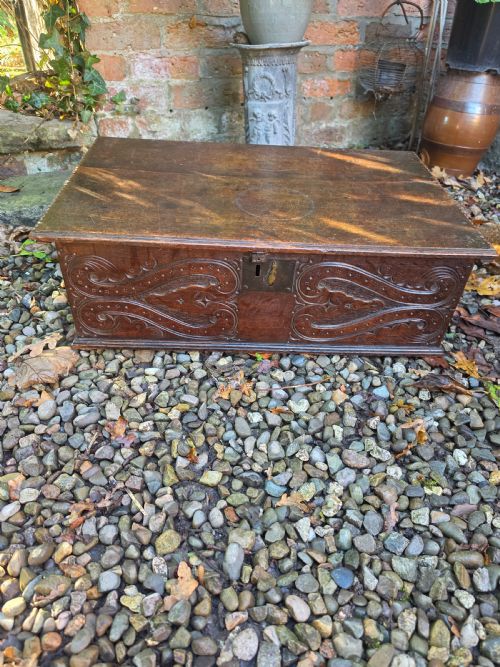
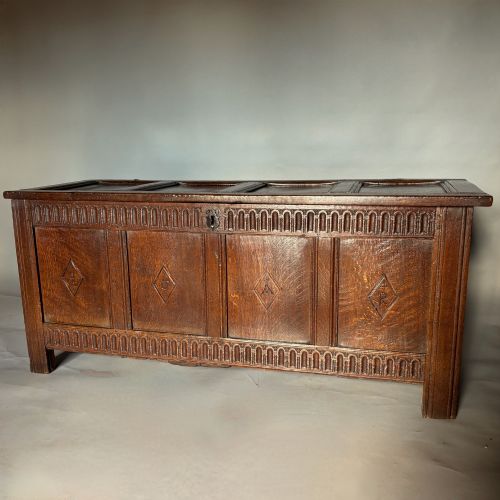
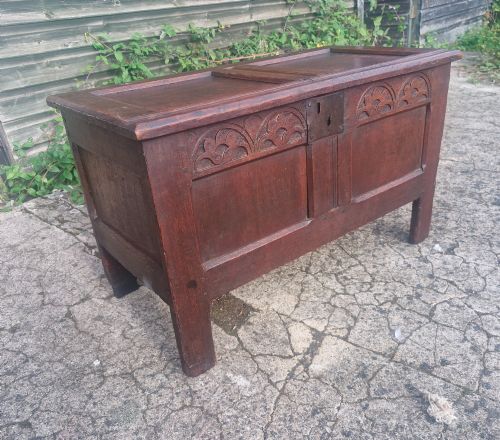
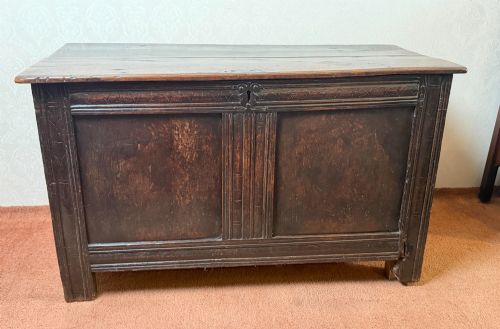
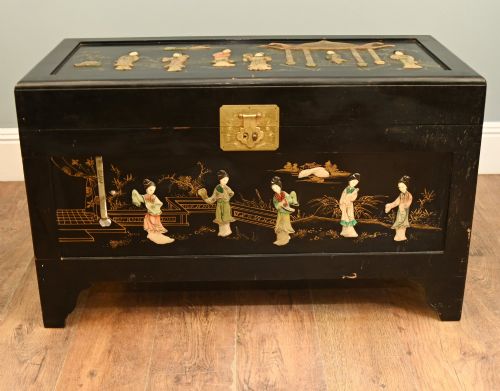
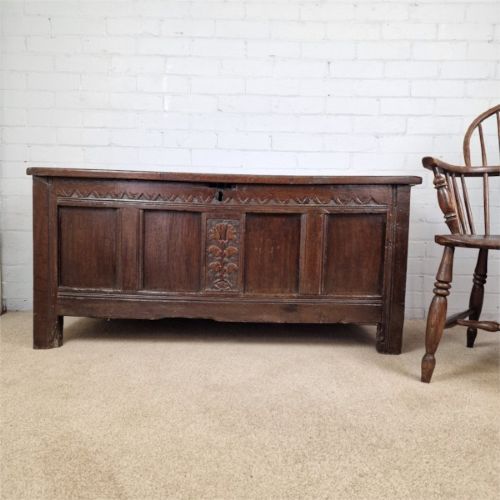
The most common form met on this page is the oak coffer or joined chest originating from seventeenth-century English workshops. Examples also appear in elm, walnut, and lacquer, spanning Elizabethan, Jacobean, and Georgian periods.
How they were made
Construction relies heavily on solid English oak, elm, and walnut shaped through panelled, joined, or six-plank methods. Master carpenters utilised pegged mortise and tenon joints to build rigid frames that could endure daily domestic service.
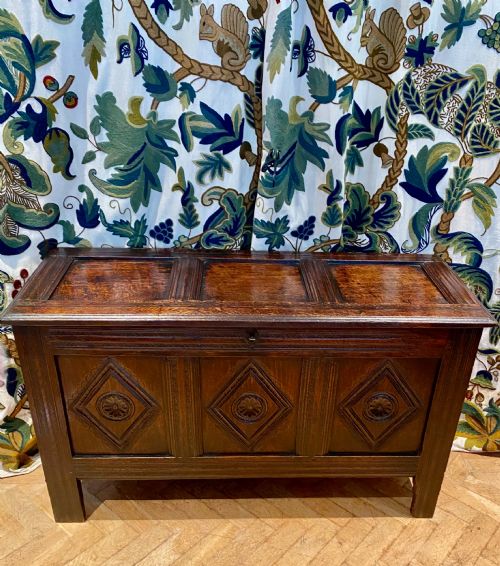
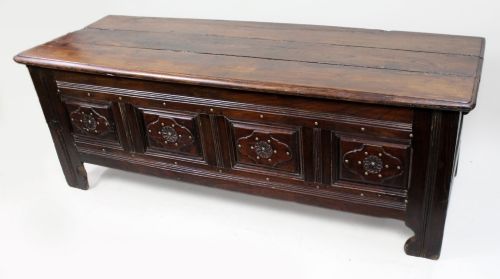
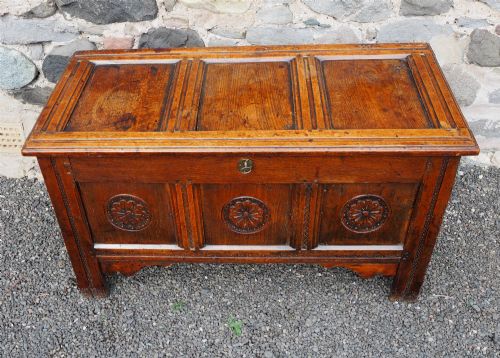
Surface ornament involves hand carving, incised detail, marquetry inlay, and occasionally polychrome lacquer. Iron and brass hinges, locks, and brackets provide structural reinforcement and functional security.
Materials span English oak, elm, walnut, brass, iron, and Chinese lacquer across centuries of domestic cabinet making.
What varies in quality
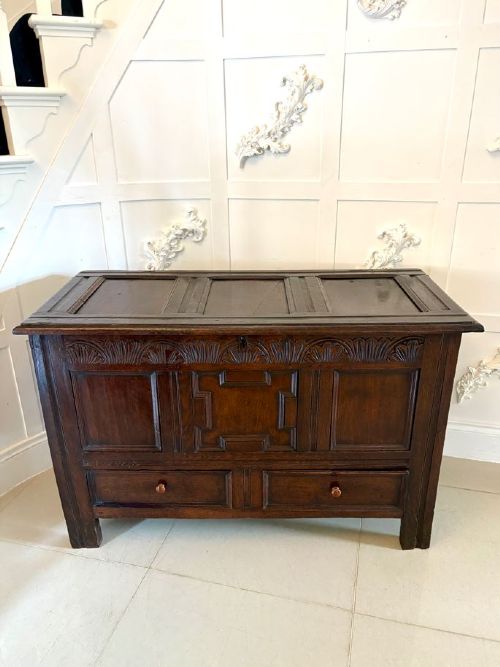
The distinction between standard utility pieces and finer examples rests upon the ambition of the joinery and the depth of the carving. Superior items display crisp geometric panels, sophisticated figural motifs, and integrated marquetry rather than plain boards.
Proportion and original timber condition dictate the standing of a piece within the range. Retaining authentic boards, patinated surfaces, and original ironwork elevates the integrity of the box.
The Period Blanket Box Glossary
- Coffer
- A heavy wooden chest traditionally used for storing valuables, documents, or garments. These forms predate standard domestic wardrobes and often feature hinged lids.
- Mule chest
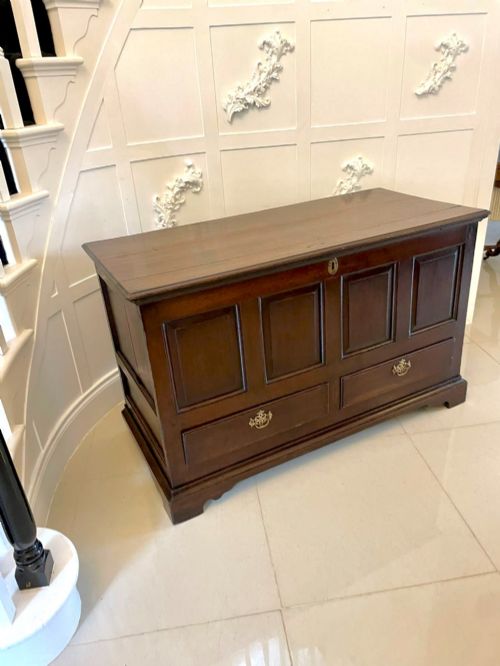
- A storage chest featuring one or more drawers built into the base beneath the primary compartment. This hybrid form emerged to provide more accessible storage than a standard top-opening coffer.
- Joined oak
- Furniture construction utilising interlocking wooden joints secured with wooden pegs rather than metal nails. This technique defines seventeenth-century English cabinet making.
- Marquetry
- Decorative inlay work using various tinted woods to create pictorial or geometric patterns on the surface. Artisans fit thin veneer sections precisely into carved recesses.
- Six-plank
- A primitive chest construction method utilising six individual boards joined directly at the edges. This straightforward method produced sturdy early containers.
Period Blanket Box: Frequently Asked Questions
What did people store in a period blanket box?
Households utilised these deep wooden containers to store valuable textiles, hand-spun blankets, heavy wool garments, and household linen.
They also kept important family documents, silver, and dry goods safe within the main compartment or integrated base drawers.
How can I date an oak coffer?
Dating relies upon examining the construction methods, tool marks left by hand axes or saws, and stylistic carved motifs. Six-plank boards and pegged mortise and tenon joints point to sixteenth and seventeenth-century English work.
Panelling styles, such as geometric mouldings or arcade carving, align with specific eras like the Elizabethan or Jacobean periods.
Where should I place a blanket box at home?
These robust chests function effectively at the foot of a bed, beneath a bay window, or as a coffee table in a living space. Their flat lids provide a sturdy surface for display while keeping storage hidden inside.
Keep wooden chests away from direct heat sources and radiators to prevent timber from drying out and splitting.
What is the difference between a coffer and a mule chest?
A standard coffer consists of a single deep box accessed exclusively from a hinged lid on top. Retrieving items at the bottom requires removing everything stacked above.
A mule chest incorporates one or more drawers beneath the main box compartment, allowing access to smaller items without lifting the heavy lid.