
Period Bedroom Storage
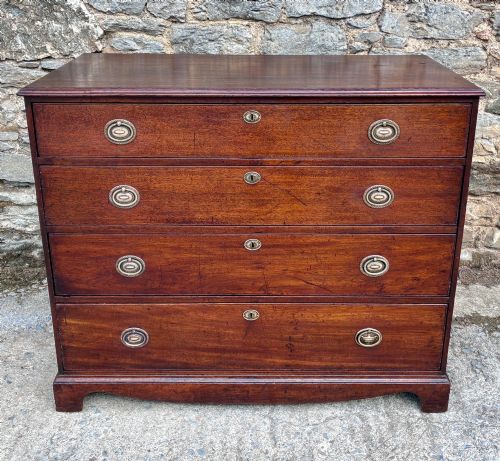
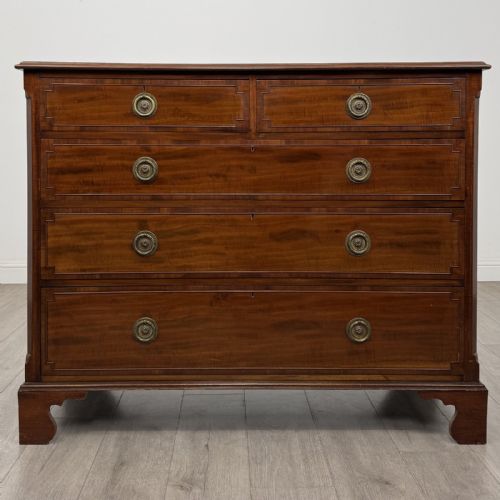
Period bedroom storage encompasses centuries of handcrafted chests and presses built to organise personal attire with enduring timber and brass.
Period Bedroom Storage
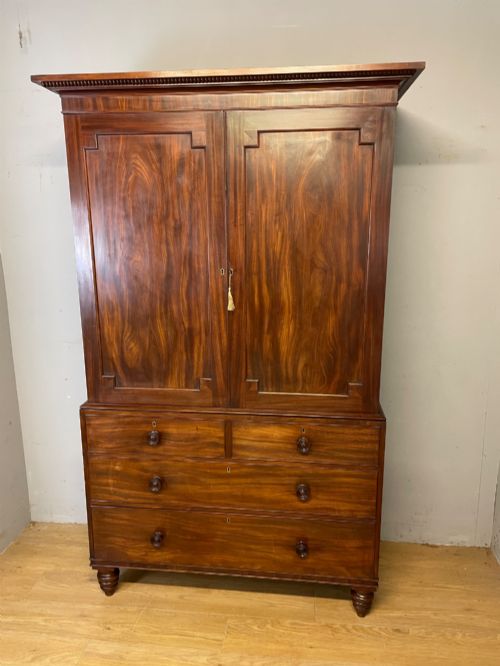
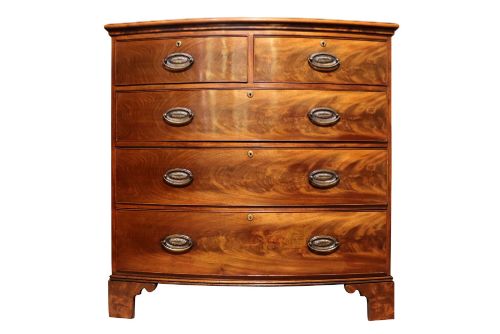
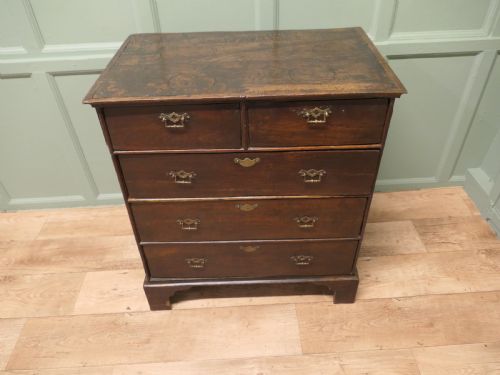
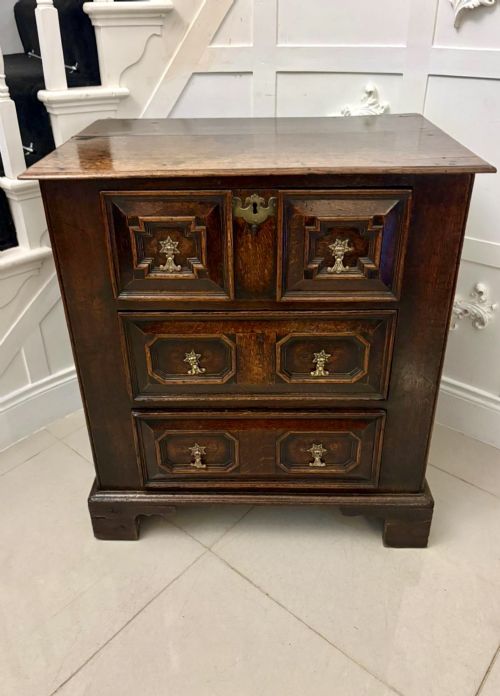
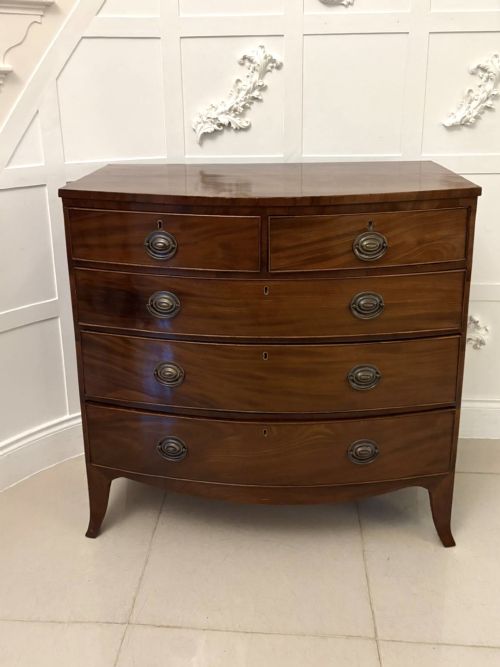
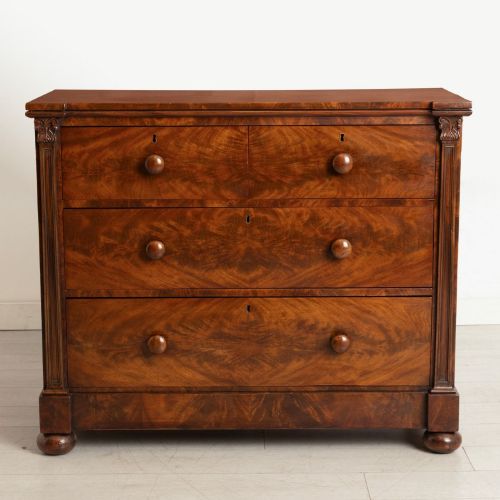
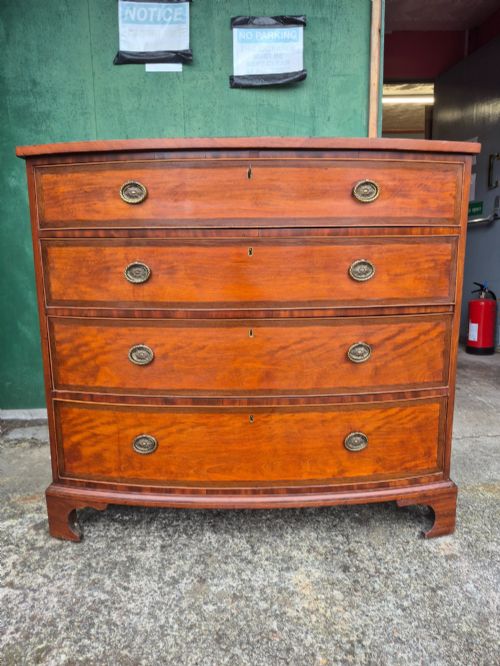
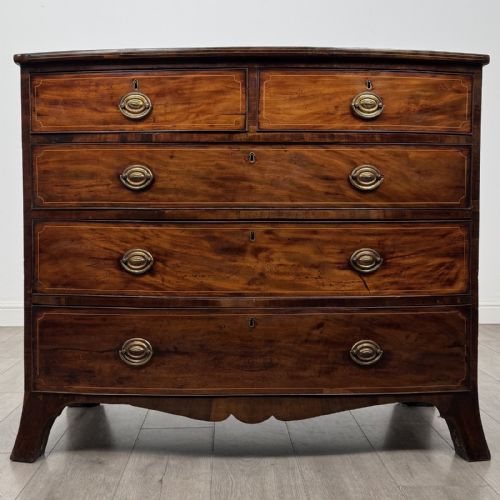
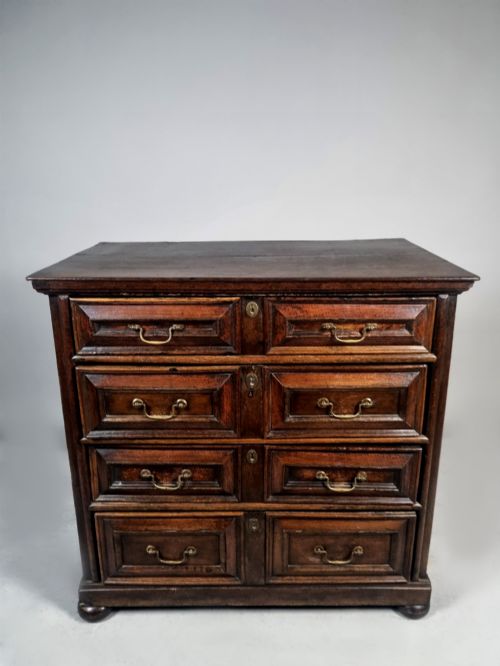
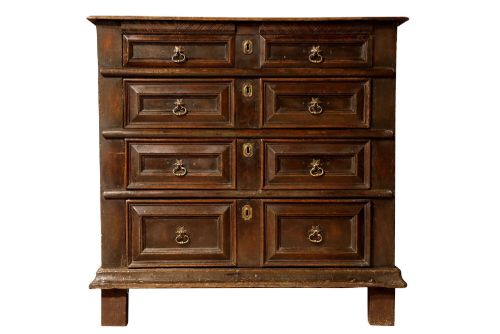
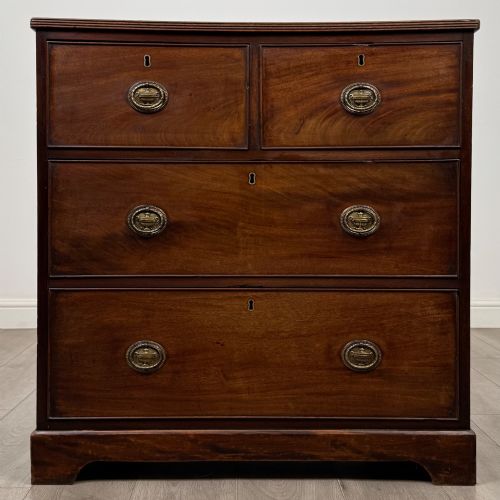
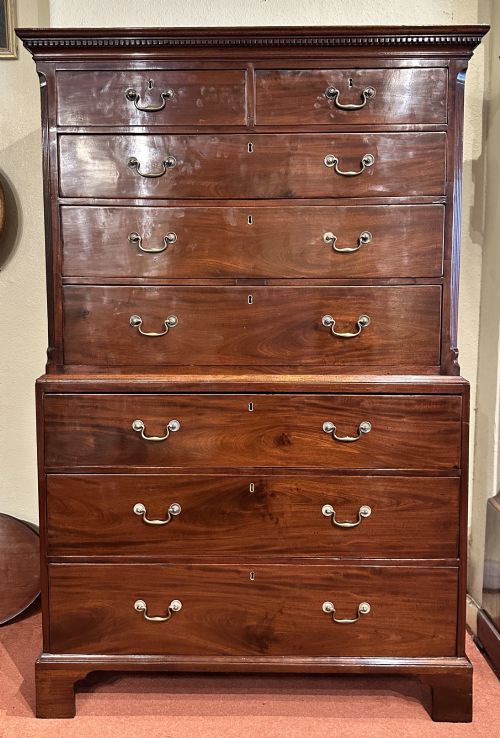
The assortment on this page ranges from modest oak pieces bearing seventeenth-century geometric mouldings to elegant bow-fronted mahogany chests from the Regency period. Taller pieces like chest-on-chests and linen presses also appear, offering substantial storage capacity within traditional proportions.
Materials and construction
Cabinetmakers constructed these pieces predominantly using solid timbers including oak, walnut, and mahogany, frequently selecting flame or figured veneers to enhance the visible grain. Brass hardware such as drop handles and escutcheons complemented the natural warmth of the wood.
Joining techniques relied heavily on traditional dovetailing for drawer construction and pegged mortise and tenon joints for structural stability. Surfaces were finished by hand, developing a deep natural patina over centuries of use and polish.
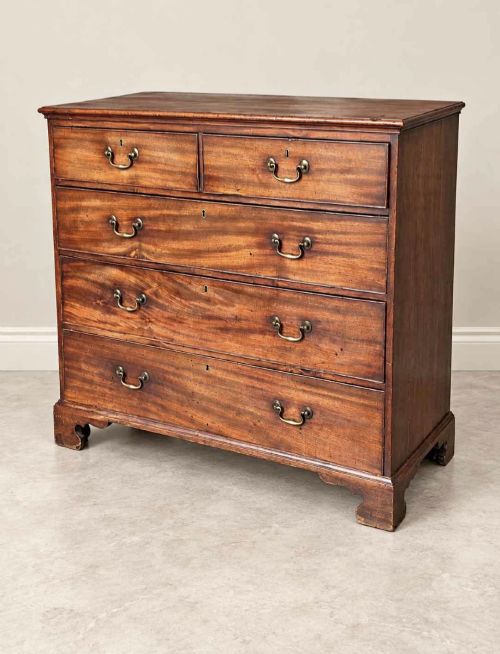
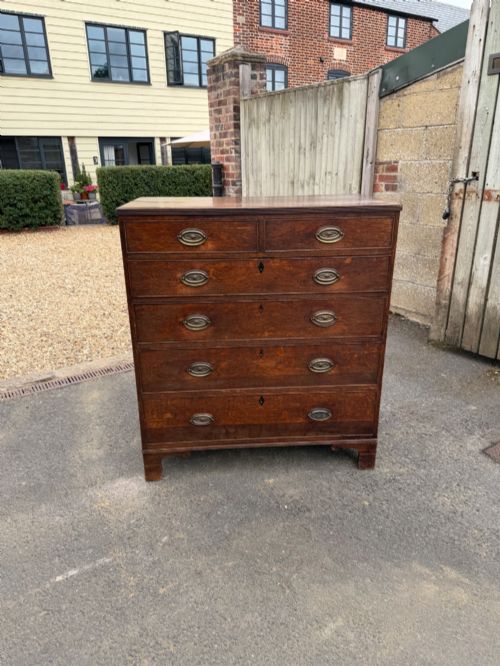
One persistent maker signed their craftsmanship into a mahogany chest of five drawers back in 1790.
Assessing quality and character
Quality in these storage pieces rests upon the crispness of the timber's figuring, the proportion of the drawers, and the retention of original brass fittings. Superior examples display careful timber selection where the grain matches seamlessly across drawer fronts.
Internal construction also dictates value, with fine pieces showing hand-cut dovetails on secondary softwoods and smooth-running drawers that retain their original oak or mahogany linings.
J Moorcroft
The Period Bedroom Storage Glossary
- Bow front
- A convex curved cabinet front popular during the Regency and late Georgian periods. This shape softens the profile of a standard rectangular chest.
- Chest-on-chest
- A tall storage unit comprising one chest stacked directly on top of a larger base chest, sometimes called a tallboy. This form maximises vertical storage space.
- Linen press
- A large wardrobe-like piece featuring upper sliding trays or shelves for textiles above a set of lower drawers. They originated for storing household linens before hanging wardrobes became standard.
- Patina
- The deep, lustrous surface sheen developed on old wood through decades of handling, waxing, and ageing. It serves as a visual indicator of authenticity.
- Bracket foot
- A structural support foot shaped like a small bracket, commonly found on Georgian furniture. These feet lift the case off the floor with subtle architectural lines.
Period Bedroom Storage: Frequently Asked Questions
What defines a George III chest of drawers?
George III pieces typically feature clean lines, high-grade mahogany timbers, and precise dovetailing. They often incorporate brass drop handles and rest on bracket or ogee feet.
These chests balance practical proportions with understated decorative details, reflecting the dominant cabinetmaking standards of the eighteenth century.
How do I care for antique wood furniture?
Maintain antique timber by keeping pieces away from direct heat sources and fluctuating humidity. Apply traditional beeswax periodically to nourish the grain and preserve the surface finish.
Avoid silicone-based sprays, which can penetrate the pores of the wood and damage the historic patina over time.
What is the difference between a chest and a press?
A chest of drawers consists solely of horizontal drawers stacked within a wooden case for storing folded garments. A linen press combines enclosed upper shelving or sliding trays with lower drawers.
Presses were traditionally taller and designed specifically to hold household linens and bedding before modern wardrobes took precedence.
How can I date a mahogany chest?
Examine the timber species, drawer construction methods, and hardware style to determine age. Eighteenth-century pieces frequently use solid mahogany with hand-cut dovetails and oak drawer linings.
Later nineteenth-century variations often introduce veneered surfaces, machine-sawn components, and different framing techniques within the carcass.