
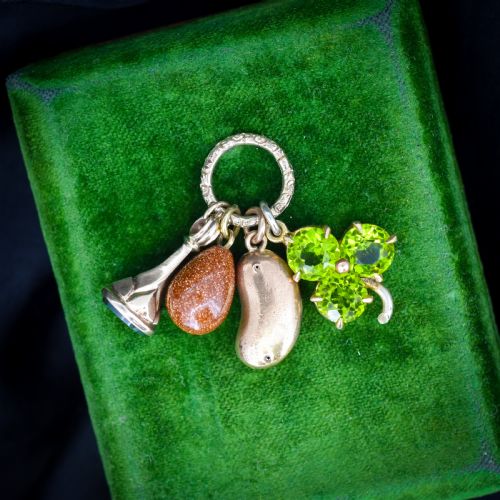


Peridot Drop Pendant
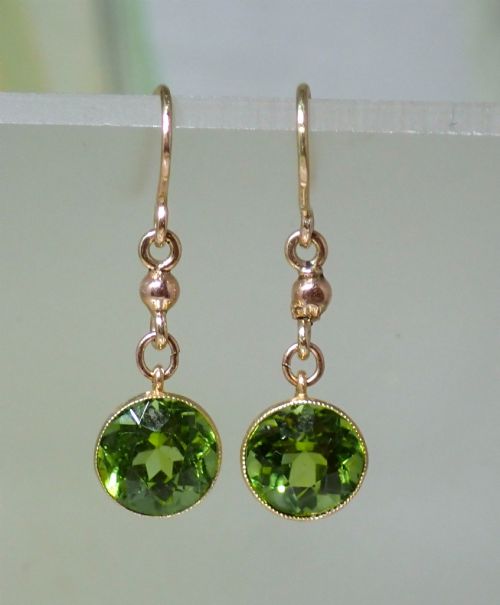
A peridot drop pendant brings together bright lime-green olivine stones and delicate gold settings, offering a distinctively luminous piece of historical jewellery.
Peridot Drop Pendant
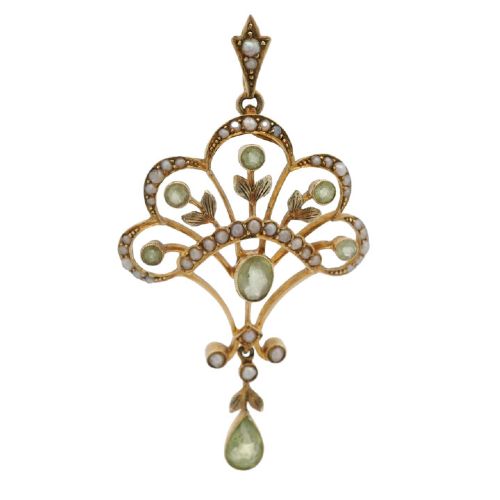
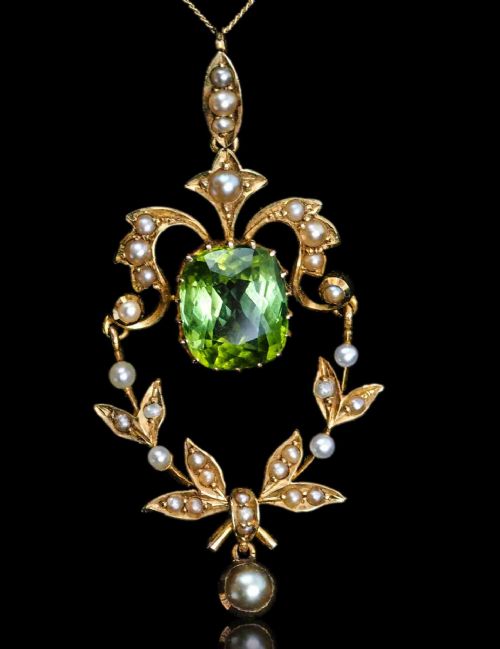
A peridot drop pendant is typically encountered in Edwardian, Victorian, and Art Nouveau designs from the late nineteenth and early twentieth centuries. These pieces suspend a cut peridot stone, often accompanied by seed pearls or diamonds, from a fine gold chain or collar.
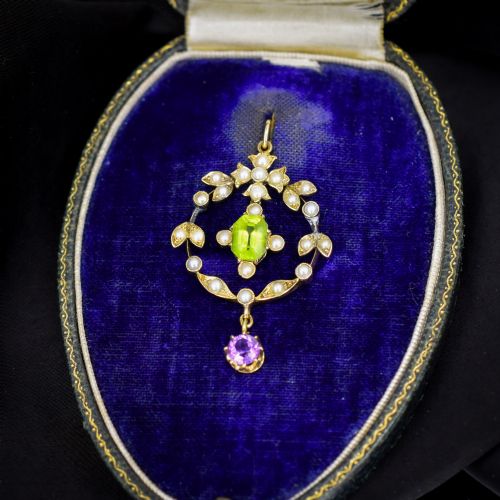
The prevailing examples on this page date from the Edwardian period and around nineteen hundred, alongside Victorian and mid-twentieth century iterations. Makers of the era frequently combined peridots with amethyst, pink tourmaline, or white sapphire in lavalier and pendant brooch formats.
Most items feature either nine-carat or fifteen-carat yellow gold, occasionally incorporating platinum or silver settings for the stones. The drop configuration allows the principal green gemstone to swing freely below the mount.
Materials and construction
Gold forms the structural base of these pendants, utilised in nine-carat and fifteen-carat purities, paired with seed pearls and peridot stones. Jewellers shaped the metal into delicate wirework, scroll motifs, and collet settings suited to holding smaller gemstones.
Seed pearls are hand-strung or pinned into floral and cluster arrangements around the central peridot drop. Certain pieces integrate platinum or silver to highlight old-cut paste or diamond accents within the pendant framework.
Listings feature peridot drop pendants paired with seed pearls, amethysts, and diamonds across Edwardian, Victorian, and Arts and Crafts styles.
Factors of quality
The depth of colour and clarity in the peridot stone dictates much of the visual impact, alongside the precision of the surrounding gold wirework. Finer examples display balanced proportions between the suspended drop and the supporting bale or necklace frame.
The presence of original components, such as matching chains, fitted boxes, or secure seed pearl settings, separates standard pieces from exceptional survivals. Maker marks or distinct design attribution also elevate specific items within the range.
Murrle Bennett
The Peridot Drop Pendant Glossary
- Peridot
- A transparent green gemstone belonging to the olivine group, known for its distinctive lime or olive hue. It was a favoured stone in Edwardian and Art Nouveau jewellery design.
- Lavalier
- A pendant featuring a primary gemstone or ornament suspended from a smaller drop or chain below the main necklace line. This style gained popularity during the late Victorian and Edwardian eras.
- Seed pearl
- A very small, naturally formed or cultured pearl often drilled and threaded onto tiny pins or silk within historical jewellery. They frequently accent peridot drops in floral or star formations.
- Art Nouveau
- A design style spanning the late nineteenth and early twentieth centuries characterised by flowing, organic lines and floral motifs. Pieces from this movement often incorporate whipped wirework and natural gemstone drops.
Peridot Drop Pendant: Frequently Asked Questions
How do I wear a peridot drop pendant?
These pendants sit well on fine gold chains close to the collarbone, mirroring the way Edwardian women wore them. Because the stones are suspended on delicate drops, it is sensible to remove them before sleeping or physical activity.
Pairing a peridot pendant with simple clothing allows the green stone and gold wirework to remain the focal point. Many pieces also function as brooches, offering versatility in how you display the metalwork.
Are seed pearls durable in antique pendants?
Seed pearls are relatively soft gems that require gentle handling and protection from harsh chemicals, perfumes, and cosmetics. In historical pieces, they are often held by tiny pins or adhesive that benefits from occasional inspection.
Storing the pendant flat in a lined box prevents unnecessary strain on the pearls and the fine gold links connecting the drop. Keeping the piece dry preserves both the organic material and the surrounding metal.
How can I tell an Edwardian pendant from a Victorian one?
Edwardian pieces often feature lighter, airier platinum or fifteen-carat gold wirework with lace-like garlands and symmetrical framing. Victorian examples tend to use heavier nine-carat or fourteen-carat gold mounts with more solid bezel settings.
Peridots paired with seed pearls and amethysts frequently span the transition between late Victorian and Edwardian reigns, around nineteen hundred. Examining the reverse of the pendant often reveals construction methods specific to each decade.
What is a Suffragette pendant?
Suffragette jewellery typically incorporates the colour combination of green for green, white for white, and violet for violet, representing give women votes. In antique pieces, this translates to peridots paired with pearls, white sapphires, or amethysts.
These colour-coded gems were worn openly during the early twentieth century to signal support for the political movement. They remain sought-after examples of Edwardian gemstone pairing.