




Pegged Oak Dining Table
A pegged oak dining table brings solid timber grain and centuries of domestic utility straight to your kitchen.

Pegged Oak Dining Table
When you search for a pegged oak dining table, you find heavy wooden furniture designed for communal dining and kitchen work. These surfaces provide large expanses of timber suitable for daily family life.
The pieces on this page span several distinct periods, including the seventeenth century, the nineteenth century, and the nineteen twenties. You will encounter forms such as refectory tables, trestle bases, and farmhouse styles.
Many examples originate from French country and provincial workshops, alongside English country pieces. These regional variations offer different proportions while maintaining sturdy wooden construction.
How they were made
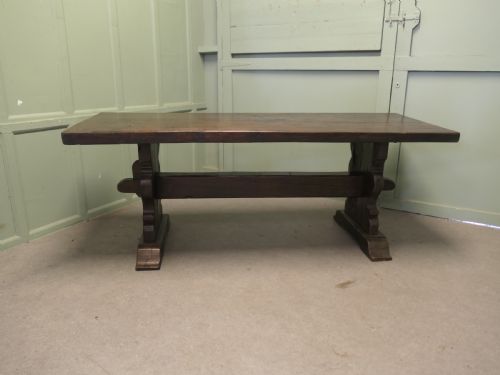
Construction relies heavily on solid oak timber, frequently formed into thick plank tops. Joinery utilises traditional wooden pegs to secure the framework without relying solely on metal fixings.
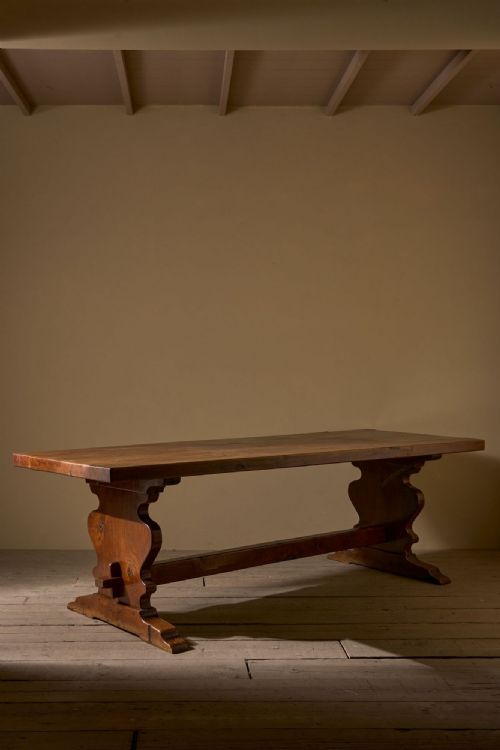
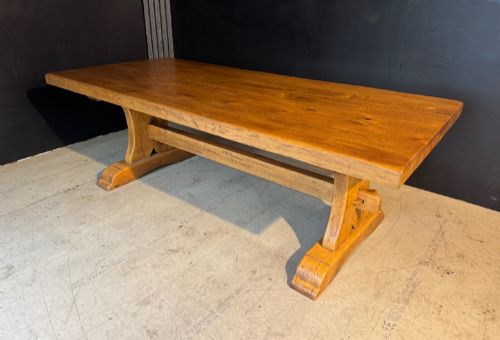
Trestle bases and refectory frames support the heavy upper surfaces. Carpenters shaped the timber by hand to create durable dining furniture designed to withstand decades of heavy use.
Early makers pegged their joints so tightly that the tables outlived empires, revolutions, and several generations of dinner parties.
What varies in quality
The substance of the timber top determines much of the character, with thick, well-joined planks outlasting thinner boards. Substantial framing beneath the surface provides structural stability that lesser builds lack.
Proportion and surface patina distinguish simpler utilitarian boards from finer provincial examples. The integration of the joints shows the maker's hand and skill in cutting the wood.
The Pegged Oak Dining Table Glossary
- Refectory table
- A long narrow dining table traditionally used in monasteries and large halls. This form provides substantial length for seating many diners.
- Plank top
- A surface constructed from several parallel boards joined together. Older tables often display wide individual boards with distinct natural grain.
- Trestle base
- A support structure consisting of two or more vertical frames connected by a horizontal stretcher. This design leaves maximum legroom along the length of the table.
- Pegged joint
- A method of securing timber components using wooden dowels rather than modern nails or screws. This traditional technique accommodates natural wood movement.
Pegged Oak Dining Table: Frequently Asked Questions
What is a pegged oak dining table?
A pegged oak dining table is a sturdy wooden surface assembled with traditional wooden dowels rather than metal fasteners. These pieces are built for heavy daily use and communal dining.
They appear in various forms, including refectory designs and farmhouse styles, spanning from the seventeenth century through to the twentieth century.
How do I use an antique oak table daily?
These heavy tables serve well as central kitchen surfaces or formal dining hubs. Their solid timber construction handles daily meals and preparation work with ease.
Protecting the wood from excessive moisture and heat preserves the antique finish over years of regular use.
How do I identify seventeenth century oak tables?
Seventeenth century examples often feature trestle bases or heavy refectory construction with visible pegged joints. The timber displays deep grain patterns developed over centuries of age.
Construction details on these early pieces reflect hand-tool methods distinct from later mass-produced furniture.
What is a French country oak table?
French country oak tables originate from provincial workshops, offering robust farmhouse proportions. They often feature generous plank tops supported by substantial legs.
These regional pieces bring a distinct European vernacular to dining spaces while maintaining the strength of solid oak.