




Pediment Wall Frame
A pediment wall frame brings architectural presence to a room, framing glass or art with classical proportion and structured timber.
Pediment Wall Frame
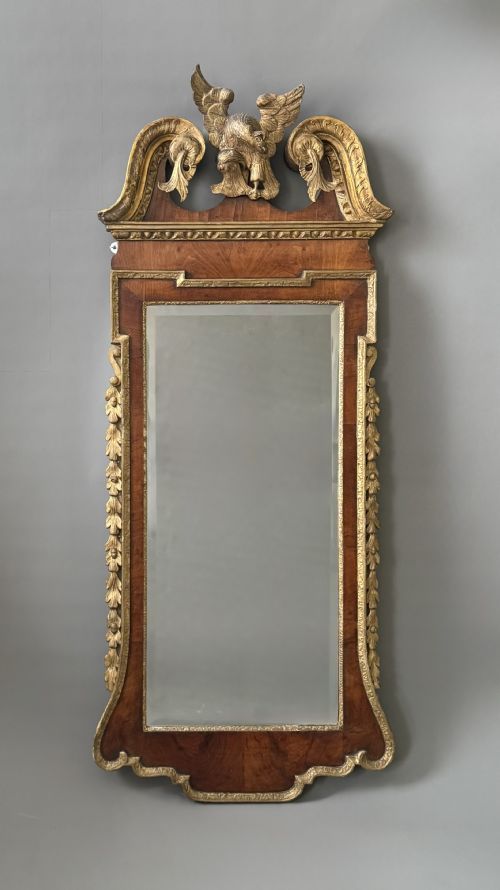
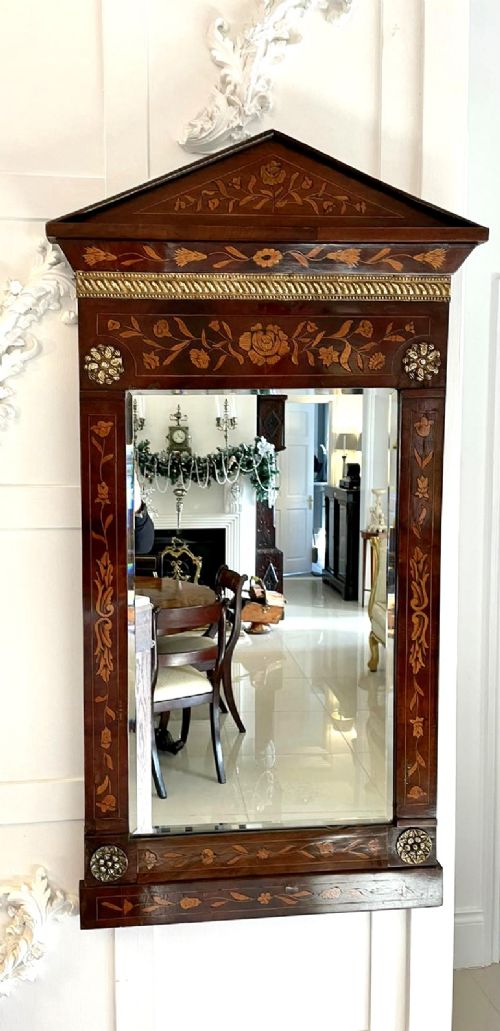
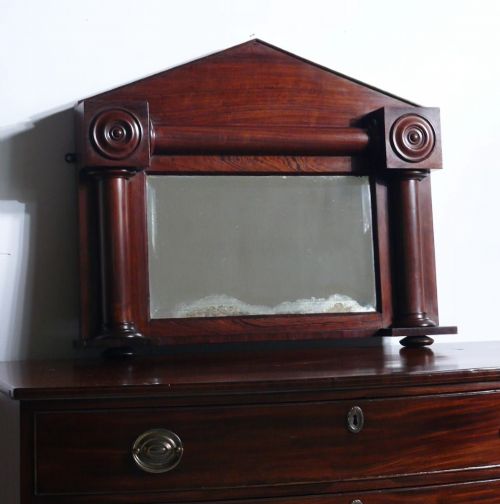
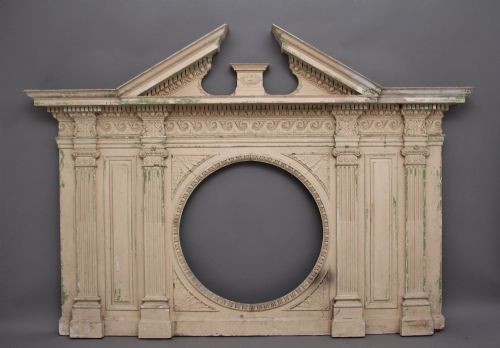
When you search for a pediment wall frame, you encounter architectural surrounds and wall mirrors built with triangular or segmental pediment tops. These pieces span from the eighteenth century through to the early twentieth century, taking the form of wall mirrors, overmantels, tabernacle frames, and ecclesiastical panels.
The selection ranges from George III walnut and parcel-gilt designs to Victorian ebonised and mahogany iterations. You are most likely to meet 19th-century interpretations of earlier George II and Georgian styles, alongside continental pieces in birchwood and giltwood.
How they were made
Carpenters and joiners constructed these frames using timbers such as mahogany, walnut, pine, and rosewood, often applying gesso to create crisp architectural mouldings. Giltwood examples received thin layers of gold leaf over preparation grounds, while other pieces utilised ebonised finishes or marquetry inlay.
Mirrors incorporated glass plates held within the wooden or gesso framework, sometimes featuring cut glass pediments or original antique mirror plates. Carved ornamentation, parcel-gilt highlights, and applied pediment crests completed the construction.
Listings feature woods such as walnut, mahogany, rosewood, and ebonised wood alongside giltwood and gesso finishes.
What varies in quality
The distinction between ordinary and exceptional examples lies in the crispness of the carving and the depth of the architectural details within the pediment. Finer pieces demonstrate meticulous hand-carving in woods like walnut and mahogany, whereas simpler versions rely on painted pine or standard mouldings.
Proportion and scale dictate the visual impact of the frame, with larger overmantels and mirrors requiring balanced construction to support heavy glass plates. The preservation of original parcel-gilt surfaces and early mirror glass further separates standard items from collector pieces.
William Kent
The Pediment Wall Frame Glossary
- Pediment
- The triangular or curved architectural gable surmounting the top of the frame. This classical element draws the eye upward and defines the formal style of the piece.
- Parcel-gilt
- Partially gilded woodwork where gold leaf highlights specific carved details against a contrasting painted or polished wood background.
- Gesso
- A plaster-like mixture applied to wood surfaces and carved to create intricate relief decoration before gilding or painting.
- Pier mirror
- A tall mirror designed to hang on the wall space between windows, often featuring a decorative pediment or crest.
- Tabernacle frame
- An architectural frame styled after a temple altar, featuring columns or pilasters supporting a distinct pediment top.
Pediment Wall Frame: Frequently Asked Questions
What is a pediment wall frame?
A pediment wall frame is a decorative border or mirror surround topped by a triangular or arched architectural pediment. These items draw on classical building design to create a strong focal point on an interior wall.
Originating in grand architectural traditions, they evolved into smaller domestic mirrors and picture frames suited for Georgian and Victorian interiors.
Where should I hang an overmantel mirror?
Overmantel mirrors are traditionally positioned directly above a fireplace mantelpiece to reflect light and anchor the hearth within the room. Their generous scale makes them well-suited for principal reception rooms.
Ensure the wall construction supports the considerable weight of these large wooden and glass assemblies before hanging.
How do I identify a George II style frame?
George II style frames typically feature robust carved mahogany or walnut construction, often accented with parcel-gilt enrichment and architectural pediments. They frequently echo the Palladian designs associated with makers like William Kent.
Later nineteenth-century revivals replicate these eighteenth-century proportions, using period-appropriate carving techniques and heavy timber.
What woods are used in these frames?
Cabinetmakers utilised a variety of timbers including mahogany, walnut, pine, rosewood, and birchwood. Softer woods like pine served as a base for painted or gessoed finishes, while dense hardwoods were polished or carved.
Selection of wood often reflects the period of origin, from Georgian walnut to Victorian ebonised and carved mahogany.