



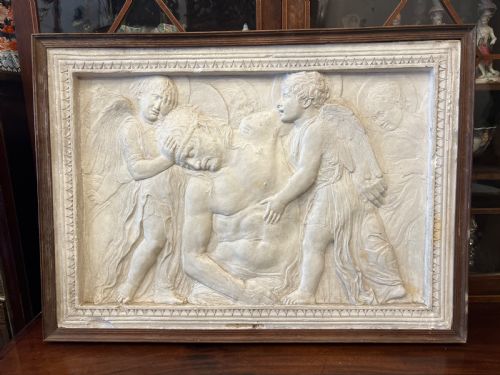

White Plaster Frame
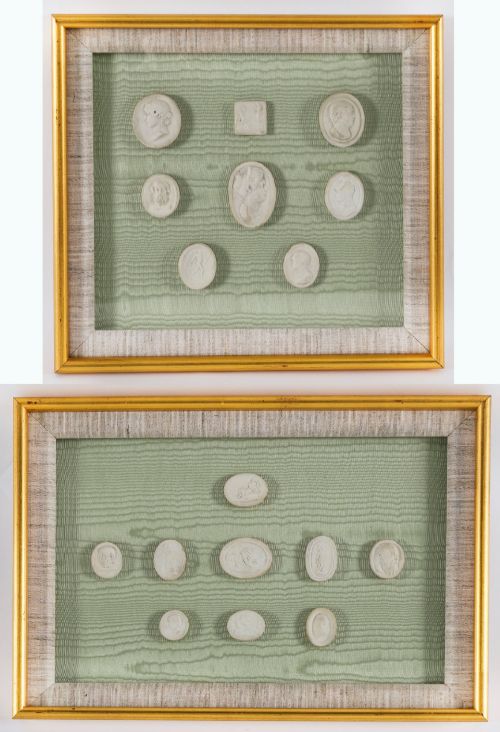
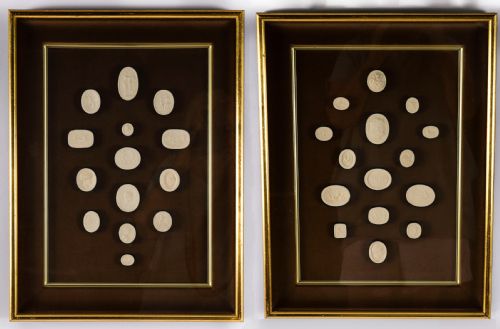
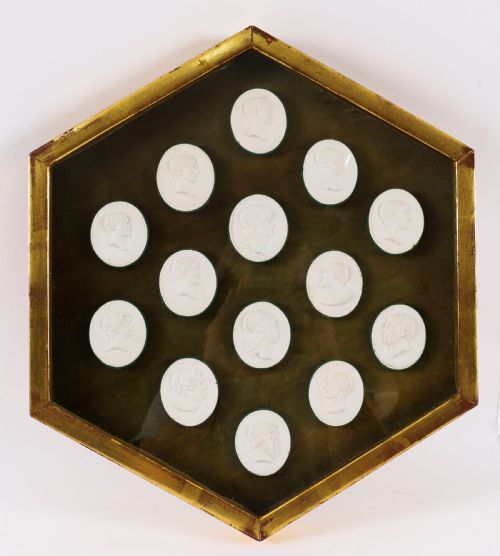
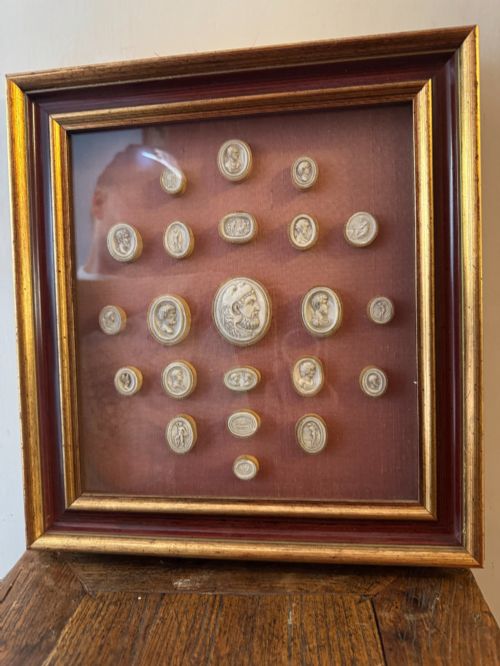
A white plaster frame holds crisp classical casts and miniature reliefs within tidy surrounds of wood and gilt.
White Plaster Frame
When you search for a white plaster frame, you encounter wall art, framed intaglios, and decorative objects shaped by neoclassical taste. The selection on this page consists chiefly of nineteenth-century Grand Tour plaster casts, gypsum intaglios, and cameo panels housed inside bespoke surrounds.
Most examples originate from the nineteenth century or the late eighteenth century, alongside Edwardian decorative arrangements and later tabernacle forms. These items record classical sculpture and portraiture in miniature relief, preserved behind glass within wooden or gilt frames.
The assortment includes pairs, boxed collections, and multi-piece sets attributed to makers such as Giovanni Liberotti and Pietro Bracci. Alongside these intaglios appear pressed white glass paste cameos and plaster copies of Renaissance reliefs.
Materials and construction
The primary medium is white plaster or gypsum, cast carefully from classical intaglios, cameos, and sculptural reliefs. These delicate white casts stand out sharply against backdrops of dark velvet, fabric, or textile lining.
Makers housed the plaster casts inside wooden surrounds finished with gold leaf or gilt wood, occasionally incorporating glass panels to protect the fragile surfaces. Deeper box frames accommodate thick plaster sets and collections of multiple medallions.
White Plaster Frame Retail Price Guide 2026
Typical asking prices for white plaster frame among the pieces listed under this phrase on Sellingantiques today, from the lower quarter to the upper quarter. They describe what is for sale here now, not the wider market.
Listings feature nineteenth-century and Edwardian pieces combining plaster, gilt wood, glass, and velvet in neoclassical styles.
Assessing quality in white plaster frame pieces
Quality rests upon the crispness of the plaster cast and the depth of detail preserved from the original classical sculpture or intaglio. Finer examples display sharp edges and subtle facial expressions without the softening caused by worn moulds.
The harmony between the plaster reliefs and their enclosing frame elevates the piece, particularly where original gilt wood, velvet backing, and glass remain intact. Larger multi-piece sets and works linked to known modellers command greater attention for their scale and provenance.
Giovanni Liberotti·Pietro Bracci·James Tassie·Donatello
The White Plaster Frame Glossary
- Intaglio
- An engraved gem or medallion where the design is incised below the surface. These carved impressions served as the models for plaster casts.
- Cameo
- A method of carving an object where a raised relief image stands proud of a contrasting background. These subjects were frequently replicated in white plaster for collectors.
- Grand Tour
- A traditional trip through Europe undertaken by upper-class young men to absorb classical art and culture. Travellers collected plaster casts and intaglios as portable souvenirs.
- Gypsum
- A soft sulphate mineral used to create plaster of Paris. Artisans poured this material into moulds to produce bright white sculptural reliefs.
- Tabernacle frame
- An architectural frame style resembling a small shrine or altar piece. These surrounds feature columns and pediments framing central artworks.
White Plaster Frame: Frequently Asked Questions
What is a white plaster frame?
It is a decorative surround housing white plaster casts, intaglios, or cameos behind glass. These pieces record classical sculpture in miniature.
They range from single relief plaques to extensive boxed collections arranged on velvet or textile backings.
How were these frames used?
Grand Tour travellers and collectors displayed them on walls or desks as scholarly ornaments. They served as portable galleries of ancient sculpture.
Today they function as framed wall art, bringing neoclassical texture and monochrome contrast to domestic interiors.
How do I date these pieces?
Dating relies on the style of the wooden frame, the mounting textiles, and the historical period of the casts. Nineteenth-century examples often reflect strict neoclassical revival tastes.
Earlier pieces from around eighteen hundred feature detailed hand-written labels or specific maker attributions associated with Grand Tour workshops.
Are all the casts made of plaster?
While the majority consist of white plaster or gypsum, some collections incorporate pressed glass paste or specialised ceramic compositions. These alternative materials imitate the appearance of carved stone and shell cameos.
Frames themselves combine wood, velvet lining, and gilt leaf finishes to complement the white reliefs.