

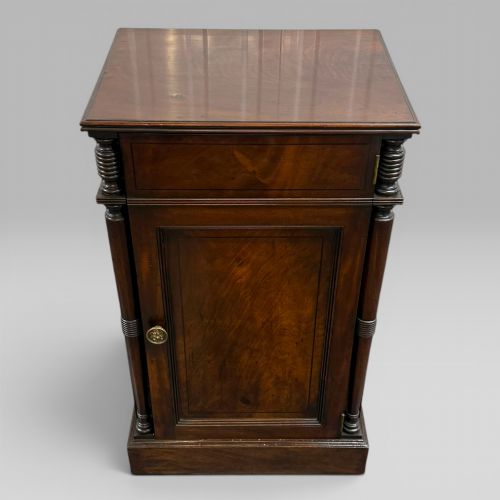
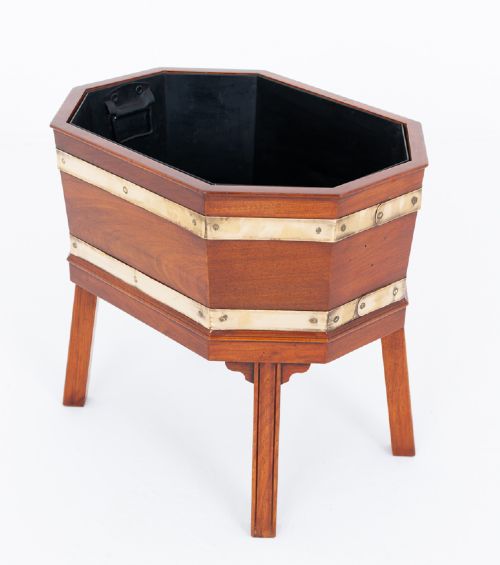


Pedestal Wine Cellarette
A pedestal wine cellarette brings architectural dignity and practical bottle storage to a dining room, uniting fine timber with formal proportion.
Pedestal Wine Cellarette
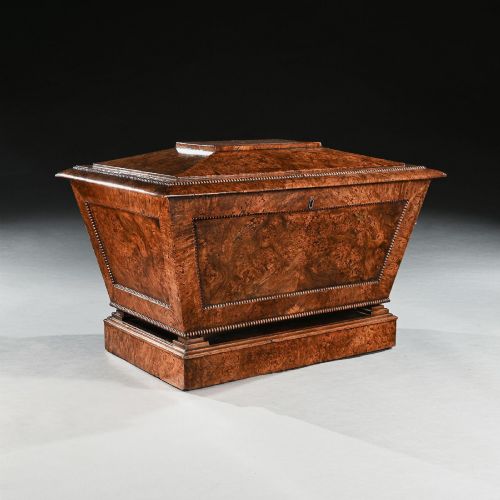
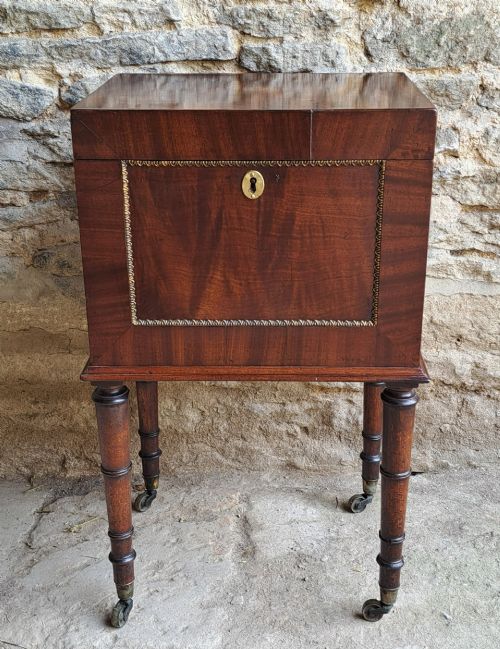
When you search for a pedestal wine cellarette, you encounter grand dining furniture designed to chill and store bottles during formal meals. The examples on this page span the Georgian, Regency, and William IV periods, alongside later twentieth-century interpretations.
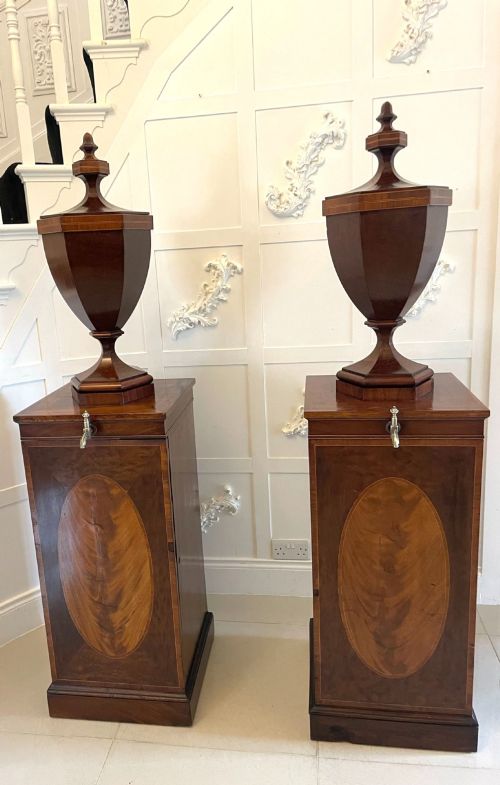
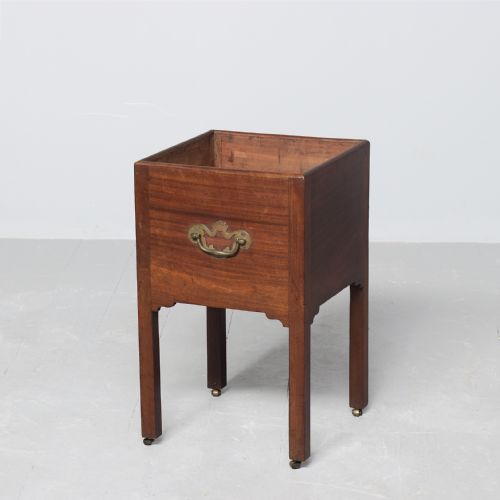
You are most likely to meet mahogany versions raised on pedestals or integrated with cupboards, often ornamented with boxwood and satinwood inlay. These forms range from freestanding champagne coolers to urns on stands and box-style cellarettes.
How they were made
Cabinet makers utilised dense hardwoods such as mahogany and walnut as the primary structural bodies, frequently incorporating burr maple and satinwood for contrasting decorative veneers. Boxwood inlay provided sharp geometric definition along panels and borders.
Metal fittings such as brass bands reinforced the timber forms, while internal compartments and linings prepared the pieces to hold ice and bottles safely during service.
Pedestal Wine Cellarette Retail Price Guide 2026
Typical asking prices for pedestal wine cellarette among the pieces listed under this phrase on Sellingantiques today, from the lower quarter to the upper quarter. They describe what is for sale here now, not the wider market.
Listings span multiple eras from seventeen-fifty through the twentieth century, dominated by mahogany and accented with brass, boxwood inlay, and satinwood.
What varies in quality
The distinction between standard and superior pieces rests on the choice of timber and the precision of the cabinet work. Finely figured mahogany and crisp, unblemished satinwood inlay elevate an object far above simpler versions.
Proportion and architectural presence dictate the visual success of the pedestal form. Pieces that retain their original stands, mounts, and interior configurations demonstrate the highest order of period craftsmanship.
Gillows
The Pedestal Wine Cellarette Glossary
- Cellarette
- A lockable container or cabinet designed for holding wine and spirits near the dining table. They frequently incorporate lead linings for ice.
- Pedestal
- A supporting column or base that elevates an urn, cupboard, or cooler. This form provides height and formal balance in dining room interiors.
- Satinwood
- A pale, lustrous timber native to India and Ceylon, prized for its golden sheen and smooth texture. It is often utilised for decorative banding and inlaid motifs.
- Teapoy
- A small stand or table equipped with internal caddies or compartments for storing tea. These occasionally share forms with compact cellarettes.
- Jardiniere
- An ornamental stand or receptacle designed to hold plants and flowers. In the context of wine storage, these forms overlap with cooler designs.
Pedestal Wine Cellarette: Frequently Asked Questions
What is a pedestal wine cellarette?
A pedestal wine cellarette is a piece of formal dining furniture designed to hold and chill wine bottles near the table. These objects typically combine a timber body with internal compartments for bottles and ice.
They appear in various architectural formats, including urns on cupboards and freestanding mahogany boxes raised on columns.
How were cellarettes used?
During formal dinners, servants used these containers to keep wine cool and secure before pouring. The lockable lids ensured that expensive vintages remained under the host's control.
Internal linings made of metal protected the timber from melting ice and moisture during service.
Where should I place one?
These pieces suit dining rooms, hallways, or living spaces where their architectural proportions can stand clear of other furniture. Their height and surface area make them practical side tables as well as focal points.
Keep them away from direct heat sources to protect the historic timber and veneer.
How do I tell periods apart?
Georgian and Regency examples rely on classical proportions, mahogany solids, and subtle boxwood or satinwood stringing. Later nineteenth-century interpretations, such as William IV pieces, often display heavier scaling and bolder carved details.
Twentieth-century revivals replicate these earlier silhouettes using traditional joinery methods.