



Pedestal Tea Caddy Table
A pedestal tea caddy table is a grand nineteenth-century box on a pillar stand that holds dry leaf and shows exquisite cabinetwork in the drawing room.
Pedestal Tea Caddy Table
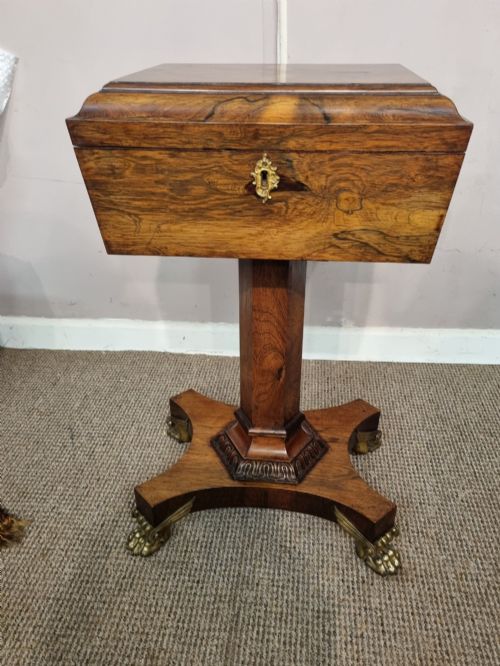
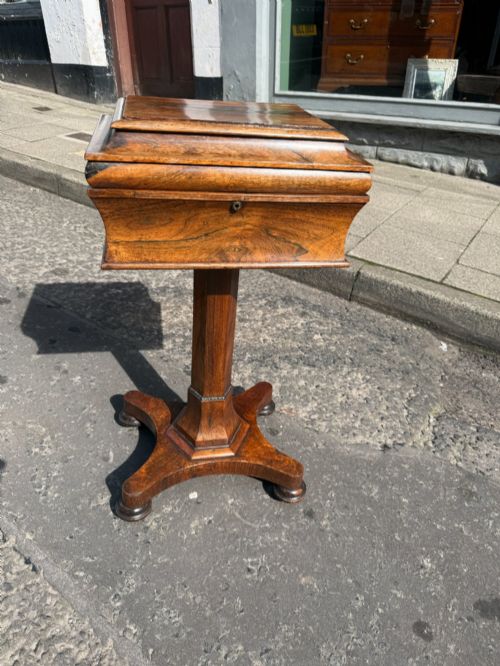
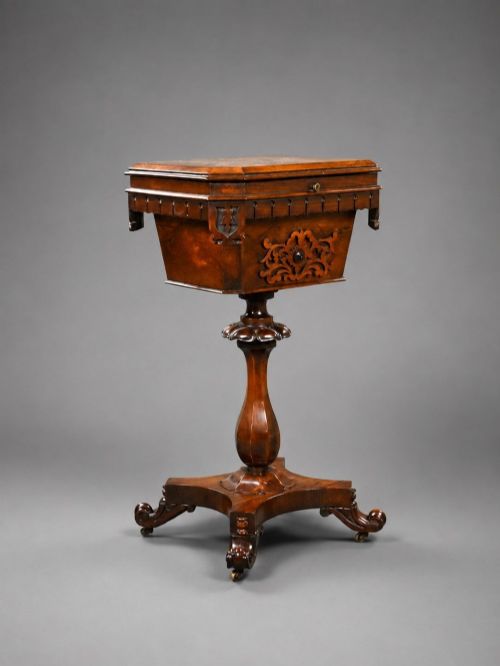
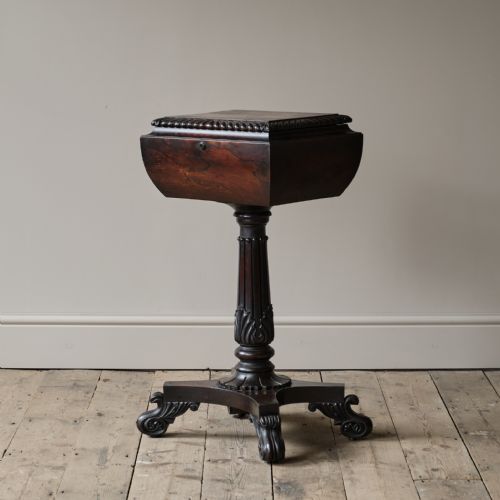
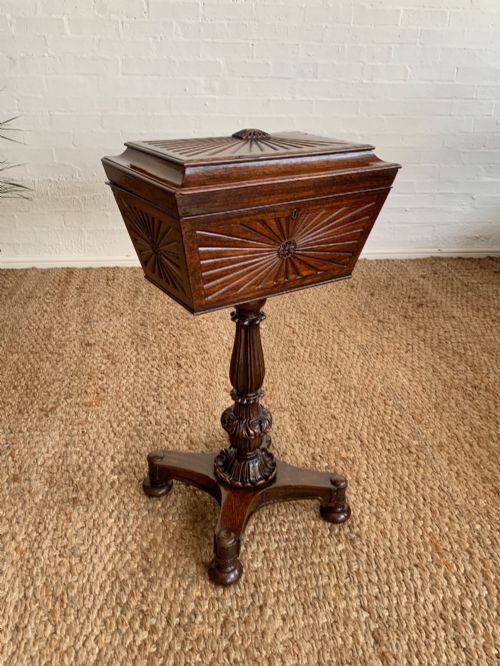
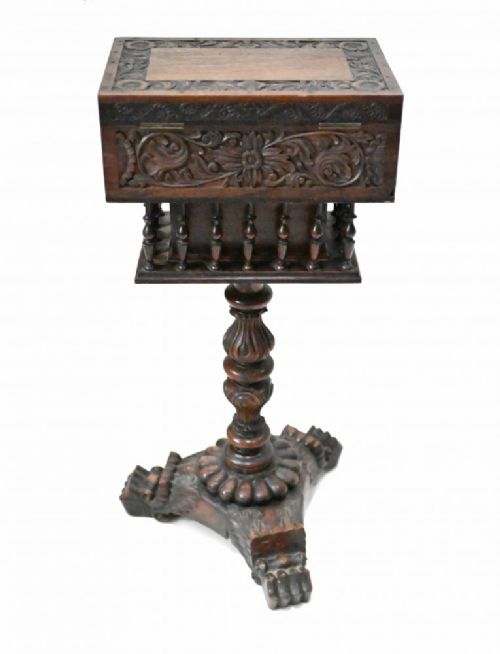
A pedestal tea caddy table, frequently recorded in the trade as a teapoy, combines a lidded storage box with a sturdy central pillar and a platform or footed base. Buyers seeking a pedestal tea caddy table will find examples dating from the Georgian, Regency, and Victorian eras, often taking the form of a sarcophagus or rectangular box mounted firmly upon a turned column.
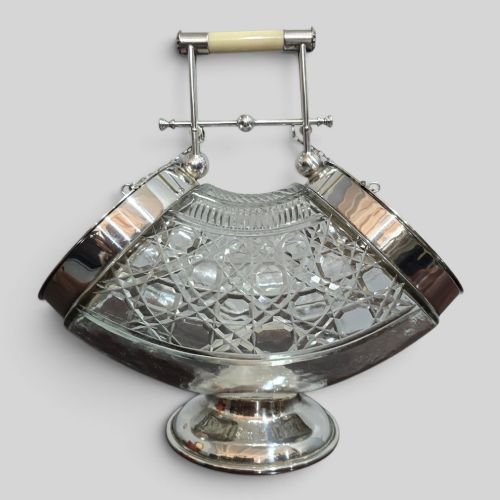
The pieces appearing here span several decades of nineteenth-century design, encompassing styles from Grand Regency and William IV to Anglo-Indian Colonial and Swedish Biedermeier. Alongside standard tea containers, the selection includes occasional tables, work tables with caddy tops, spirits tables, and biscuit barrels sharing the same structural format.
Rosewood and mahogany dominate the offerings, augmented by burr walnut, burr maple, burr elm, burr yew, and carved padouk. These woods are frequently shaped with brass inlay, sunburst carving, or elaborate pedestals set upon four carved feet.
Materials and construction methods
Cabinetmakers constructed these pieces using dense tropical hardwoods such as rosewood and mahogany as the primary carcase materials, often applying decorative veneers like burr walnut, burr maple, and burr yew to the prominent surfaces. Solid timbers were carved into intricate pillars, pedestal bases, and ornamental feet.
Master workshops incorporated brass inlay, hobnail cutting on glass components, and silver plate alongside carved details like sunburst motifs. Interiors were engineered to hold dry leaf or decanters, frequently utilising fitted compartments within the main box.
Pedestal Tea Caddy Table Retail Price Guide 2026
Typical asking prices for pedestal tea caddy table among the pieces listed under this phrase on Sellingantiques today, from the lower quarter to the upper quarter. They describe what is for sale here now, not the wider market.
Listings feature pieces spanning the nineteenth century, including Georgian, Regency, William IV, and Victorian periods.
Distinctions in quality
The standard of a pedestal tea caddy table rests upon the choice of timber and the precision of the cabinetwork. Heavily figured veneers like burr walnut and flame mahogany, combined with crisp carving on the pedestal and feet, separate standard items from exceptional workshop productions.
Attribution to known makers such as Gillows elevates an item through documented craftsmanship and superior joinery. The complexity of the interior fittings, the inclusion of brass inlay, and the integration of the box onto its central column also define the upper tier.
Gillows
The Pedestal Tea Caddy Table Glossary
- Teapoy
- A pedestal table featuring a lidded box for storing dry leaf, originating during the nineteenth century. This term is frequently used interchangeably with tea poy.
- Sarcophagus
- A box shape characterised by a domed or stepped lid and sloping sides, commonly utilised on Regency examples. It echoes classical stone monuments popular in the period.
- Padouk
- A heavy, durable tropical timber native to Asia and Africa, seen in Anglo-Indian colonial furniture. Its dense grain permitted deep, crisp carving.
- Biedermeier
- A Central European style emphasising clean lines and rich wood grains, represented here through Swedish burr elm examples. It reflects domestic comfort during the nineteenth century.
- Hobnail cut
- A sharp, geometric glass-cutting pattern producing diamond points, found on biscuit barrels associated with these listings. This technique catches the light across the glass surface.
Pedestal Tea Caddy Table: Frequently Asked Questions
What is a teapoy?
A teapoy is a lidded box mounted on a central pedestal designed to hold dry leaf and brewing apparatus in the parlour.
These pieces served a practical function in nineteenth-century households where dry leaf was kept locked away from servants and guests.
How do I date a pedestal tea caddy table?
Dating relies upon observing the timber, the shape of the box, and the style of the pedestal column. Regency pieces often display brass inlay and sarcophagus forms, while later Victorian examples utilise burr walnut and heavier proportions.
Makers' stamps or specific regional characteristics, such as Scottish mahogany or Anglo-Indian padouk carving, also help narrow the period.
Can I use these tables as ordinary occasional furniture?
Many of these pieces function effectively as lamp tables or occasional stands in modern rooms, combining surface space with enclosed storage.
Interior compartments originally built for dry leaf now accommodate small personal items or collection displays.
What woods were used for these tables?
Cabinetmakers primarily utilised dense hardwoods including rosewood and mahogany, often embellished with decorative veneers like burr walnut, burr maple, burr elm, and burr yew.
Colonial workshops additionally employed carved padouk, while structural elements frequently incorporated brass and glass.