
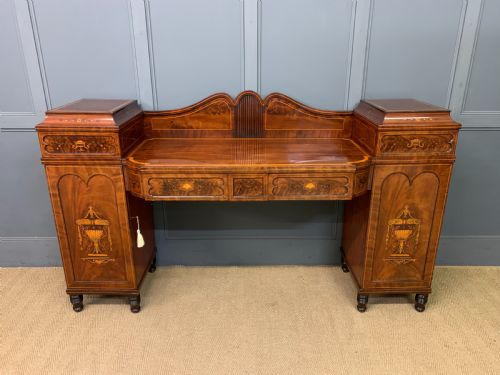


Pedestal Style Mahogany Buffet
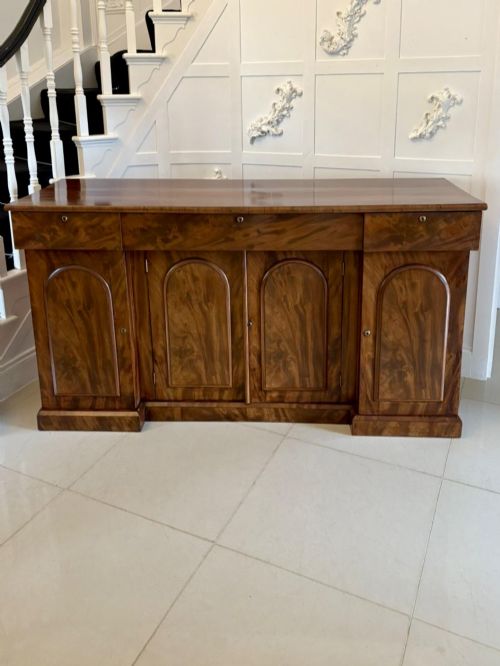
These pedestal style mahogany buffet pieces are substantial dining room furniture items that bring classic proportion and rich timber figure to an interior.
Pedestal Style Mahogany Buffet
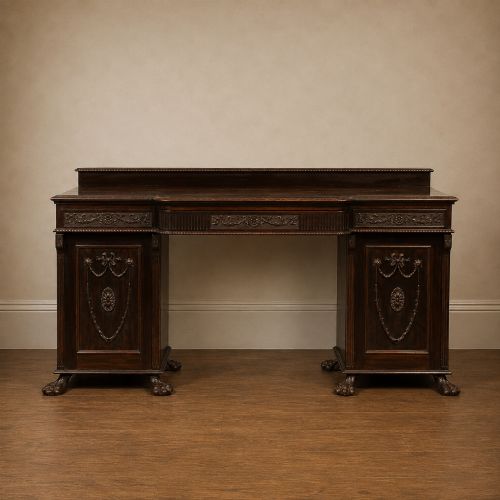
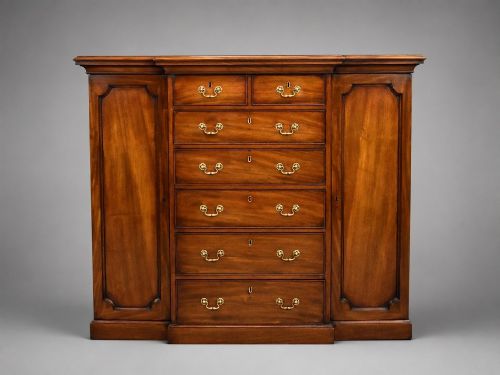
When you search for a pedestal style mahogany buffet, you encounter large dining room serving pieces that originate predominantly from the nineteenth century and the Georgian era. These substantial items provide extensive surface space for serving food and deep cupboards contained within flanking pedestals or breakfront bodies.
The versions you are most likely to meet on this page span the William IV, Victorian, and Edwardian periods, alongside revival interpretations of earlier Georgian and Regency designs. They utilise robust forms such as bow fronts and breakfronts, often incorporating inlaid decoration alongside carved wooden details.
How they were made
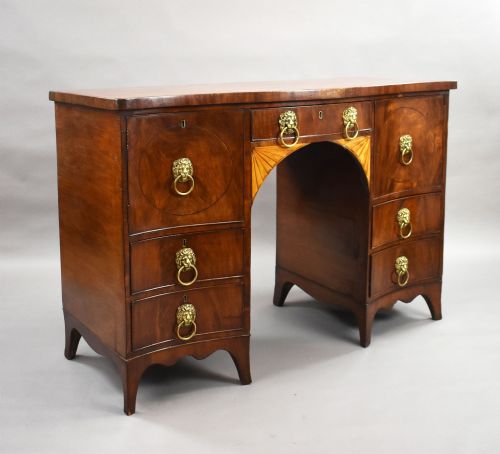
Cabinet makers constructed these sideboards using solid timber carcases overlaid with figured veneers such as flame mahogany to create striking grain patterns across the primary surfaces. Workshops applied contrasting stringing and banding in satinwood, boxwood, and other light woods to accentuate the structural lines.
Makers integrated cast brass hardware, including handles and drawer pulls, alongside carved wooden elements like paw feet to punctuate the dark timber body. Construction methods relied on traditional joinery to support the substantial weight of the dense tropical hardwood.
The listings feature mahogany alongside decorative stringing in satinwood and boxwood.
What varies in quality
The grade of timber selection dictates the visual impact of the piece, with carefully matched flame veneers commanding greater presence than plain stock. Workshops applied precise wood inlay and crisp carving that remained sharp and well-defined across the mouldings and feet.
Proportion and architectural balance separate standard production from master craftsmanship, particularly in how pedestals integrate with the central serving surface. Interior construction quality, including the timber thickness used for drawer linings and carcase backs, determines the durability of the furniture.
Gillows·Goodall of Manchester
The Pedestal Style Mahogany Buffet Glossary
- Pedestal sideboard
- A dining room storage piece featuring two substantial side pedestals flanking a central section or recessed table. These designs emerged during the late eighteenth century and remained popular through the Victorian era.
- Flame mahogany
- A veneer cut from timber where the grain creates a flamy, flickering pattern across the surface. This figuring is prized for its decorative movement.
- Breakfront
- A cabinet or sideboard whose central section projects forward from the flanking wings. This architectural arrangement creates depth and shadow on the front elevation.
- Stringing
- Thin inlaid lines of contrasting light wood used to outline drawers, panels, and borders. It provides a crisp linear definition against dark mahogany.
- Bow front
- A convex curved front facade that softens the rectangular geometry of the furniture. This shape requires skilled woodworking to bend and fit the timber accurately.
Pedestal Style Mahogany Buffet: Frequently Asked Questions
How do I date a mahogany sideboard?
Dating relies on examining the timber construction, secondary woods used in the carcase interiors, and stylistic cues such as carved bracket feet or brass handle types. Cabinet making techniques evolved from eighteenth-century hand-cut joints towards more mechanised production methods by the Edwardian period.
Hardware styles and veneer thickness also shift across eras, moving from solid timber and subtle stringing towards heavier figured mahogany veneers and revival ornamentation.
Where should I place a pedestal sideboard?
These large pieces require substantial wall space within a dining room or wide hallway to accommodate their deep proportions and flanking pedestals. They function effectively as serving surfaces during meals or as focal storage points displaying silver and ceramics.
Positioning them away from direct sunlight and heat sources protects the mahogany veneer and polish from fading or drying out over time.
What is the difference between Georgian and Victorian sideboards?
Georgian examples often display restrained classical proportions, subtle satinwood inlay, and lighter structural frames derived from Adam or Sheraton design vocabulary. They prioritize refined elegance and delicate detailing over sheer bulk.
Victorian and William IV pieces tend to be heavier and more imposing, featuring deep flame mahogany veneers, robust carved scrollwork, and prominent architectural feet.
How do I care for antique mahogany furniture?
Maintenance involves dusting with a soft, dry cloth and occasionally applying traditional beeswax to nourish the timber and protect the polish finish. Avoid using silicone-based sprays or placing the wood in damp environments.
Maintaining stable room humidity prevents the timber and underlying veneers from shrinking, expanding, or cracking across the large flat surfaces.