
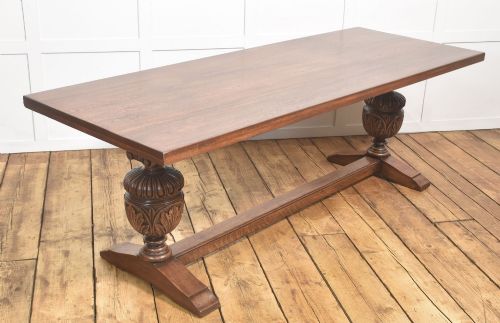
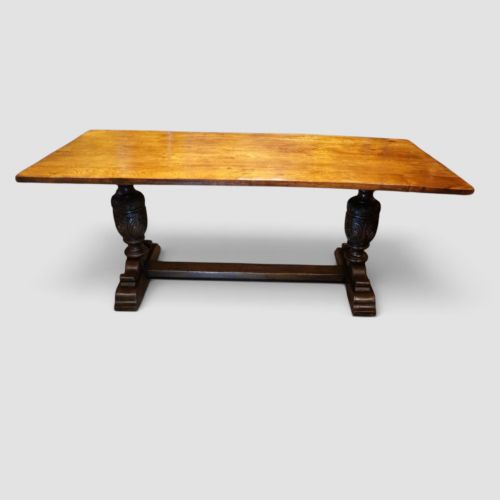
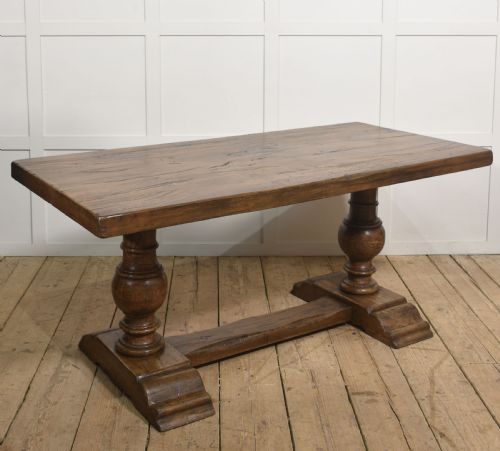


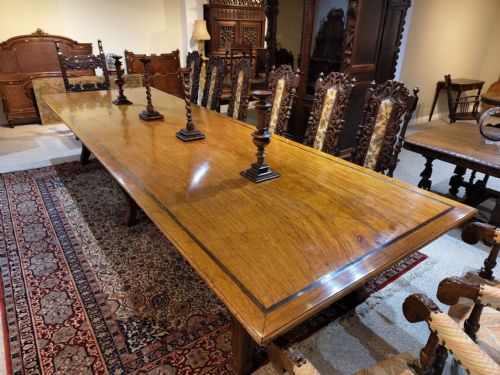
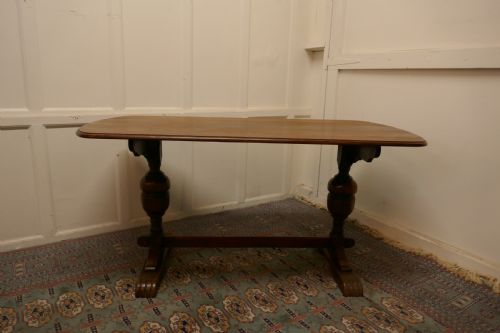


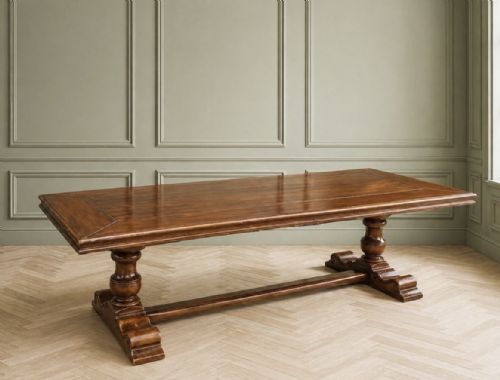
Pedestal Refectory Table
These pedestal refectory table examples bring substantial dining surfaces and historic timber into the room with genuine presence.
Pedestal Refectory Table
A pedestal refectory table provides a long, communal surface historically suited for dining halls and large kitchens. When exploring a pedestal refectory table, buyers encounter substantial dining tables and console tables designed for daily gathering.
The selection ranges from early Victorian and Edwardian examples to pieces from the nineteen-thirties. Formats span from rustic farmhouse and Jacobean revival styles to French provincial and Italian country influences.
Oak dominates the forms, appearing alongside walnut, pine, and timber. Occasional iterations combine timber tops with cast iron or brass elements for structural support.
Markers of quality
The distinction between standard examples and superior pieces rests on the choice of timber and the integrity of the joinery. Solid oak and figured walnut provide a depth of grain and structural longevity that lesser pine or general timber compositions lack.
Execution of carved details and the stability of extension mechanisms, such as draw leaf systems, separate utilitarian workshop output from refined craftsmanship. Cohesion of style, whether leaning towards Jacobean revival or French provincial, indicates the maker's discipline.
Ships tables in the selection remind us that some sturdy oak dining tops spent their earlier decades keeping plates steady during heavy seas.
The Pedestal Refectory Table Glossary
- Refectory table
- A long dining table originally built for monastic or communal dining halls. These pieces typically feature elongated proportions supported by trestles, pedestals, or robust legs.
- Draw leaf table
- A dining table equipped with pull-out leaves stored beneath the main surface. This mechanism allows the table length to increase quickly without removing the central top.
- Jacobean revival
- A decorative style popular in the nineteenth and twentieth centuries that imitates seventeenth-century English furniture. It is characterised by dark oak, geometric moulding, and heavy turned supports.
- Trestle table
- A table consisting of two or more support frames connected by a longitudinal beam. This design maximises legroom along the length of the surface.
Pedestal Refectory Table: Frequently Asked Questions
How do I care for an antique oak table?
Maintain timber surfaces by applying natural beeswax periodically to nourish the grain and protect against moisture. Avoid placing wooden dining furniture near direct heat sources or strong sunlight to prevent splitting.
Use coasters and placemats during daily meals to safeguard the historic finish from heat rings and liquid spills. Wipe surfaces clean with a dry or barely damp soft cloth.
What is a draw leaf mechanism?
A draw leaf mechanism conceals two extension leaves beneath the main table top. Users pull these leaves outward from each end to instantly expand the surface area for dining.
This clever engineering eliminates the need to store separate table leaves away from the furniture. It remains a practical feature found on several twentieth-century dining tables.
How do I identify a Jacobean revival piece?
Jacobean revival furniture imitates the heavy, dark oak aesthetic of seventeenth-century England. Look for deep geometric carvings, strapwork patterns, and substantial turned pedestals.
These pieces were frequently produced during the Victorian and Edwardian eras to satisfy a renewed interest in historic domestic design. The timber is typically dark-stained oak with a robust physical presence.
Are these tables suitable for modern kitchens?
These large dining tables integrate well into contemporary spaces by providing a grounded, tactile centrepiece for daily family life. Pine and oak variations offer durable surfaces suited for kitchen dining and meal preparation.
Consider the room dimensions and chair clearance carefully before selecting a lengthy pedestal or trestle format. Many examples accommodate varying seating arrangements due to their open underframe designs.