

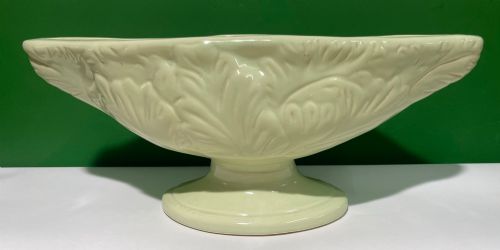

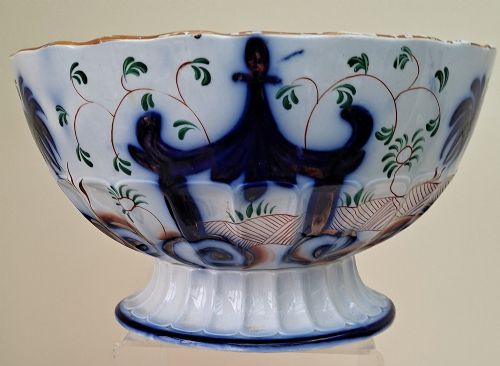
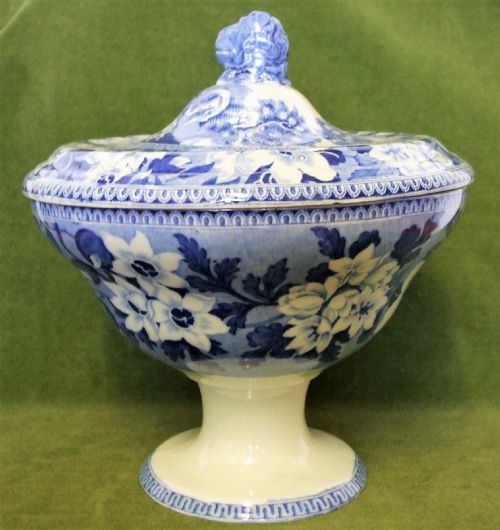


Pedestal Pottery Bowl
These pedestal pottery bowl examples range across centuries of ceramic artistry, offering striking elevated forms that anchor a room.
Pedestal Pottery Bowl
A pedestal pottery bowl elevates its form on a raised base, creating a distinct display piece for a table or sideboard. These items appear in various historical periods from the Georgian era through to the early twentieth century.
The selections on this page include footed bowls, comports, centrepiece bowls, and tureens. These elevated vessels serve decorative and functional purposes within domestic interiors.
Makers and potteries from the nineteenth and early twentieth centuries produced these elevated forms in earthenware, ironstone, and pearlware. Styles span from traditional blue and white transferware to Art Nouveau and Art Deco designs.
Materials and construction methods
Potters utilised durable earthenware, ironstone, and pearlware bodies to form the structure of each pedestal bowl and comport. These clay compositions provided a sturdy foundation capable of supporting raised footed designs.
Glazes and enamel colours applied to the ceramic surface created decorative patterns, including cobalt blue transfer prints and hand-painted motifs. Firing techniques fixed these pigments permanently to the pottery.
Pedestal Pottery Bowl Retail Price Guide 2026
Typical asking prices for pedestal pottery bowl among the pieces listed under this phrase on Sellingantiques today, from the lower quarter to the upper quarter. They describe what is for sale here now, not the wider market.
Listings feature earthenware, ironstone, and pearlware materials across periods from the late eighteenth century to the 1930s.
Assessing quality in historical ceramics
The clarity of transfer-printed patterns and the precision of hand-painted enamel details distinguish finer examples from standard production pieces. Rich cobalt glazes and well-defined mouldings reflect higher skill in the pottery workshop.
The crispness of the pedestal base and the balanced proportions of the bowl indicate the maker's expertise in shaping and firing elevated ceramic forms.
John Rogers & Son·Ridgway·Ulisse Cantagalli·Maling·Masons Ironstone·Eichwald·Moorcroft
The Pedestal Pottery Bowl Glossary
- Comport
- A raised dish or bowl used for serving fruit or sweets at the table. These elevated vessels often match larger dinner services.
- Ironstone
- A type of heavy, durable earthenware patented in the nineteenth century. This ceramic material resists chipping and provides a strong base for intricate decoration.
- Pearlware
- A refined form of earthenware developed in the late eighteenth century featuring a subtle bluish glaze. It bridged the gap between creamware and later white ironstone bodies.
- Transferware
- Pottery decorated by applying a printed design from an engraved copper plate onto the ceramic surface. This technique allowed for detailed pictorial scenes like blue and white landscapes.
- Majolica
- A type of earthenware coated in an opaque tin glaze and painted with coloured metal oxide pigments. This technique produced vibrant, glossy finishes popular during the Victorian period.
Pedestal Pottery Bowl: Frequently Asked Questions
What is a pedestal pottery bowl used for?
These elevated vessels primarily served as centrepieces on dining tables for displaying fruit, flowers, or sweetmeats. Their raised stature added height and visual interest to formal table settings.
In contemporary settings, they function effectively as standalone decorative objects on sideboards or mantelpieces. Their deep basins also make them practical containers for holding seasonal items.
How do I date an antique footed bowl?
Dating relies on examining the ceramic body, glaze characteristics, and any makers' marks stamped or printed on the base. Lighter pearlware bodies generally point towards the late eighteenth or early nineteenth century.
Later Victorian and twentieth-century examples often feature distinct style markers such as Art Nouveau floral motifs or Art Deco geometric patterns. Comparing stylistic details with known factory periods helps narrow down the origin.
What is the difference between a comport and a pedestal bowl?
A comport typically refers to an elevated dish specifically intended for serving fruit or dessert courses during formal meals. They often feature a shallower basin supported by a distinct stem and foot.
Pedestal bowls encompass a broader category of elevated vessels that may have deeper bowls suited for centrepiece displays or tureens with matching covers. Both share the characteristic raised base that defines this group of ceramics.
How should I care for antique pottery bowls?
Antique ceramics require gentle handling and should be washed by hand in lukewarm water using mild soap when necessary. Avoid harsh scrubbing or abrasive materials that could damage historical glazes and enamels.
Keeping them away from direct sunlight and extreme temperature fluctuations helps preserve the integrity of the ceramic body and surface decoration over time.