

Pedestal Gaming Table
A pedestal gaming table brings tactile play and clever fold-over mechanics into a room, combining fine cabinet-making with the social rituals of nineteenth-century card and board games.
Pedestal Gaming Table
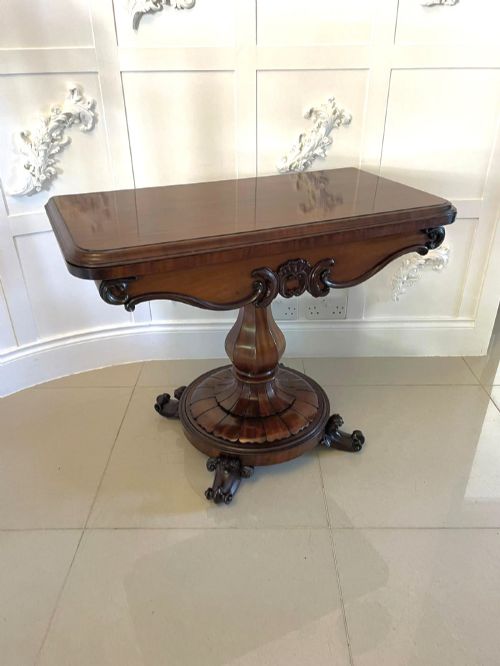
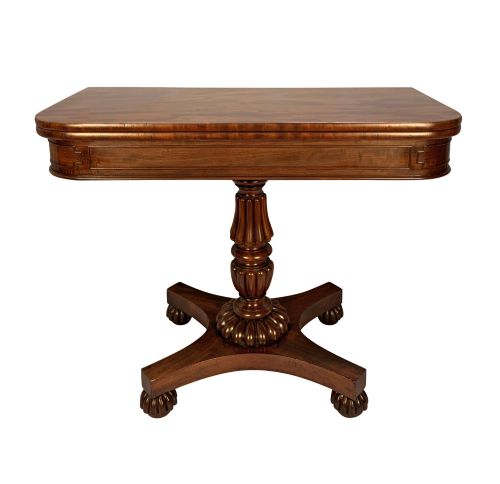
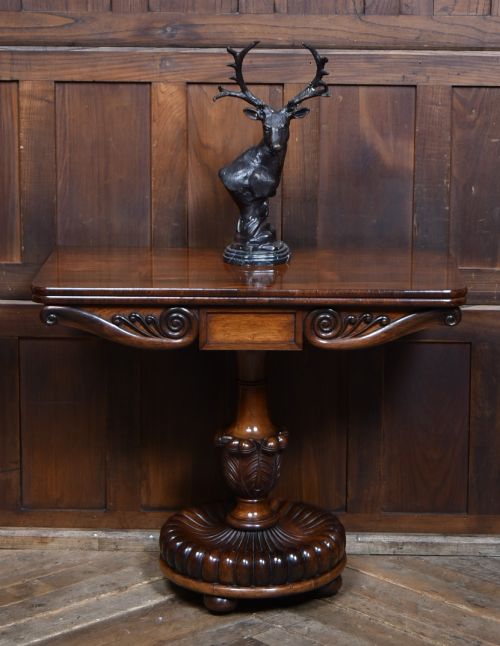
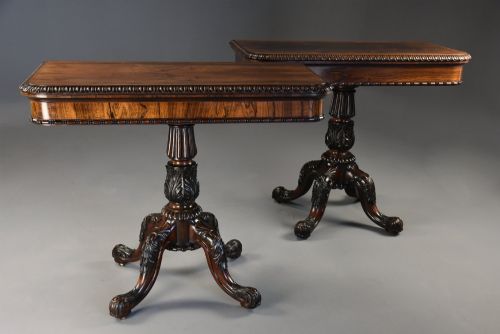
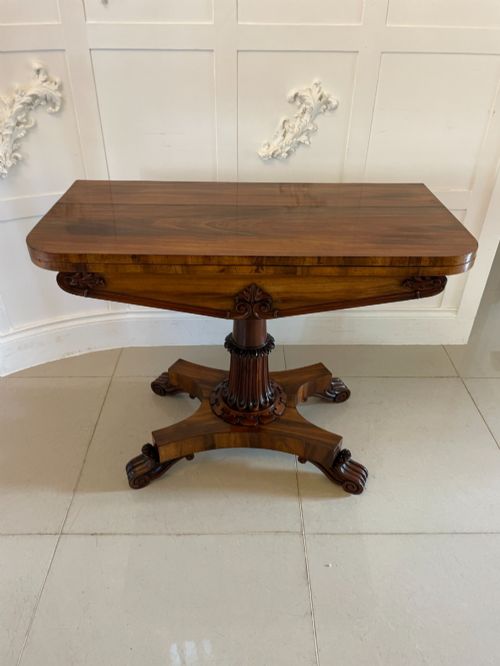
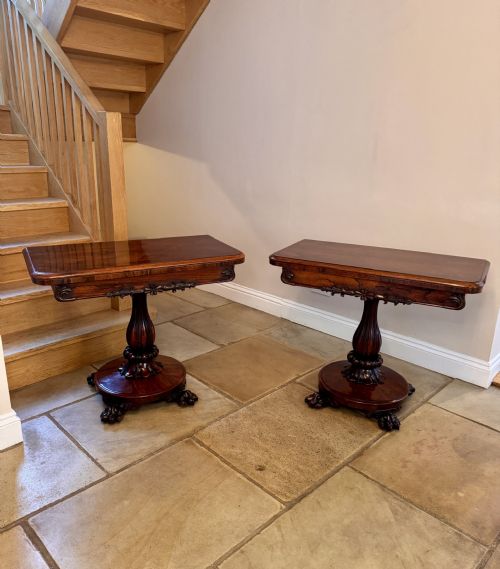
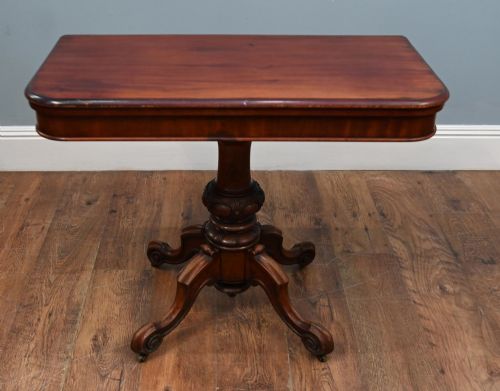
A pedestal gaming table is typically encountered as a card or games table supported by a central column and a stable platform or carved base. The pieces on this page span the Georgian, Regency, William IV, and Victorian periods, showcasing forms designed to sit neatly against a wall when closed.
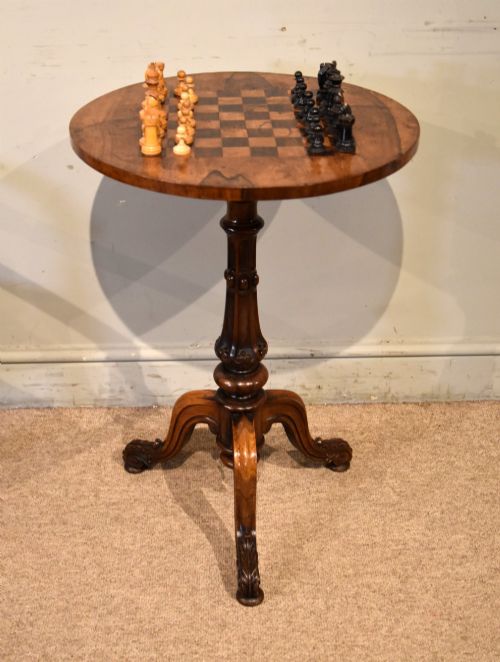
Most examples function as dual-purpose furniture, featuring turnover or fold-over tops that open to reveal baize-lined playing surfaces for cards, chess, or patience. Alongside traditional card tables, the selection includes side tables, tea tables, and console tables that share the same central pedestal construction.
Originating predominantly from nineteenth-century English workshops, these tables reflect the shifting domestic fashions of the era. Makers utilised rich timbers to ensure the furniture looked equally appropriate as a side table during the day and a gaming surface by evening light.
Materials and construction
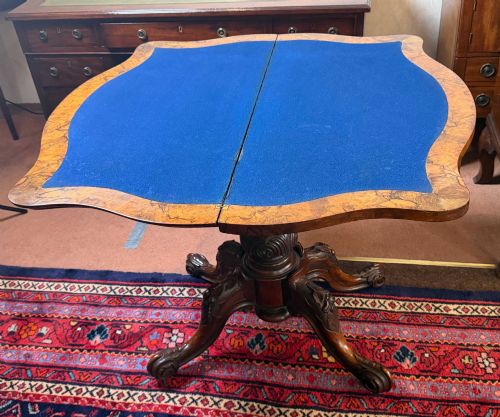
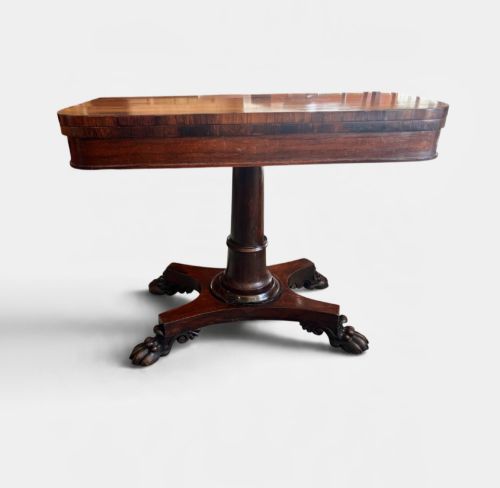
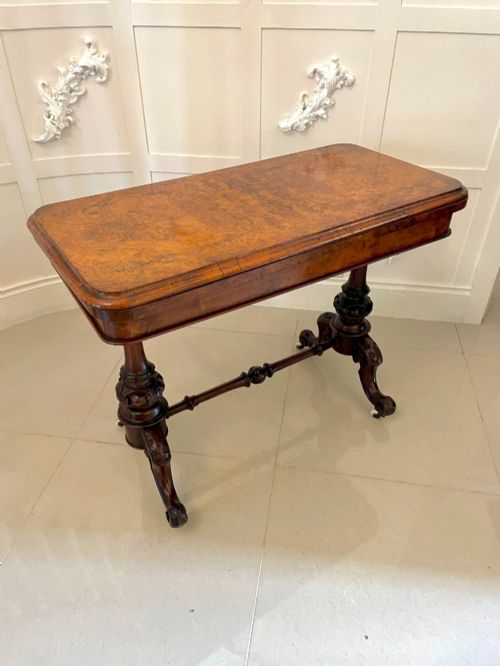
Cabinet-makers relied heavily on dense tropical hardwoods, choosing rosewood, mahogany, and walnut for their stability and deep natural grain. Burr walnut and burr yew wood veneers provided striking figured patterns across the fold-over tops, whilst satinwood and olive veneers offered lighter contrasts for specialised gaming boards.
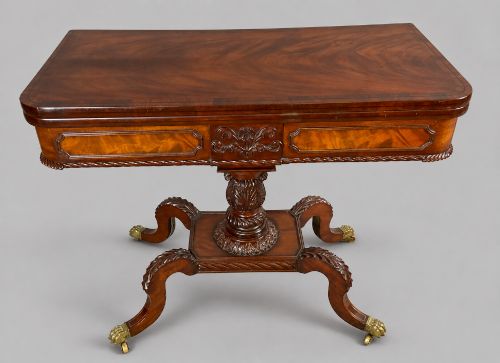
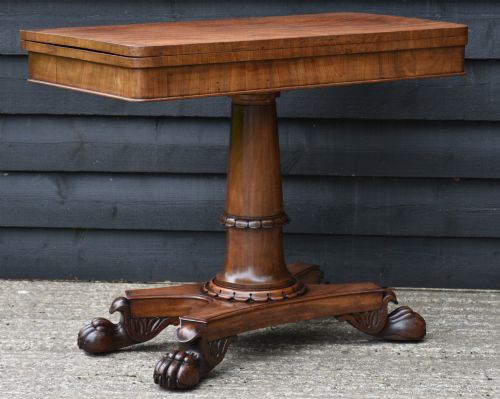
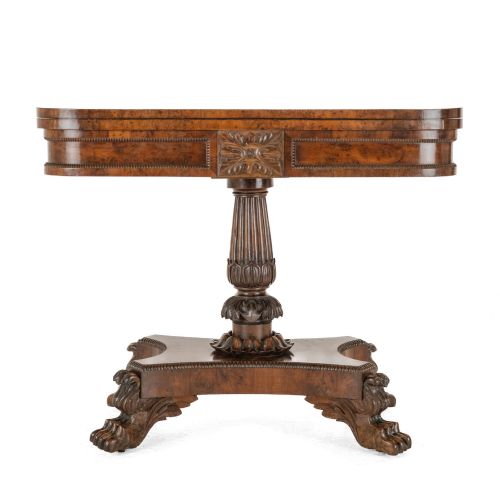
Brass inlay and delicate wood stringing frequently embellished the friezes and tops of Regency and Georgian examples, reflecting precise hand-cutting techniques. Structural support came from robust central pillars, often mounted on tripartite or quadrupartite platforms fitted with carved paw feet or concealed castors.
Baize served as the standard textile lining for the interior playing surfaces, glued directly to the wood substrate to provide a soft, tactile surface for handling cards and counters. Fold-over mechanisms relied on clever pivot hinges and wooden support gates that swung outward to bear the weight of the open leaf.
Pedestal Gaming Table Retail Price Guide 2026
Typical asking prices for pedestal gaming table among the pieces listed under this phrase on Sellingantiques today, from the lower quarter to the upper quarter. They describe what is for sale here now, not the wider market.
Judging quality
The distinction between standard production and top-tier craftsmanship lies in the selection of timber veneers and the crispness of the carved details. Superior examples display perfectly matched flame mahogany or symmetrical burr walnut figures that flow seamlessly across the fold when closed.
Carving on the pedestal base and collar reveals the hand of a skilled artisan, showing sharp, deep relief rather than soft, mechanical moulding. Furthermore, the precision of the brass inlay work and the smooth operation of the pivoting top distinguish workshop output from mass-produced furniture.
George Bullock·Gillows
The Pedestal Gaming Table Glossary
- Turnover top
- A hinged table top that folds open to double the surface area for gaming or dining. This mechanism often conceals a shallow compartment underneath for storing cards and counters.
- Baize
- A coarse woollen fabric, traditionally green, used to line the interior playing surfaces of card and games tables. It provides a soft, non-slip texture that dampens the sound of dice and protects wooden counters.
- Console table
- A table designed to be fixed or placed flat against a wall, frequently serving as a side table when not in use for games. Many pedestal examples feature this form.
- Veneer
- A thin layer of figured wood applied to a secondary timber base to create decorative surfaces. Cabinet-makers used rosewood, walnut, and satinwood veneers to achieve rich visual patterns.
- Tripod table
- A table supported by a central pillar resting on three feet. This construction allows maximum legroom for seated players.
Pedestal Gaming Table: Frequently Asked Questions
How do I use a fold-over card table?
To open the table, lift the hinged top and rotate it ninety degrees on its central pivot so it rests squarely over the frame. The underlying wooden gate or swing-out leg then moves into position to support the unfolded leaf.
Once secured, the baize-lined surface is ready for play. When closing the table, reverse the steps carefully to avoid straining the pivot hinge.
What games were played on these tables?
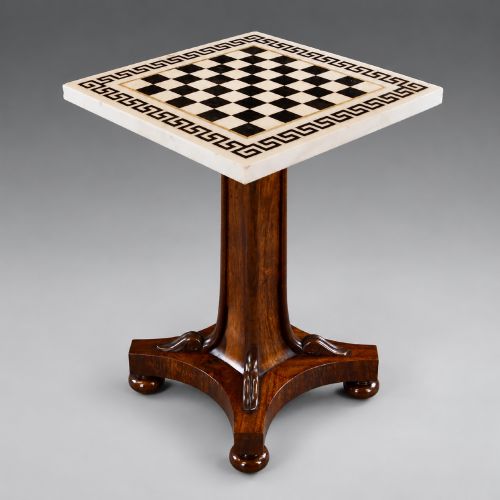
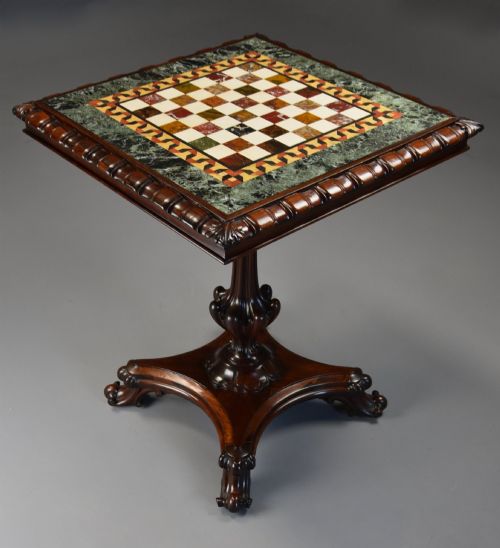
These tables accommodated a wide variety of parlor pastimes popular in the Georgian and Victorian eras, including whist, quadrille, and backgammon. Some specific tops featured inlaid chess or checker boards directly into the wood.
Others included specialised layouts for patience or card storage compartments beneath the folding leaf.
How do I date a pedestal gaming table?
Dating relies on observing the prevailing styles of the woodwork, hardware, and pedestal design. Regency and Georgian tables often feature brass inlay and rosewood veneers, whilst later Victorian examples frequently showcase heavy burr walnut and elaborate carved basket bases.
Secondary woods and construction methods underneath the frame also offer strong clues to the decade of manufacture.
How do I care for antique wood and baize?
Keep the timber away from direct sunlight and steady heat sources to prevent the veneers from drying out or splitting. Dust the carved pedestal and polished surfaces regularly with a dry, soft cloth.
Protect the baize lining from moisture and heavy pressure, brushing it gently if necessary to remove dust.