

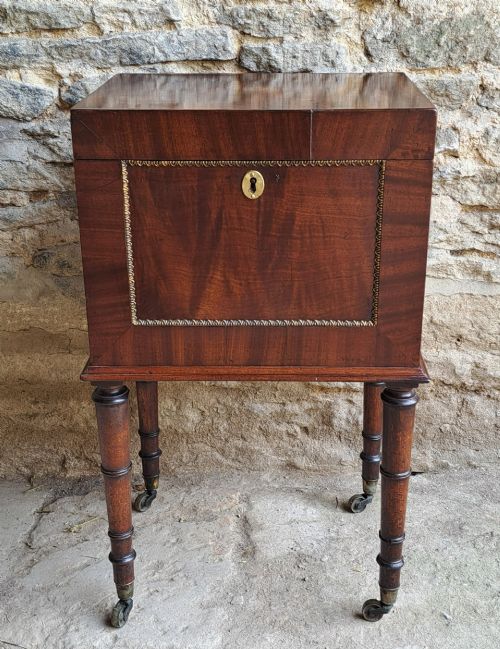
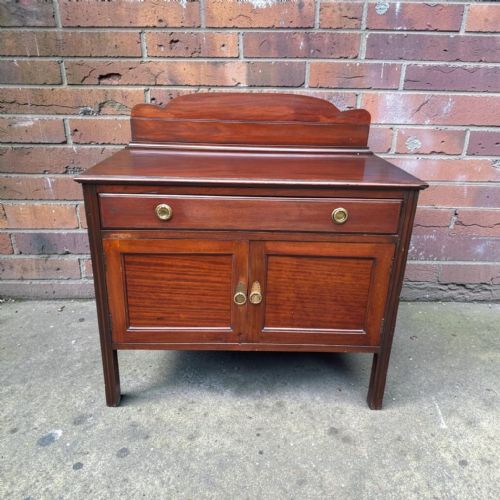
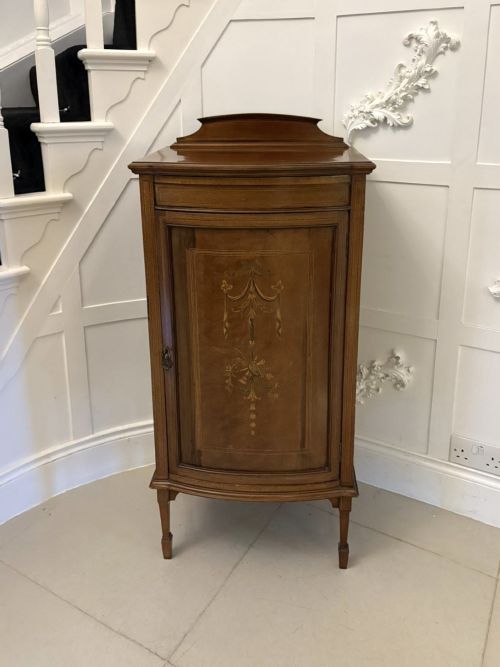
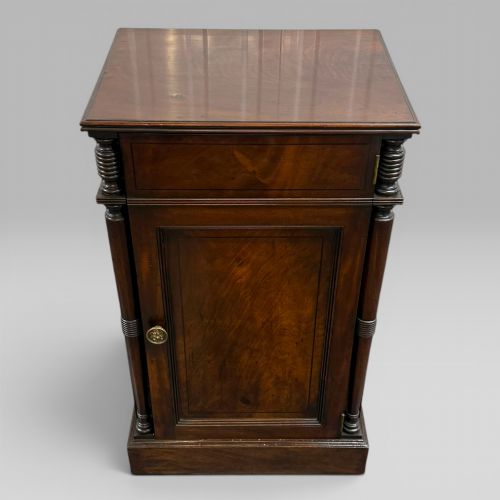


Pedestal Drinks Cabinet
A pedestal drinks cabinet brings serious presence to a room, offering clever storage for bottles and glassware rooted in centuries of cabinet-making.
Pedestal Drinks Cabinet
A pedestal drinks cabinet combines upright storage with the compact footprint of a pillar or column base, drawing on forms seen in wine coolers, cellarets, and side cabinets. These pieces serve as functional furniture for entertaining, designed to keep bottles and glasses secure and close to hand in a dining room or drawing room.
You are most likely to meet mahogany examples spanning the Georgian, Regency, and Victorian periods, alongside Edwardian and Art Deco interpretations. These range from figured mahogany chiffoniers and bow-fronted side cabinets to specialised plate-warmer pedestals and oak champagne tables.
The lineage of these items stretches from early nineteenth-century wine coolers and cellarettes through to later side cabinets and occasional tables adapted for hospitality. Each era brings distinct proportions and timber choices, anchoring the form firmly within traditional British domestic interiors.
Materials and construction methods
Makers relied heavily on solid mahogany and mahogany veneer, often selecting highly figured grains to create striking visual depth across door panels and drawer fronts. Walnut, oak, and satinwood inlay appear across specific pieces, providing contrasting tones and ornamental detailing.
Metal mounts in brass and ormolu add structural definition and decorative accent, frequently appearing on Regency and nineteenth-century designs. Glass and mirror tops feature on later Art Deco pieces, reflecting light and offering durable surfaces for serving drinks.
Pedestal Drinks Cabinet Retail Price Guide 2026
Typical asking prices for pedestal drinks cabinet among the pieces listed under this phrase on Sellingantiques today, from the lower quarter to the upper quarter. They describe what is for sale here now, not the wider market.
Some nineteenth-century pedestals doubled as plate-warmers, keeping the silver warm before it reached the dining table.
Distinctions in craftsmanship
The refinement of the timber selection dictates much of the visual success, separating pieces with richly figured grain patterns from those with plain or uniform surfaces. Superior examples display thoughtful matching of veneers across prominent panels and careful integration of satinwood inlay.
The quality of hardware and metalwork reveals the original ambition of the piece, where crisply cast ormolu mounts and substantial brass fittings elevate the overall design. Proportion and scale also govern the hierarchy, with unusually compact or harmonious dimensions commanding greater regard among traditional forms.
Gillows
The Pedestal Drinks Cabinet Glossary
- Cellaret
- A lockable container or cabinet designed specifically for holding bottles of wine and spirits securely. They frequently take pedestal or sarcophagus forms in nineteenth-century dining rooms.
- Chiffonier
- A low sideboard or cabinet featuring enclosed cupboards below, often topped with a shelf or raised back. This form provides versatile storage for dining accessories and glassware.
- Ormolu
- Gilded bronze or metal mounts applied to furniture for decorative contrast. It is commonly found on Regency and nineteenth-century pieces to highlight architectural lines.
- Satinwood inlay
- Contrasting light wood inserted into a darker primary timber to form geometric or floral patterns. This technique adds delicate ornamentation to cabinet fronts and borders.
- Bow front
- A convex, curved front elevation that softens the angles of a cabinet. It is a defining feature of several formal side cabinets and sideboards.
Pedestal Drinks Cabinet: Frequently Asked Questions
What is a pedestal drinks cabinet?
A pedestal drinks cabinet is a specialised storage piece designed to hold bottles, decanters, and glassware within a compact, column-supported or cabinet structure.
These items descend from historical wine coolers, cellarettes, and side cabinets used in dining and entertaining spaces.
How were these cabinets used historically?
They were positioned in dining rooms and drawing rooms to keep wine, spirits, and serving equipment close to the dining table during meals.
Locks ensured valuable spirits and wines remained secure when the room was unattended by servants.
How do I date a mahogany cabinet?
Dating relies on identifying timber characteristics, construction methods, and stylistic cues such as Georgian proportions or Regency ormolu mounts.
Secondary woods and the style of internal fittings also provide clear indicators of the period of manufacture.
Where should I place one at home?
These cabinets suit dining rooms, living spaces, or studies where they can function as traditional side storage or a dedicated cocktail station.
Their compact pedestal footprints allow them to fit into corners or wall spaces where standard sideboards prove too wide.