

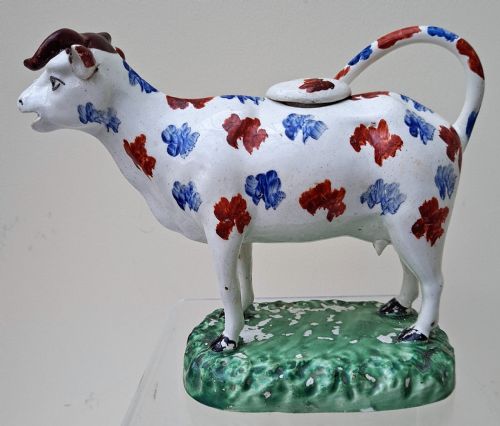


Pearlware Pottery Jug
These pearlware pottery jugs bring tangible Georgian and Regency character to a room, valued for their distinctive glazes and narrative transfer prints.
Pearlware Pottery Jug
A pearlware pottery jug embodies the domestic pottery of the Georgian and Regency periods, spanning the late eighteenth and early nineteenth centuries. When you search for pearlware pottery jug, you encounter functional vessels ranging from capacious maritime jugs to small creamers and character jugs.
The pieces listed on this page showcase forms such as cow creamers, Toby jugs, and large pitchers with poetic panels or transfer-printed decoration. English and Welsh folk art traditions heavily influence these forms, presenting robust shapes intended for everyday use in past centuries.
Materials and construction
Potters built these vessels using earthenware and pearlware ceramic bodies, applying a subtle bluish-tinted glaze over a whitish slip to mimic Chinese porcelain. Artisans then decorated the surfaces with purple transfer printing and metallic lustre glazes.
Techniques such as hand-modelling appear strongly in figural pieces like cow creamers and Toby jugs, whilst larger vessels utilise thrown bodies combined with applied handles and spouts before firing.
Pearlware Pottery Jug Retail Price Guide 2026
Typical asking prices for pearlware pottery jug among the pieces listed under this phrase on Sellingantiques today, from the lower quarter to the upper quarter. They describe what is for sale here now, not the wider market.
The listings on this page span the Georgian and Regency periods, featuring earthenware and pearlware materials finished with metallic lustre and transfer printing.
Assessing quality and execution
The artistic expression found in folk art examples determines their standing within the range, where confident modelling and balanced proportions separate standard production from more expressive works.
The Pearlware Pottery Jug Glossary
- Pearlware
- A refined earthenware developed in the late eighteenth century featuring a thin glaze that pooled with a faint blueish tinge in crevices. It succeeded creamware by offering a whiter ground for painted and printed decoration.
- Metallic Lustre Glaze
- A surface treatment incorporating metallic oxides that created a reflective, metallic sheen upon firing. Potters frequently applied pink or purple lustre to highlight rims and decorative panels.
- Transfer Printing
- A method of applying detailed designs to ceramics by transferring engraved impressions from a copper plate via tissue paper. This technique allowed consistent reproduction of complex maritime scenes and poetic verses.
- Toby Jug
- A pottery jug modelled in the shape of a seated, stout eighteenth-century person holding a mug of beer or a pipe. These characterful vessels often feature vibrant underglaze or enamel colours.
- Cow Creamer
- A small vessel shaped as a cow, used for serving cream from the animal's back or mouth. These whimsical pieces formed a popular staple of Georgian and Regency tabletop ceramics.
Pearlware Pottery Jug: Frequently Asked Questions
What is a pearlware pottery jug?
A pearlware pottery jug is a ceramic vessel produced during the Georgian and Regency eras, characterised by its pale earthenware body and distinctive bluish glaze.
These pieces often feature transfer-printed maritime themes, poetic panels, or metallic lustre decoration reflecting early nineteenth-century English and Welsh folk art.
How were these jugs used?
These vessels served practical functions in the home for pouring liquids such as cream, milk, or ale during meals and social gatherings.
Larger examples with specific themes likely served commemorative purposes or acted as display pieces in domestic interiors rather than daily service.
How do I date a pearlware jug?
Dating relies on stylistic clues such as the shade of the pearlware glaze, the nature of the transfer printing, and the recorded production periods of specific forms like Toby jugs and cow creamers.
Most examples date from the late eighteenth century through the first half of the nineteenth century, aligning with Georgian and Regency aesthetic preferences.
How should I care for pearlware?
Protect these historic ceramics by keeping them away from direct sunlight and sudden temperature changes that might stress the antique glaze.
Hand wash gently with mild soap and water when necessary, avoiding dishwashers or harsh abrasives that could damage the delicate ceramic surface.