


Pearl Heart Pendant
A pearl heart pendant brings together romantic sentiment and fine period craftsmanship in a wearable form.
Pearl Heart Pendant
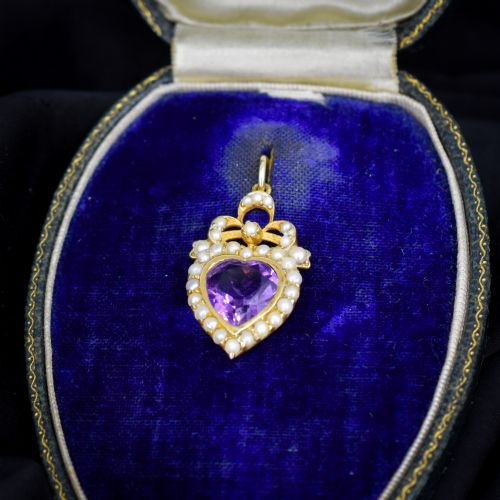
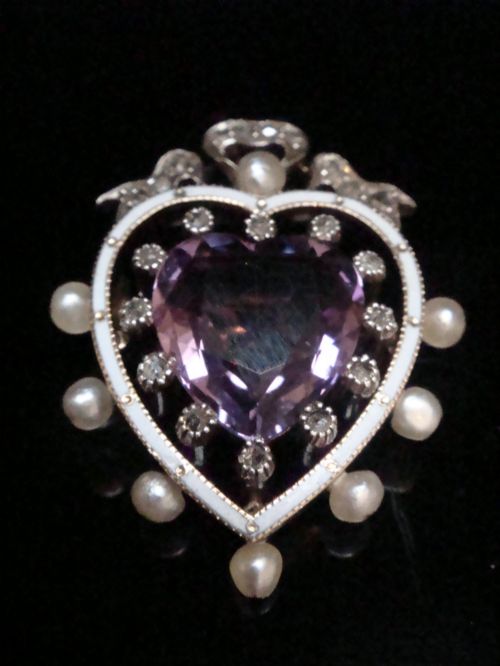
A pearl heart pendant captures the sentimental aesthetics of the late nineteenth and early twentieth centuries, spanning the Victorian and Edwardian eras. Buyers looking at this page encounter delicate gold, enamel, and gemstone pieces fashioned into love hearts, puff hearts, and witches hearts.
The selection ranges from simple seed pearl designs mounted on high carat yellow gold to elaborate Belle Epoque pieces set with diamonds, garnets, and sapphires. Many examples double as brooches or locket mementos, reflecting the multi-functional jewellery of the period.
Materials and Technique
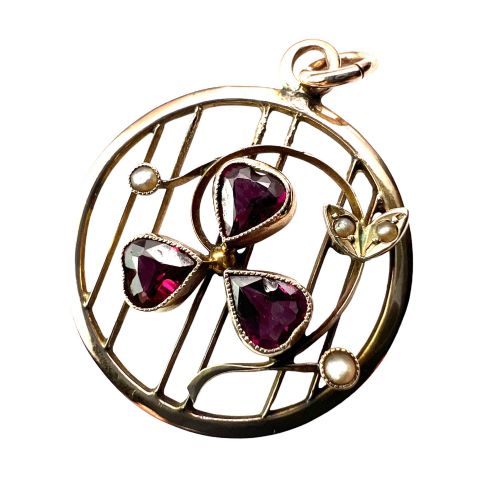
Goldsmiths constructed these pieces primarily in nine carat, fifteen carat, and eighteen carat yellow and rose gold, often pairing the metal with natural pearls, seed pearls, and old cut diamonds. Coloured gemstones such as amethyst, turquoise, garnet, and ruby appear frequently alongside intricate guilloche and coloured enamel work.
Turquoise and amethyst emerge as the most common coloured gemstones paired with seed pearls in these heart designs.
Craftsmanship and Proportion
Quality rests in the precision of the goldwork and the uniformity of the pearls used. Finer examples display meticulous enamel work free from chipping and secure, flush settings for diamonds and coloured stones.
Proportion and weight also dictate distinction, as solid or substantial puff hearts with intact original fittings and clear hallmarks stand apart from lighter, more utilitarian counterparts.
The Pearl Heart Pendant Glossary
- Seed pearl
- Very small, naturally occurring pearls that are drilled and set closely together to form continuous patterns or textures on jewellery. They define much of the delicate surface detail seen in nineteenth-century romantic designs.
- Puff heart
- A three-dimensional hollow heart pendant fashioned from two convex plates of gold joined at a central seam. This technique created volume and presence without excessive weight.
- Witches heart
- A heart pendant featuring a distinctive twisted or scrolling tail at the base, symbolising a pierced or captured heart. It is a recurring motif in antique sentimental jewellery.
- Guilloche enamel
- A decorative technique where transparent enamel is layered over machine-turned or engraved metal. It produces a shimmering, patterned background beneath the glossy coloured surface.
- Lavaliere
- A drop necklace featuring a central dangling pendant, popular during the Edwardian and Belle Epoque periods. These pieces often incorporate swinging gemstone clusters and pearl tassels.
Pearl Heart Pendant: Frequently Asked Questions
How do I date a pearl heart pendant?
Dating relies on examining the gold carat marks, fastening mechanisms, and the accompanying gemstone cuts. Victorian pieces often utilise fifteen carat gold and heavier closed backs, whilst Edwardian examples favour lighter yellow gold, platinum accents, and intricate openwork.
Stylistic cues also help narrow the timeline. The presence of guilloche enamel and flowing garlands typically points towards the Edwardian or Belle Epoque eras, whereas high carat gold combined with seed pearl clusters and turquoise frequently indicates mid to late Victorian manufacture.
Were these pendants worn every day?
In their original eras, sentimental jewellery of this nature was often worn to mark betrothals, anniversaries, or deep personal attachments. Many pieces were cherished daily as tokens of affection or remembrance.
The inclusion of locket compartments and photo glass backs suggests that owners kept locks of hair or miniature portraits close to them. Today, contemporary wearers continue this tradition, though antique seed pearls require mindful care to preserve their integrity.
How should I care for antique seed pearls?
Seed pearls are organic gems that are sensitive to moisture, cosmetics, perfume, and harsh chemicals. They should be wiped gently with a soft dry cloth after wearing and stored separately to avoid scratching.
Because many antique pieces feature pearls held on traditional silk threads or delicate pins, immersion in water or ultrasonic cleaning must be avoided. Regular gentle inspection by a jeweller ensures the settings remain secure.