
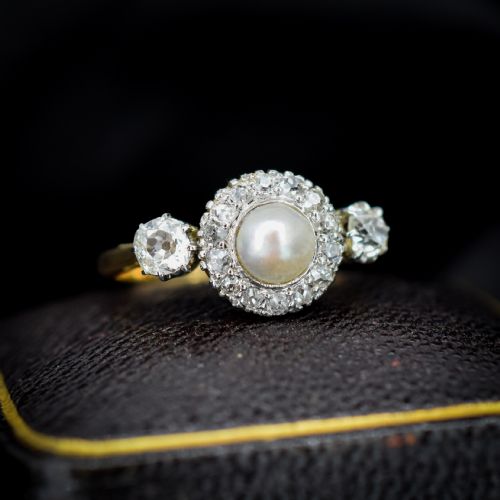
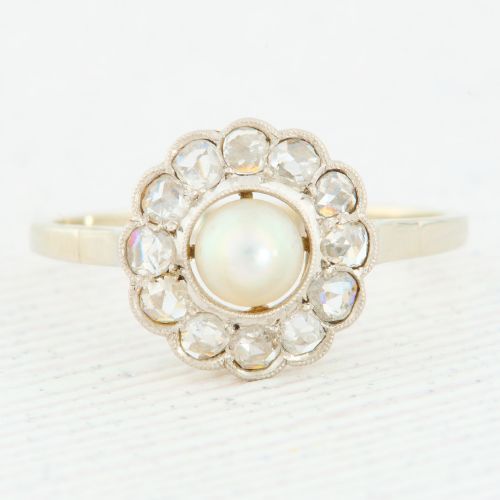


Pearl Diamond Target Ring
A pearl diamond target ring sets a central pearl inside concentric rows of diamonds, offering geometric brilliance and timeless elegance.
Pearl Diamond Target Ring
A pearl diamond target ring centres on a lustrous pearl framed by a distinct circle of sparkling diamonds, creating a striking bullseye motif. These concentric configurations draw the eye inward, magnifying the luminosity of the central gem.
Most examples found here date from the Edwardian period and the 1930s Art Deco era. The designs span Edwardian yellow gold and platinum settings to later geometric mountings.
How they were made
Craftsmen utilised combinations of 18ct yellow gold, 18ct white gold, and platinum to secure the stones. Platinum prongs and settings allowed for delicate, intricate wirework that maximised light entry into the diamonds.
Gems were typically hand-set with old cut diamonds surrounding natural or cultured pearls. Jewelers occasionally incorporated small rubies or enamel accents to contrast the monochrome sparkle of the surrounding stones.
What varies in quality
The fineness of the metalwork and the symmetry of the concentric design distinguish superior examples. Master jewellers achieved precise spacing between the central pearl and the outer diamond border.
The selection of well-matched old cut diamonds with lively scintillation elevates a piece. Furthermore, the orient and preservation of the central pearl dictate the overall desirability of the ring.
The Pearl Diamond Target Ring Glossary
- Target ring
- A ring featuring a central stone encircled by one or more concentric rings of contrasting gems, resembling a bullseye. This geometric arrangement gained immense popularity during the early twentieth century.
- Old cut diamond
- A hand-faceted diamond cut before modern machinery standardised proportions, typically featuring a small table and high crown. These stones produce a warm, chunky candlelight sparkle.
- Cluster ring
- A ring setting where multiple smaller stones cluster closely around a larger central element. This style maximises visual impact and presence on the finger.
- Seed pearl
- A very small, naturally occurring or cultured pearl, often drilled and strung or set tightly in clusters. They add a delicate texture to antique jewellery.
Pearl Diamond Target Ring: Frequently Asked Questions
Are these rings suitable for daily wear?
Pearls are softer than diamonds and require gentle care during everyday tasks. Regular cleaning with a soft cloth helps preserve their natural lustre over time.
Removing the ring before heavy lifting or swimming protects both the pearl and the delicate metal settings from unnecessary wear.
How do I tell Edwardian from Art Deco examples?
Edwardian rings frequently utilise 18ct yellow gold paired with platinum tops, showcasing flowing floral or garland motifs. The craftsmanship emphasises airy, lace-like metalwork.
Art Deco pieces lean towards stark geometric lines and white metals like platinum or white gold. The symmetry becomes sharper and more architectural.
What is the difference between natural and cultured pearls?
Natural pearls form organically in molluscs without human intervention, making them exceptionally scarce in antique pieces. They possess a unique layered structure that accumulates over years.
Cultured pearls involve human assistance to initiate the pearl-forming process within the oyster. Both types appear in antique target rings depending on the exact decade of manufacture.
How do I clean an antique pearl ring?
Wipe the pearl and diamonds gently with a damp, soft cloth after wearing. Avoid harsh chemical cleaners, ultrasonic baths, or abrasive brushes that damage the organic surface of the pearl.
Store the ring separately from harder gemstones in a lined box to prevent scratching. Professional jewellers can periodically check the security of the settings.