
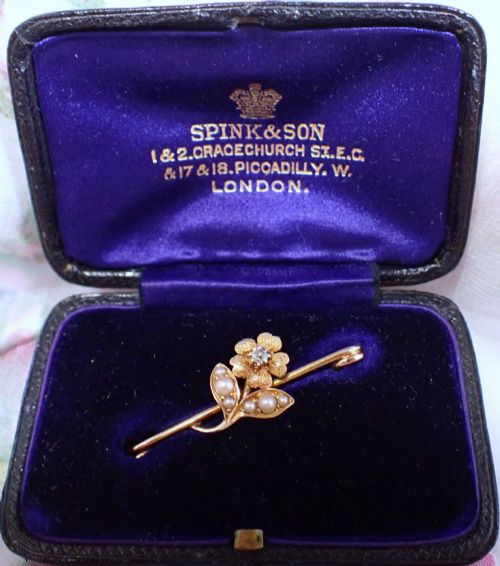


Pearl and Diamond Pin
A pearl and diamond pin brings together luminous organic nacre and brilliant stones, offering wearable miniature sculpture from the late nineteenth and early twentieth centuries.
Pearl and Diamond Pin
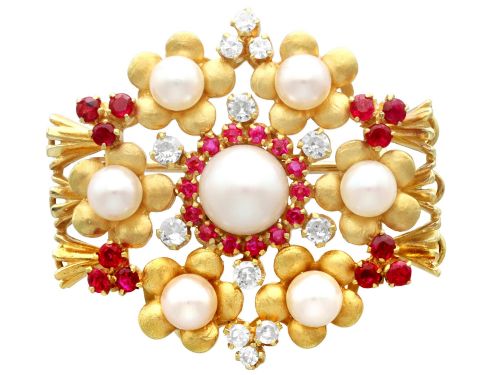
The selections available here lean heavily toward Victorian flower and insect designs alongside Edwardian bar brooches and openwork geometric frames. Natural pearls and seed pearls frequently anchor designs featuring rose-cut or old mine-cut diamonds.
Makers of the period utilised versatile formats that allowed dress ornaments to function alternately as pendants or brooches depending on the fastener. Natural pearls appear alongside cultured varieties, mounted securely in claw, grain, or bezel settings.
Materials and Construction
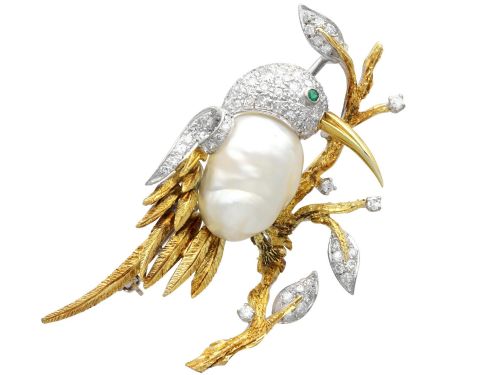
Goldsmiths constructed these jewels using 9ct, 12ct, 14ct, 15ct, and 18ct yellow or rose gold, often combining platinum or silver on the face to whiten the metal around diamonds. This dual-metal technique maximised the brilliance of the stones while maintaining the structural strength of gold pin stems.
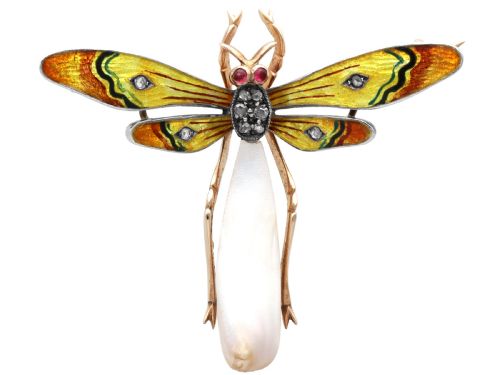
Pearls are set alongside faceted diamonds and rose-cut diamonds, sometimes accented by coloured gems like rubies, sapphires, emeralds, turquoise, and peridot. Enamel work, including plique-a-jour, also appears within heart and floral frameworks.
Components were hand-fabricated, utilising fine wirework, collet settings, and millegrain edging to secure small stones closely together. Pins typically feature hinged stems with C-clasps or safety catches characteristic of late Victorian and early twentieth-century bench work.
Several unfortunate beetles and turtles found themselves immortalised in gold, pearls, and diamonds during the late Victorian craze for jewelled insects.
Standards of Quality
Quality rests upon the proportion and matching of the pearls, the symmetry of the design, and the weight and purity of the precious metals. Superior examples display high lustre in the pearls and expert gemstone cutting that maximises light return.
The sophistication of the metalwork distinguishes finer pieces, particularly where openwork filigree, plique-a-jour enamel, or platinum-topped gold creates a seamless face. Original boxes and intact, functioning mechanisms add further distinction to a piece.
Mappin and Webb
The Pearl and Diamond Pin Glossary
- Bar brooch
- A narrow horizontal pin featuring central gemstone clusters or uniform decorative motifs. These pieces gained immense popularity during the Edwardian period for fastening neckties and lapels.
- Rose-cut diamond
- An antique gemstone cut featuring a flat base and a domed crown faceted with triangular triangles. This style produces a soft, translucent gleam rather than modern brilliance.
- Seed pearl
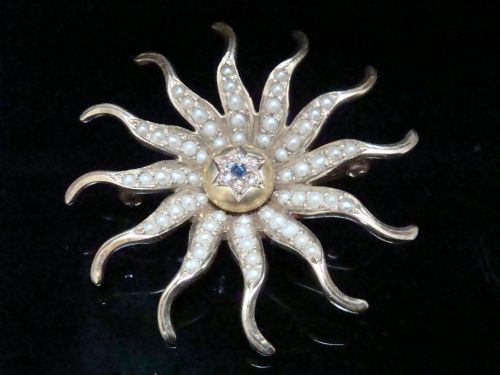
- A tiny, naturally occurring small pearl, often drilled and threaded onto silk or wire. Victorian jewellers clustered these to form petals and bodies in floral and insect motifs.
- Plique-a-jour
- An enamelling technique where enamel is applied to open cells without a backing, resembling miniature stained glass. It allows light to pass directly through the coloured glass elements.
- Millegrain
- A decorative technique featuring a line of tiny raised metal beads along the edges of a setting. This subtle texture softens metal borders and frames diamonds.
Pearl and Diamond Pin: Frequently Asked Questions
What periods do these pins come from?
The pieces span the Victorian, Edwardian, and Art Deco eras, with production heavily concentrated between the 1880s and the 1920s.
Design motifs shifted from romantic yellow gold floral clusters toward platinum-topped white metal geometric and swallow arrangements as the twentieth century progressed.
How were these pins worn originally?
Victorians and Edwardians pinned these jewels to lapels, bodices, hats, and cravats to signal status and embellish everyday garments.
Many examples feature hidden loops that allow the primary brooch body to suspend from a chain as a pendant.
Are the pearls natural or cultured?
Inventory includes both natural saltwater pearls and fine historic seed pearls gathered before the rise of commercial pearl culture.
Microscopic examination often reveals the organic concentric nacre growth characteristic of uncultivated origin.
What metals are typically used?
Common alloys include 9ct, 15ct, and 18ct yellow and rose gold, reflecting British and European standards of the nineteenth and early twentieth centuries.
Later Edwardian pieces frequently introduce platinum or silver-topped gold to provide a bright white background for diamonds.