

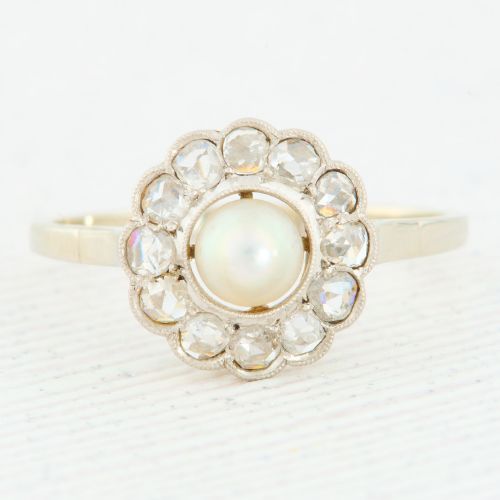
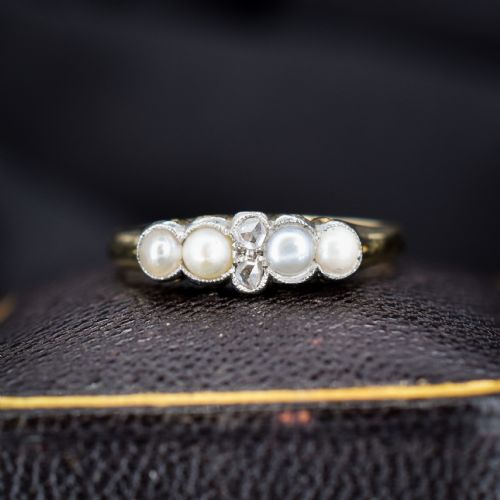


Pearl and Diamond Cluster
A pearl and diamond cluster brings together organic lustre and faceted stone work across rings, earrings and brooches spanning multiple eras.
Pearl and Diamond Cluster
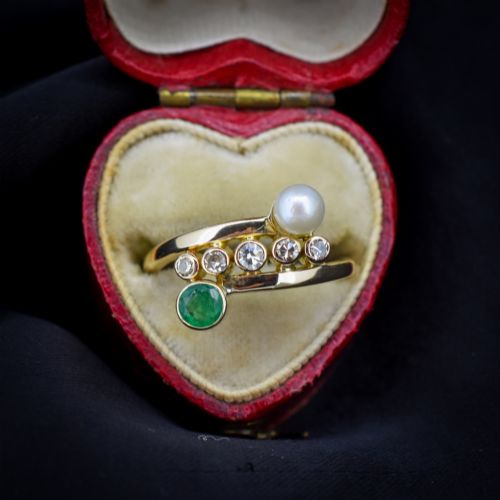
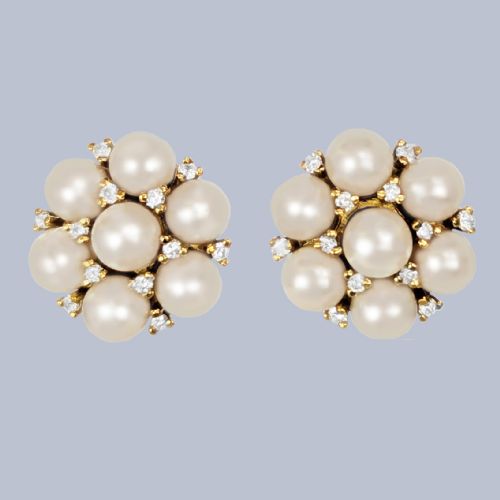
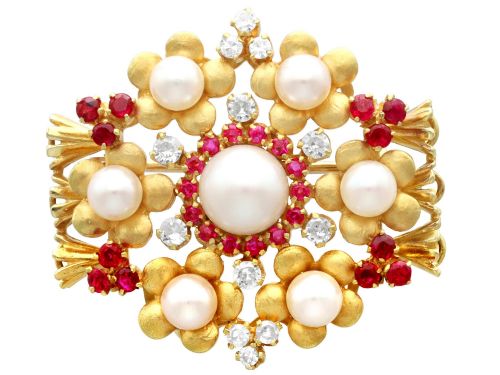
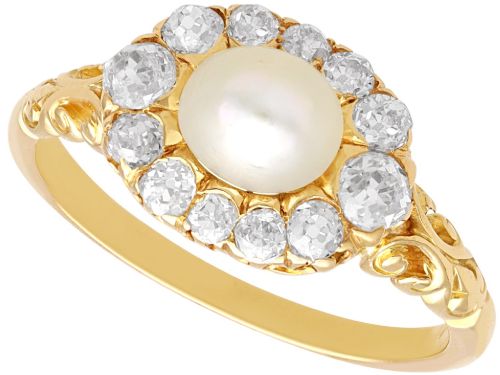
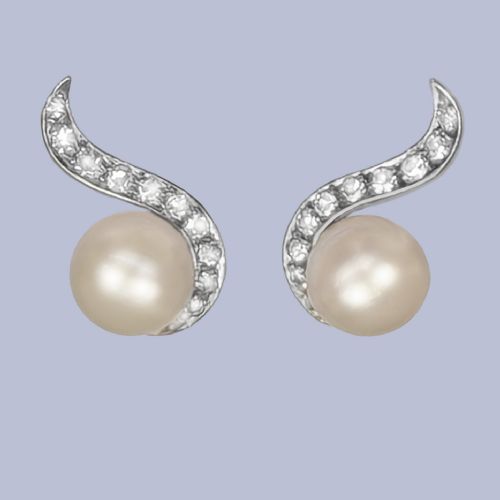
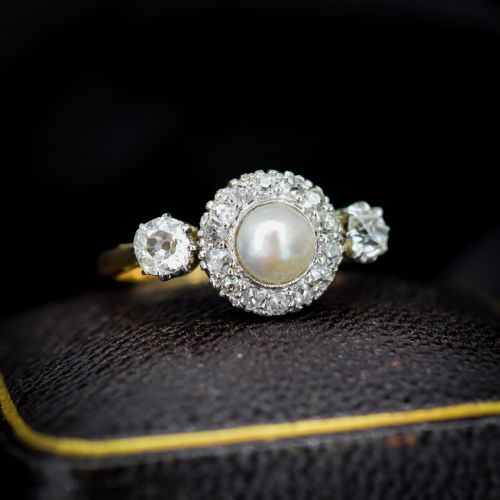
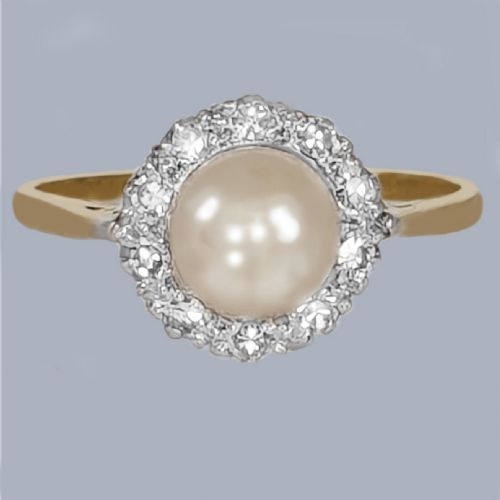
A pearl and diamond cluster brings together a central pearl surrounded by diamonds, appearing frequently in rings, earrings, brooches and necklaces across this selection. Buyers encounter these arrangements primarily in Edwardian and Victorian pieces, alongside Mid-Century and Art Deco interpretations.
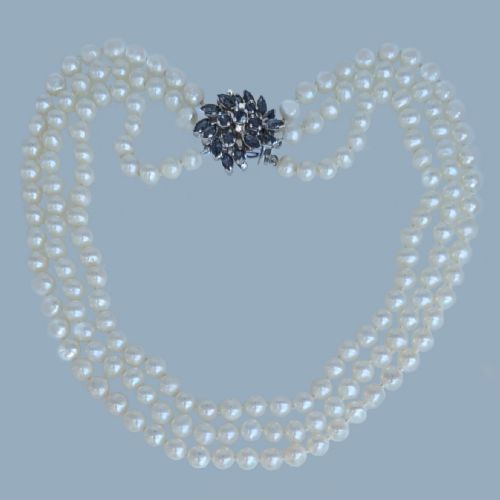
Ring formats dominate the selection, often taking the form of floral or button designs set in yellow gold or platinum. Drop earrings, bar brooches and multi-strand necklaces also feature prominently, carrying natural pearls alongside old-cut or rose-cut diamonds.
Materials and Construction
Goldsmiths utilised varied purities of yellow, white and rose gold alongside platinum to mount the stones. Platinum became common in Edwardian work for its strength in delicate cluster settings, while 15ct and 18ct yellow gold underpin Victorian and earlier examples.
Pearls are paired with diamonds cut in old European, rose-cut or modern brilliant styles, secured alongside occasional coloured gems like ruby, sapphire and turquoise. Enamel and silver feature selectively in clasps and secondary settings.
Pearl and Diamond Cluster Retail Price Guide 2026
Typical asking prices for pearl and diamond cluster among the pieces listed under this phrase on Sellingantiques today, from the lower quarter to the upper quarter. They describe what is for sale here now, not the wider market.
Listings span Victorian, Edwardian, Art Deco and Mid-Century periods, utilising 9ct, 14ct, 15ct and 18ct yellow, white and rose gold alongside platinum.
Evaluating the Pieces
Quality rests on the integrity of the central pearl and the matching of the surrounding diamonds. Natural pearls with strong orient and unblemished surfaces elevate a piece above those with uneven lustre or later replacements.
The precision of the metalwork defines the craftsmanship, particularly in Edwardian and platinum settings where millegrain edges and openwork galleries require steady hand execution. Secure setting of both small rose-cuts and larger old-cut stones dictates overall durability.
The Pearl and Diamond Cluster Glossary
- Cluster ring
- A ring design featuring a central stone or pearl encircled by a border of smaller stones. This configuration maximises visual impact and light reflection.
- Old-cut diamond
- A hand-faceted diamond shape from the nineteenth or early twentieth century featuring a smaller table and higher crown. These stones produce a softer, candlelit sparkle compared to modern brilliant cuts.
- Rose-cut diamond
- A gemstone cut with a flat base and a domed crown of triangular facets terminating in a point. This historical style dates back centuries and offers a translucent appearance.
- Millegrain
- A decorative jewellery technique consisting of a line of tiny raised metal beads along the edge of a setting. It provides a soft texture typical of Edwardian platinum work.
- Navette
- A boat-shaped gemstone or setting design that tapers to points at both ends. It creates an elongated silhouette on the finger.
Pearl and Diamond Cluster: Frequently Asked Questions
How do I care for pearl and diamond jewellery?
Pearls are organic and sensitive to chemicals, perfumes and cosmetics, requiring gentle wiping with a soft cloth after wear rather than immersion in ultrasonic cleaning tanks.
Diamonds are harder and tolerate mild soapy water, but the soft nature of pearls means pieces should be stored separately to prevent scratching from metal mounts.
What is the difference between natural and cultured pearls?
Natural pearls form organically within molluscs without human intervention, accumulating concentric layers of nacre over time. They appear frequently in antique and Edwardian pieces.
Cultured pearls involve human assistance to initiate the pearl-forming process. Gemological reports often accompany older natural specimens to verify their origin.
How can I date an Edwardian cluster ring?
Edwardian pieces, made between roughly 1901 and 1910, often combine platinum-topped gold shanks with delicate openwork filigree and millegrain decoration. The use of old-cut diamonds is standard for this period.
Hallmarks, where present, help pinpoint the exact assay office and year of manufacture, though many antique rings rely on stylistic markers and setting techniques for dating.
Can these rings be resized easily?
Resizing depends on the band material and whether the shoulders feature intricate engraving or cluster work that could be distorted. Plain gold shanks adjust straightforwardly.
Pieces with closed galleries or platinum settings require specialist laser welding to preserve structural integrity, so a professional jeweller should inspect the piece first.