
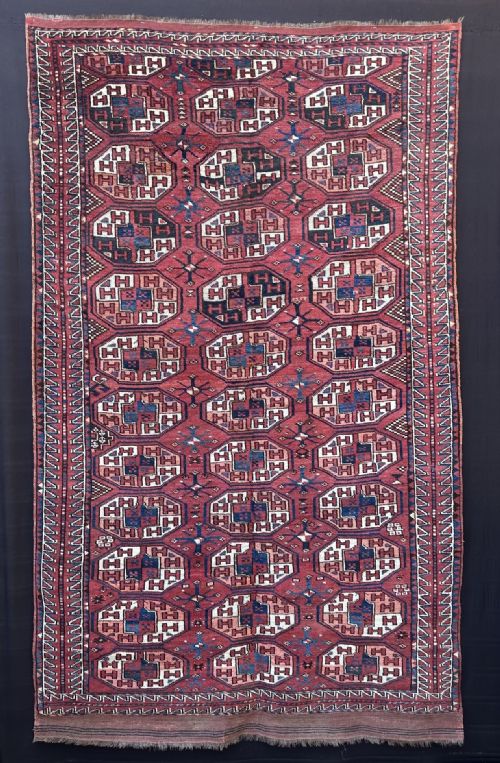

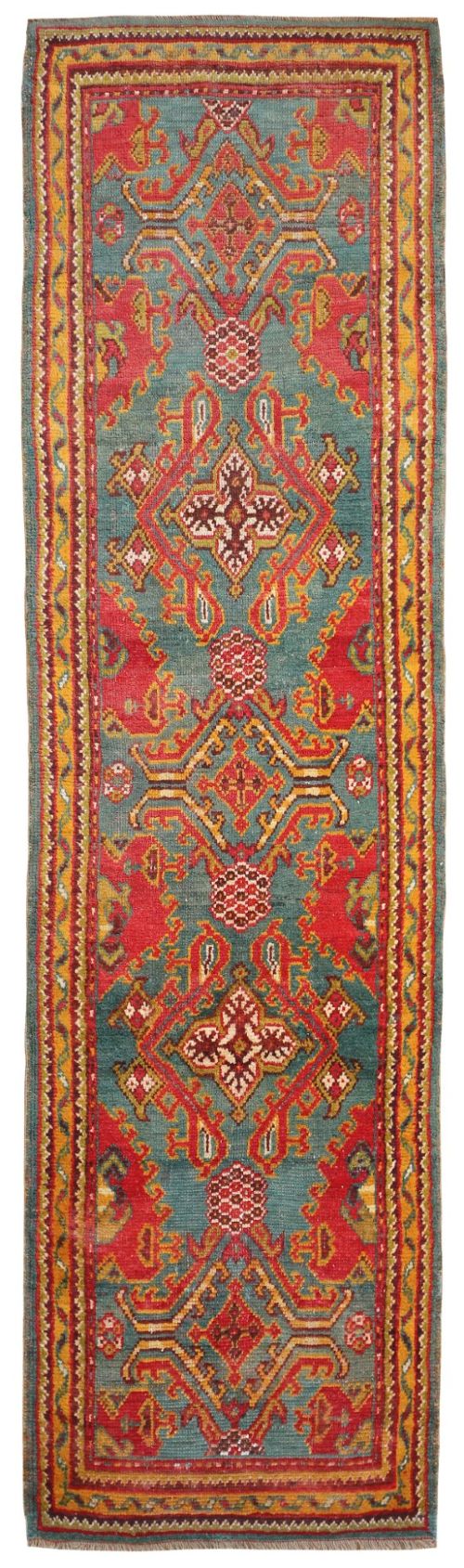
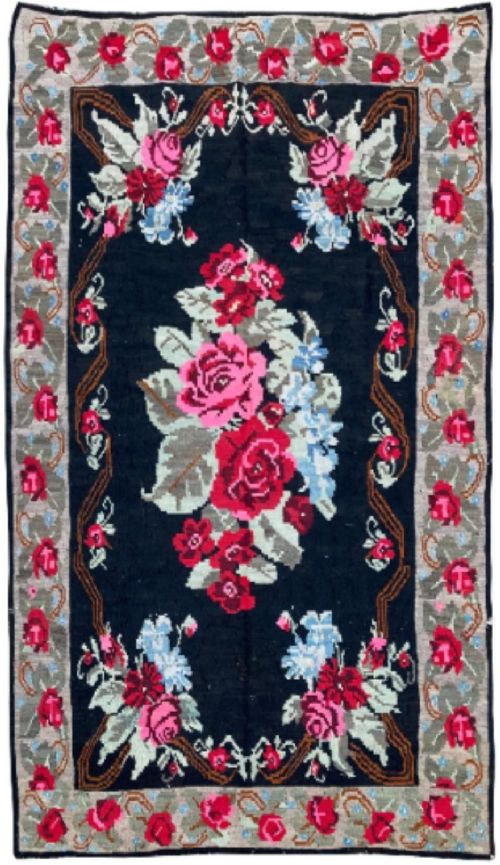
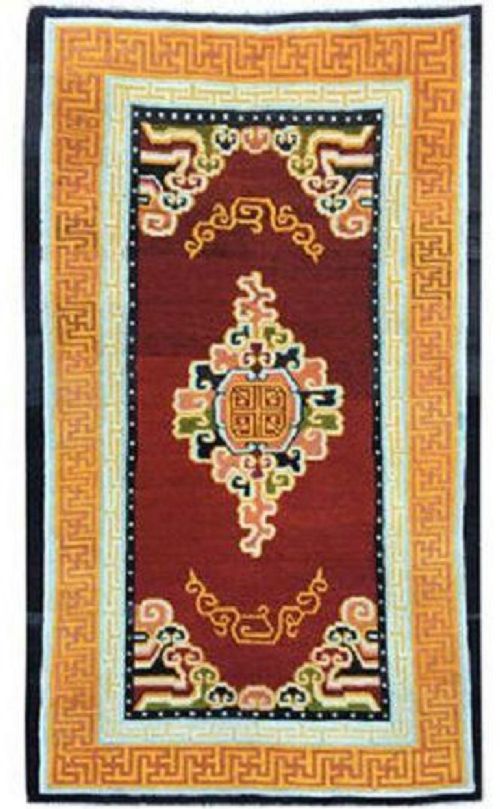
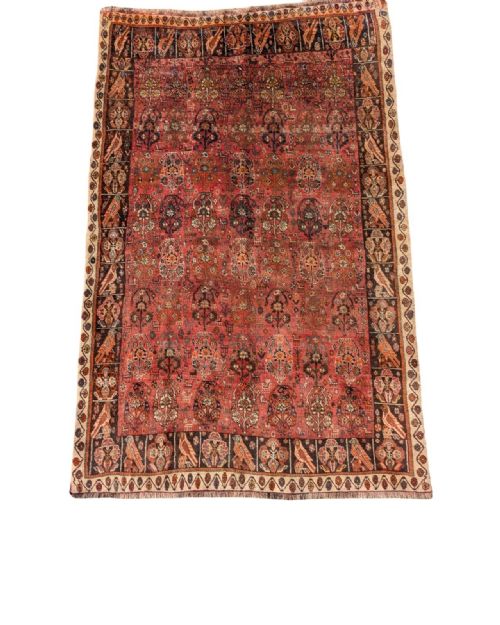
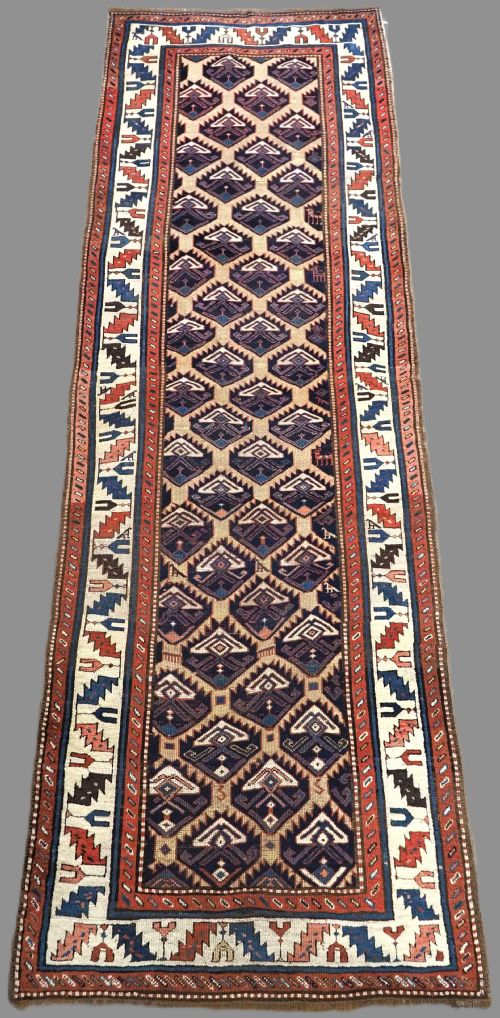
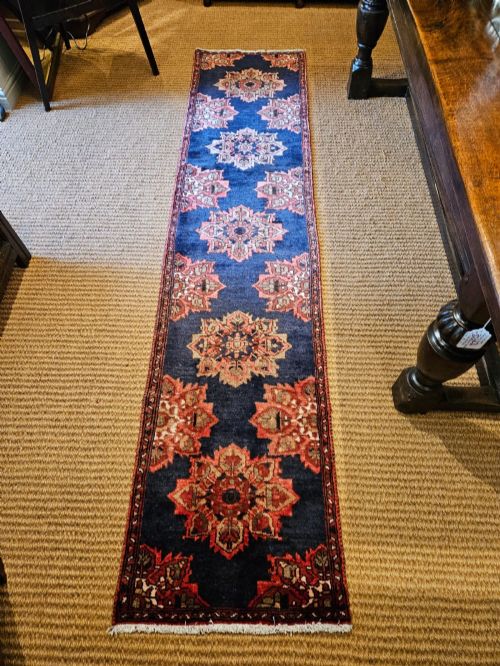
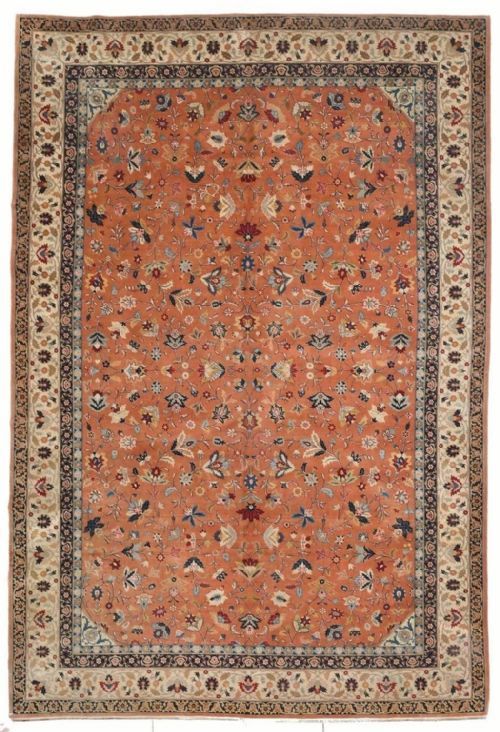
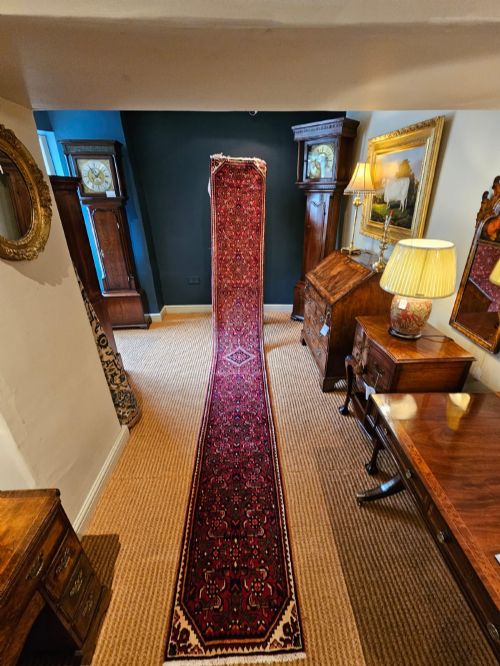
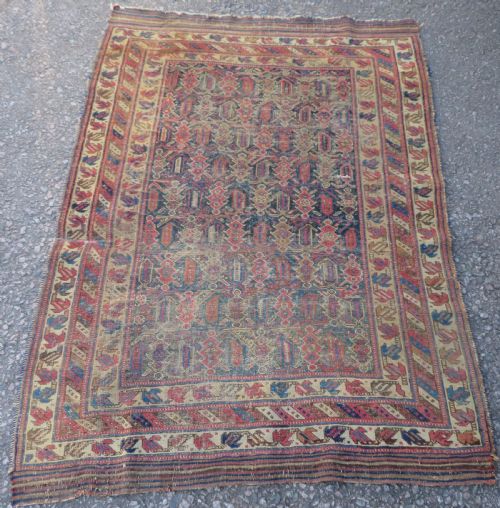
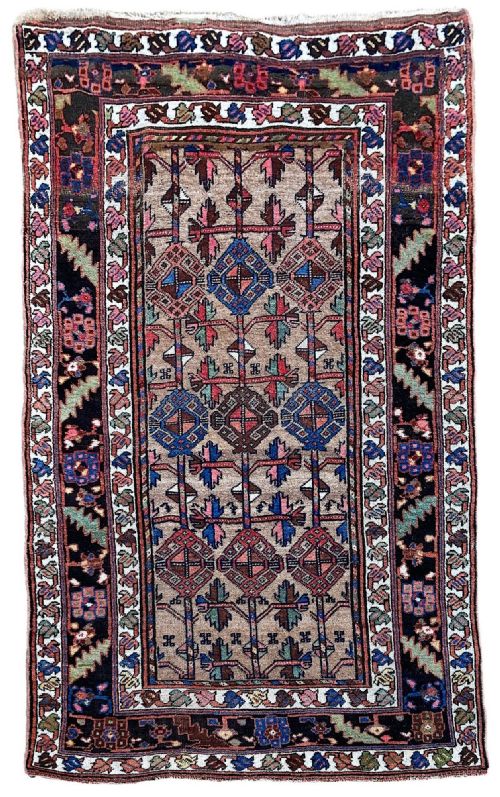
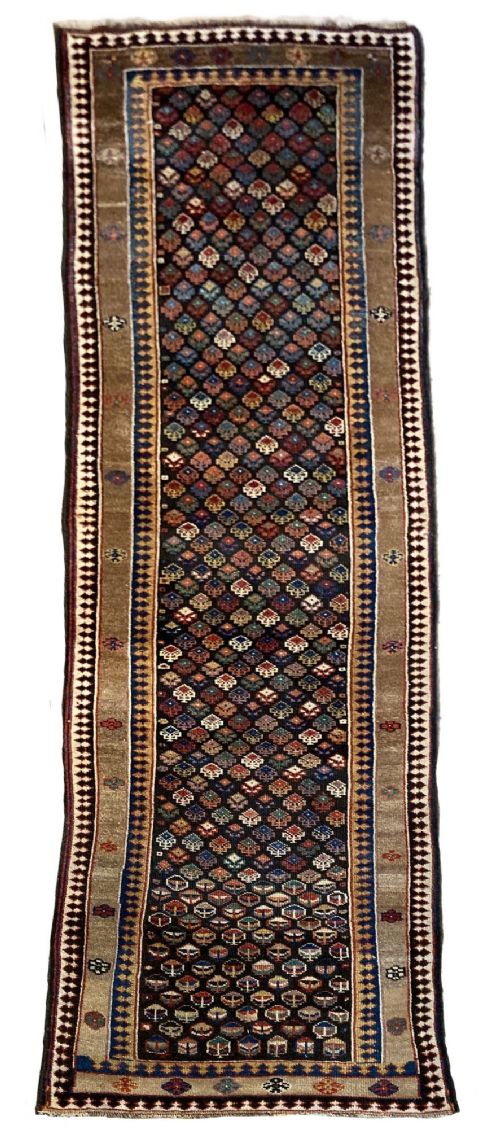
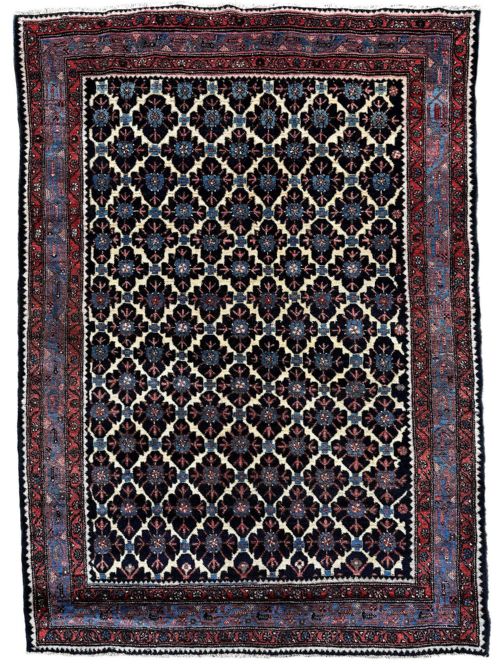
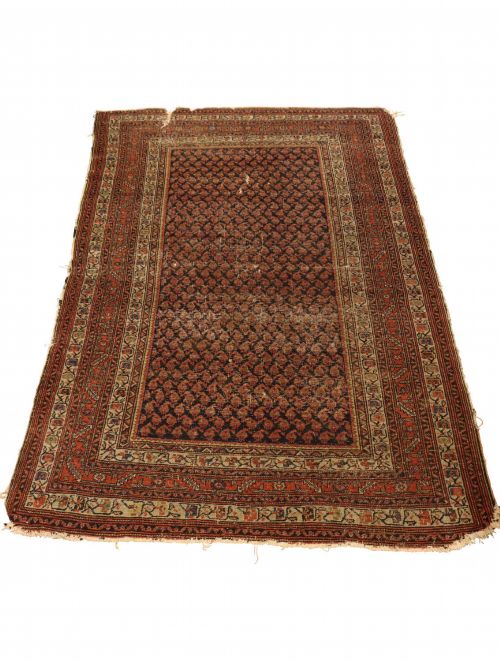

Patterned Wool Runner
A patterned wool runner brings linear geometry and rich texture to long spaces, drawing the eye along corridors with traditional motifs.
Patterned Wool Runner
A patterned wool runner provides a narrow, elongated format designed for corridors, hallways, and stairs. These pieces bring historical character to functional spaces through varied regional designs originating from Persian, Caucasian, and Anatolian traditions.
The selection ranges from nineteenth-century tribal formats to early twentieth-century examples. Buyers frequently encounter regional weaves such as Kurdish, Heriz, and Gendje runners alongside wider categories of nomadic and village carpet production.
Materials and construction methods
Makers utilised wool and hand-spun wool for the pile and structure, often paired with cotton foundations. Natural dyes supplied the colour palette, yielding stable tones that soften gracefully over decades of use.
Weavers employed hand-knotting and flat-weave techniques to build dense structures suited to heavy foot traffic. The resulting textiles combine durability with pliable foundations that settle evenly along hallway floors.
Certain antique Kazak runners exhibit delightfully crooked geometry where the weavers changed their minds halfway down the corridor.
Judging quality and execution
Knot density and precision of design execution determine the refinement of a weave. Finer examples display crisper geometry in medallions, lattice patterns, and boteh motifs, whereas simpler village pieces show charming irregularities in line and scale.
The integrity of the wool, consistency of natural dyes, and preservation of original selvedges and ends dictate the overall standing of a runner. Pieces retaining their full length and uncompromised structural margins hold greater integrity.
The Patterned Wool Runner Glossary
- Runner
- A long, narrow carpet format specifically proportioned for corridors, hallways, and staircases. These pieces balance repeated border patterns with central fields.
- Boteh
- A stylised almond or pear-shaped motif representing a floral shoot or cypress tree. This ancient symbol appears frequently in Persian and tribal textile designs.
- Kilim
- A flat-woven carpet produced without a pile by tightly interweaving warp and weft threads. These textiles offer crisp geometric patterns and a lightweight profile.
- Gul
- A medallion or repeating octagonal stamp motif used extensively in Central Asian and Turkmen carpet designs. Each tribal group utilised distinct variations of these forms.
- Selvedge
- The finished side edge of a carpet formed by wrapping transverse threads to protect the structure from fraying. Original selvedges indicate careful preservation.
Patterned Wool Runner: Frequently Asked Questions
Where should I place a runner?
These narrow textiles suit hallways, corridors, and bedside positions where floor space is constrained. Their elongated proportions guide movement and add warmth to transitional areas.
Ensure adequate clearance for doors to swing freely over the pile thickness. Underlays help maintain stability on smooth wooden or tiled hallway floors.
How do I clean a wool runner?
Gentle regular vacuuming without a beater bar removes surface dust trapped within the wool pile. Address spills promptly by blotting with a damp cloth rather than rubbing.
Professional specialist cleaning is recommended for deep maintenance. Avoid harsh chemical detergents that can strip natural dye colours from the wool fibres.
Are these runners durable for hallways?
Hand-knotted wool construction provides natural resilience against regular foot traffic. The lanolin present in traditional wool fibres resists dirt and cushions the foundation over time.
Placing a quality rug pad underneath reduces friction against the floorboards and extends the functional lifespan of the weave.
How do I identify regional designs?
Look closely at the palette, border arrangement, and geometric motifs within the field. Kurdish and Caucasian pieces often display bold geometric lattices and saturated colours, whereas Persian city workshops favour refined floral curves.
Comparing structural details like knot count and end finishes helps link pieces to specific tribal or regional traditions.