





Pastoral Village Painting
A pastoral village painting captures rural life in oil or watercolour, offering an authentic glimpse into historic countryside communities that draws the eye.
Pastoral Village Painting
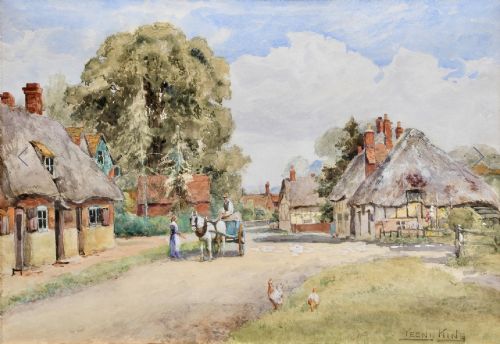
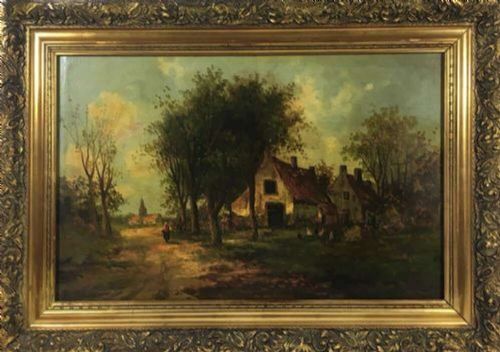
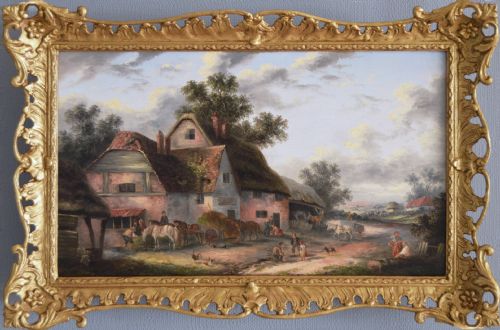
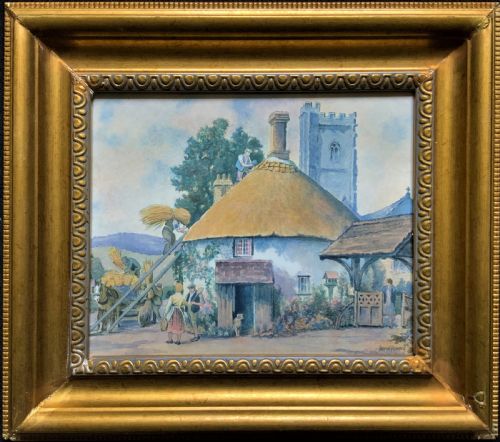
A pastoral village painting depicts rural scenes, farming landscapes, and village streets populated by figures, livestock, and local architecture. The pieces gathered here span from the nineteenth century into the mid twentieth century, capturing decades of changing artistic perspectives on country life.
Most examples on this page take the form of watercolours on paper or oil paintings on canvas, often preserved within their original gilt and wood frames. These works range from intimate watercolour studies of Devon and Warwickshire to large nineteenth century oil canvases depicting Thameside villages and French farmyards.
How they were made
Artists relied primarily on oil paint applied to canvas or watercolour pigments worked onto paper to construct these rural vistas. Canvas supports provided the structure for richly layered oil compositions, while paper offered a delicate surface suited to fluid watercolour washes.
Framing played an integral role in finishing the pieces, utilising carved wood and gilt mouldings to complement the painted scenes. These protective housings helped preserve the paper watercolours under glass and secured the stretched oil canvases over the decades.
Pastoral Village Painting Retail Price Guide 2026
Typical asking prices for pastoral village painting among the pieces listed under this phrase on Sellingantiques today, from the lower quarter to the upper quarter. They describe what is for sale here now, not the wider market.
A young foal occasionally interrupts a quiet farming landscape by stealing fruit straight from a wicker basket.
What varies in quality
Quality rests on the sureness of the draughtsmanship and the artist's ability to handle light, particularly when capturing dusk or daylight across a village street. Superior works demonstrate a confident command of perspective and atmosphere, bringing figures and architecture to life without stiffness.
The distinction between standard decorative pieces and finer works also lies in the handling of narrative detail, such as the natural postures of rural folk conversing or children fishing by a riverbank.
Charles Vickers·Robert Hollands Walker·Eugene Battaille·Alfred Rimmer·David Heward·William Greaves·Stephanie Cooper·John Holland Snr·Georgina Lara
The Pastoral Village Painting Glossary
- Watercolour
- A painting method where fine pigment is suspended in a water-based, translucent solution applied to paper. This medium allows for luminous washes and delicate atmospheric effects.
- Oil paint
- A slow-drying paint made by mixing pigments with a drying oil, typically linseed oil. It permits rich blending and substantial texture on canvas.
- Canvas
- A heavy woven fabric stretched across a wooden frame to serve as a durable support for oil painting. It remains a primary medium for historical landscape works.
- Gilt
- A thin layer of gold leaf applied to wood frames or decorative surfaces to add a bright, reflective metallic finish. This technique enhanced the grandeur of nineteenth-century presentations.
- Barbizon School
- A French movement of landscape painters active during the mid nineteenth century who emphasised direct observation of nature. Their work moved away from formal classical compositions toward realistic rural scenes.
Pastoral Village Painting: Frequently Asked Questions
How should I hang a watercolour?
Watercolours require careful placement away from direct sunlight to prevent the pigments and paper from fading over time. Maintaining stable indoor humidity levels also protects the paper and the framing materials.
Ensuring the piece is glazed with protective glass helps shield the delicate surface from airborne dust and moisture fluctuations in domestic spaces.
Where were these scenes painted?
The works depict various rural locations across Britain and France, ranging from Devon and Hampshire villages to Thameside settings and French farmyards. Artists often travelled to specific country spots to capture local architecture and rural trades.
Many pieces document specific geographic points of interest, such as Cockington near Torquay, providing a visual record of historical topography.
How do I date an oil painting?
Dating typically relies on artist signatures, biographical records, exhibition labels, and stylistic markers such as clothing fashions and architectural details within the scene. The preparation of the canvas and the style of the wooden stretcher frame can also offer clues.
Comparing a signature to documented working periods helps narrow down the decade in which the landscape was executed.
What is Victorian genre art?
Victorian genre art focuses on scenes of everyday life, depicting ordinary people engaged in common activities like fishing, conversing in village streets, or farming. These works prioritized narrative and human interaction within a recognizable setting.
Such paintings offered nineteenth-century viewers relatable windows into rural communities and traditional ways of living.