




Pastoral Livestock Art
Pastoral livestock art captures the rural quiet of cattle, sheep and horses painted across centuries by artists drawn to agricultural life.
Pastoral Livestock Art
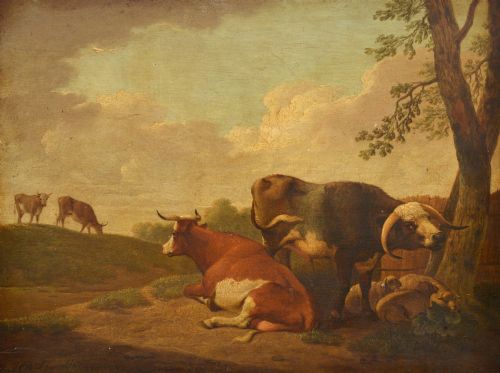
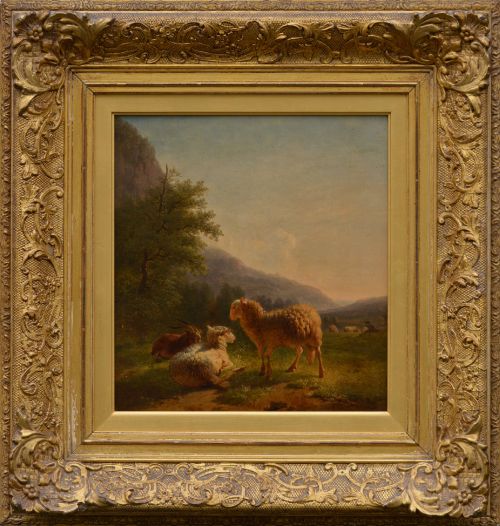
Pastoral livestock art encompasses oil paintings and watercolours depicting cattle, sheep and horses within rural landscapes, farmyards or coastal scenes. These works stretch from the seventeenth century through to the early twentieth century, with a strong representation of Victorian and Edwardian examples.
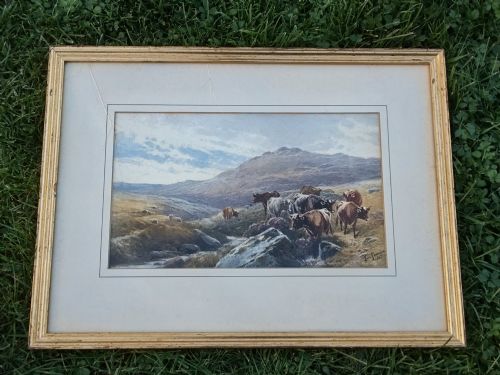
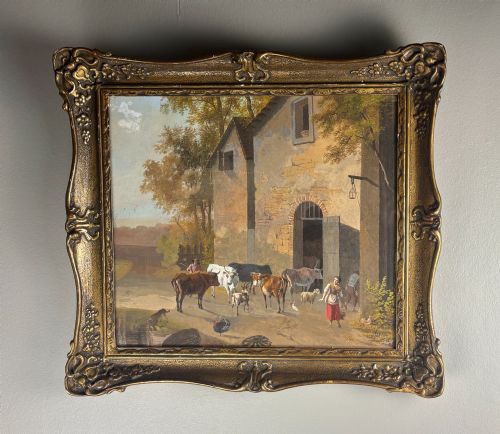
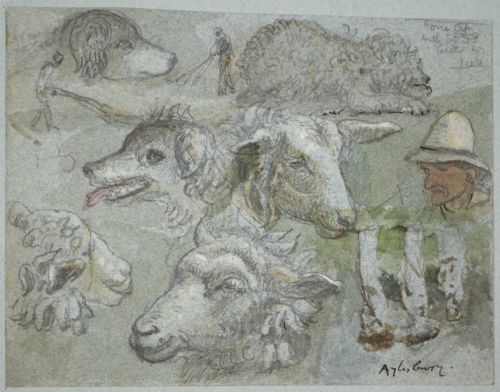
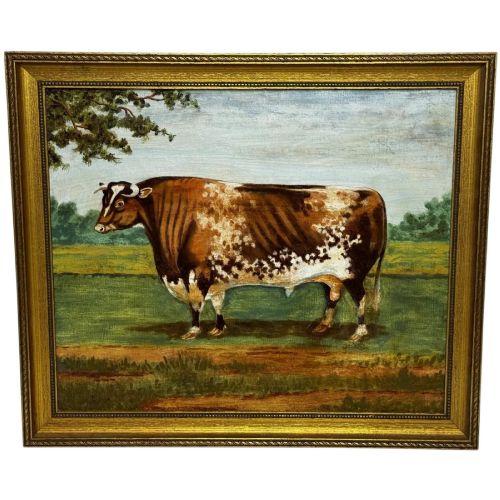
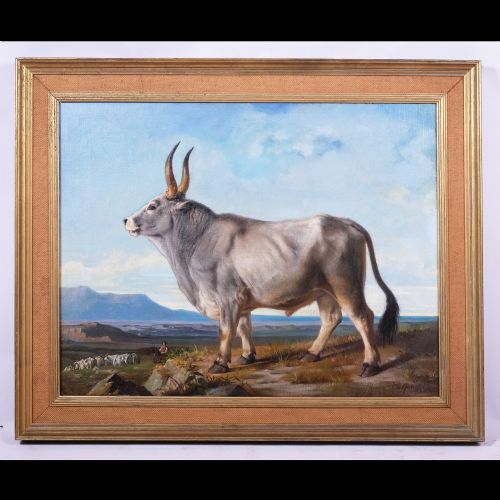
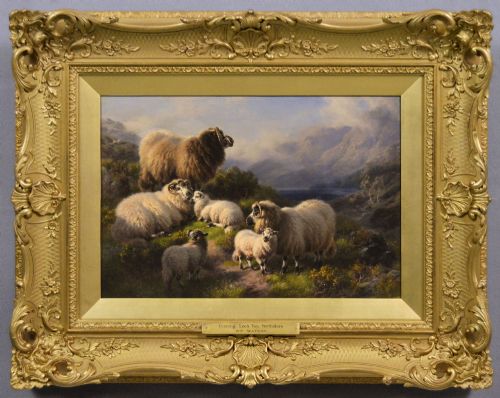
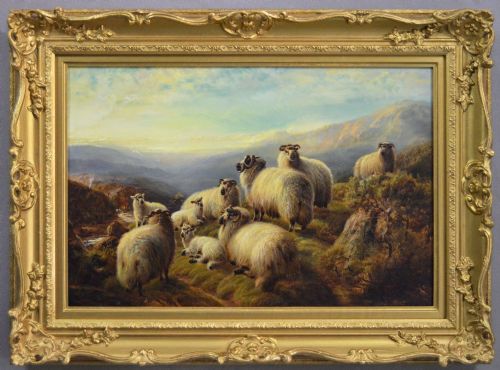
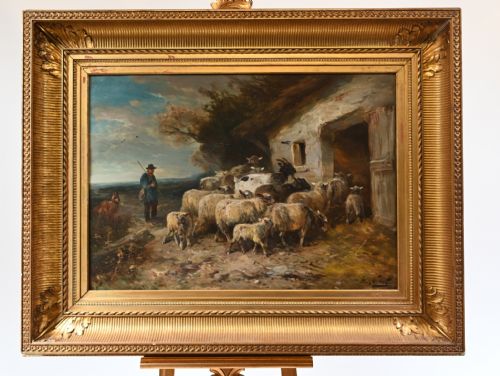
The pieces on this page range from intimate watercolours on paper to large oil paintings on canvas and oak panel. Buyers encounter detailed portraits of prized shorthorn bulls, flocks of highland sheep, and scenes of shepherds tending animals in European and British countryside settings.
Materials and Technique
Makers utilised oil paint on canvas, wood panels and paper, often pairing these with original giltwood frames adorned with gesso and gold leaf. Watercolours and mixed-media works frequently appeared on paper, protected behind glass within period frames.
Artists built depth through layered brushwork and pigment application, capturing the texture of animal coats and the atmospheric light of evening landscapes or rural farmyards.
Pastoral Livestock Art Retail Price Guide 2026
Typical asking prices for pastoral livestock art among the pieces listed under this phrase on Sellingantiques today, from the lower quarter to the upper quarter. They describe what is for sale here now, not the wider market.
Several sheep painted in these historical pastures appear remarkably unbothered by the dramatic weather unfolding behind them.
Hand and Composition
Quality rests in the anatomical accuracy of the animals, the expressiveness of the brushwork and the handling of light within the surrounding landscape. Works by established nineteenth-century animal painters show superior command of texture and proportion compared to unsigned or follower pieces.
The integrity of the frame, whether original giltwood or burr wood, contributes to the overall preservation and visual weight of the artwork.
Thomas Rowden·Karel Dujardin·Eugène Verboeckhoven·James Smetham·Hendrik Willem Schweickhardt·William Watson Jnr·Robert Watson·Henry Schouten·A M Gauci·William Henry Mander·Thomas Sidney Cooper·Franz van Severdonck·Philipp Peter Roos·Frederick Septimus Lewis·Ernest Pile Bucknall·Andre de Moller·Eugene Joseph Verboeckhoven·Heinrich Harder·James de Rijk·C Lainé·Basil Bradley·Arthur Charles Dodd·Claude Cardon·John W Morris
The Pastoral Livestock Art Glossary
- Giltwood
- Wood carved and coated with gold leaf or a gold-coloured finish. This material is standard for traditional picture frames housing fine art paintings.
- Gesso
- A paint mixture consisting of a binder mixed with chalk, gypsum or pigment. It serves as a prepared surface for wood panels or forms moulded decorative details on frames.
- Oil on Canvas
- Pigment mixed with an oil medium applied to a stretched fabric support. This technique allows for rich colour blending and durability over centuries.
- Watercolour
- Paint consisting of colour pigments suspended in a water-based solution applied to paper. It creates transparent washes that suit delicate landscape and animal studies.
- Oak Panel
- A flat wooden board made from oak used as a rigid painting support. Artists in earlier centuries favoured this substrate for its stability.
Pastoral Livestock Art: Frequently Asked Questions
What subjects appear in pastoral art?
These artworks depict domesticated animals such as cattle, sheep, goats and horses situated in rural valleys, highlands, farmyards and coastal pastures. Herdsmen, shepherds and farm workers often accompany the livestock.
Scenes range from tranquil evening landscapes to detailed portraits of individual prize-winning bulls.
How do I date an oil painting?
Dating relies on the style of the clothing worn by figures, the stretcher construction behind the canvas, and the materials used in the frame. Signatures, inscriptions on the reverse, and known artist dates narrow the timeline further.
Victorian and Edwardian works often exhibit specific framing styles and canvas stamps that correspond to art suppliers of those decades.
Where should I hang these paintings?
These works suit traditional living spaces, studies and dining rooms where rural themes complement period interiors. They require placement away from direct sunlight and excessive moisture to protect the canvas or paper.
Pairing a framed oil painting with adequate wall lighting highlights the texture of the brushwork and the detail of the giltwood frame.
What is the difference between oil and watercolour?
Oil paintings utilise pigment bound in drying oils applied to canvas or wood, offering rich textures and deep colour blending. Watercolours use water-soluble pigments on paper, yielding a transparent and lighter aesthetic.
Watercolours require glass protection within the frame, whereas traditional oil paintings remain open to the air.