

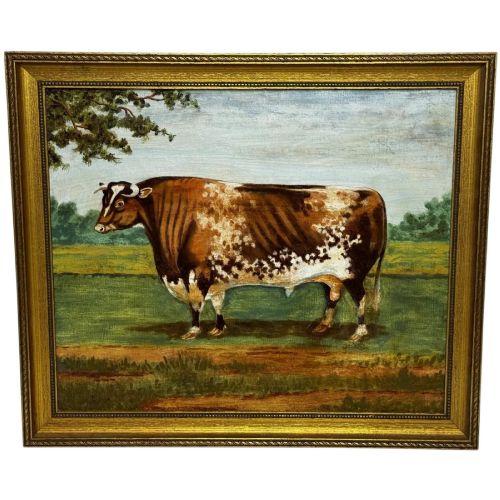


Pastoral Farm Painting
A pastoral farm painting brings the quiet labour and domestic animals of the countryside directly into a room.
Pastoral Farm Painting
A pastoral farm painting depicts rural scenes populated by agricultural workers, farmsteads, horses, cattle, and sheep. These artworks capture the daily rhythms of agrarian life, from harvesting crops to tending livestock in fields and farmyards.
The pieces on this page span the Victorian era, the Edwardian period, and the twentieth century, reflecting shifting approaches to rural subjects. British and European artists recorded these agricultural landscapes in oil and watercolour.
Viewers regularly encounter depictions of shorthorn bulls, carthorses at rest, and shepherds tending flocks. Such works range from intimate watercolours of farm hands to large canvas landscapes detailing rural toil.
Materials and Techniques
Painters of these rural scenes relied primarily on oil paint applied to canvas, panel, or board, creating rich surface textures and durable finishes. Many works also utilise watercolour on paper for lighter, more fluid atmospheric effects in farmyard and meadow settings.
Framing often involved traditional wooden mouldings accented with gold leaf or gilt, which complemented the earthy tones of the pigment. Mixed-media pieces combine various drawing and painting techniques to capture the specific textures of foliage, animal coats, and weathered timber.
Pastoral Farm Painting Retail Price Guide 2026
Typical asking prices for pastoral farm painting among the pieces listed under this phrase on Sellingantiques today, from the lower quarter to the upper quarter. They describe what is for sale here now, not the wider market.
Materials documented across these listings include oil paint, canvas, wood, paper, gold leaf, and gilt.
Differentiating Quality
The distinction between standard decorative works and finer examples rests upon the artist's command of light, anatomical precision in animals, and the naturalism of human figures. Superior compositions integrate workers and livestock harmoniously into the surrounding topography rather than placing them as isolated figures.
Brushwork maturity also defines the range, where confident, deliberate strokes convey the movement of foliage and clouds effectively. Weaker works often rely on rigid repetition and flat colour application, whereas higher quality paintings demonstrate careful observation of atmospheric conditions and seasonal colour.
Franz van Severdonck·James William Booth·Ernest Pile Bucknall·Charles Vickers·John Linnell·George Soper·Thomas Sidney Cooper·Claude Cardon·Owen Bowen·Henry Birtles·Ernest Higgins Rigg·George Cole
The Pastoral Farm Painting Glossary
- Pastoral
- Relating to the countryside and the life of farm workers or shepherds. These scenes idealise or realistically portray rural labour and agriculture.
- Genre painting
- The depiction of aspects of everyday life by subjects engaged in common activities. In this context, it shows farm hands, ploughmen, and milkmaids at work.
- Gilt
- A thin layer of gold applied to wood or other materials to decorate frames. It provides a warm, reflective border that enhances the tones of oil paintings.
- Watercolour
- Paint consisting of soluble pigment suspended in a water-based solution. Artists use it on paper to achieve translucent washes and delicate detail.
Pastoral Farm Painting: Frequently Asked Questions
What subjects appear in pastoral farm paintings?
These works primarily feature agricultural scenes, including ploughing horses, milking cows, sheep grazing, and farm workers harvesting crops. Landscapes often incorporate traditional farmsteads, barns, and rural valleys.
Artists frequently documented the specific relationship between labourers, livestock, and the changing seasons, creating an enduring record of historical farming practices.
How do I distinguish between oil and watercolour paintings?
Oil paintings use thick pigments on canvas or wood panels, resulting in visible brush texture and a slightly glossy finish. Watercolours employ thinner washes on paper, usually displayed under glass.
Watercolours tend to present a lighter, more translucent quality, whereas oils offer deeper colour saturation and heavier impasto effects.
What periods do these artworks represent?
The inventory spans the nineteenth century, the Victorian and Edwardian eras, and moves into mid-twentieth-century examples. Each period brings a distinct perspective to rural life, shifting from romanticised realism to impressionistic brushwork.
Victorian pieces often emphasise narrative detail in farmyard scenes, while later works focus on light and atmospheric conditions.
How should I care for an antique painting?
Antiques require stable indoor environments away from direct sunlight and excessive moisture fluctuations. Canvas works benefit from gentle dusting with a soft, dry brush.
Watercolours on paper are especially sensitive to light and should be housed behind protective glazing to prevent fading of the pigments.