


Pastoral Cattle Artwork
These pastoral cattle artwork pieces bring rural landscapes and livestock into focus through Victorian and Edwardian oils and watercolours.
Pastoral Cattle Artwork
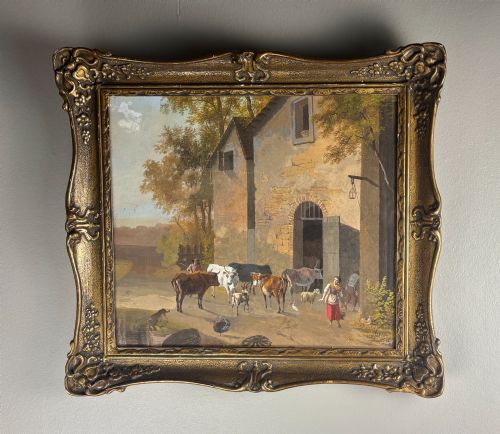
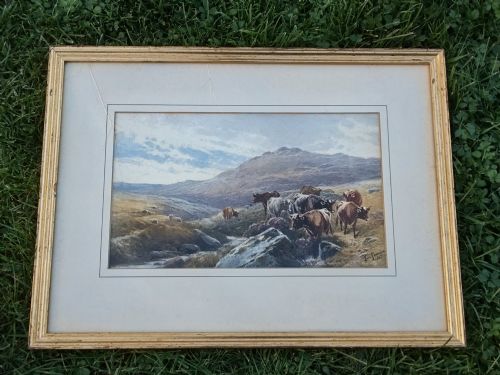
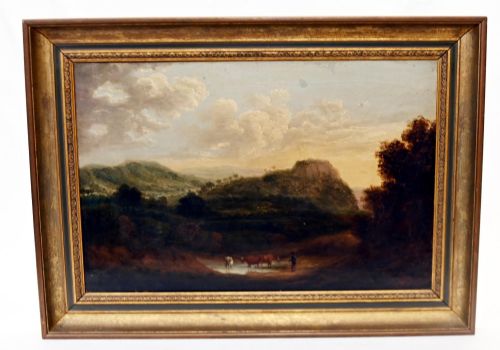
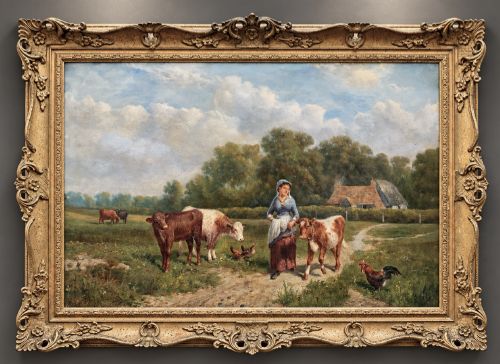
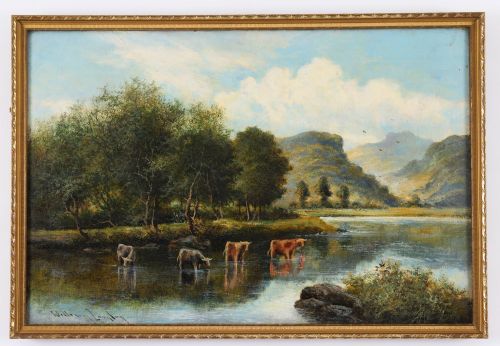
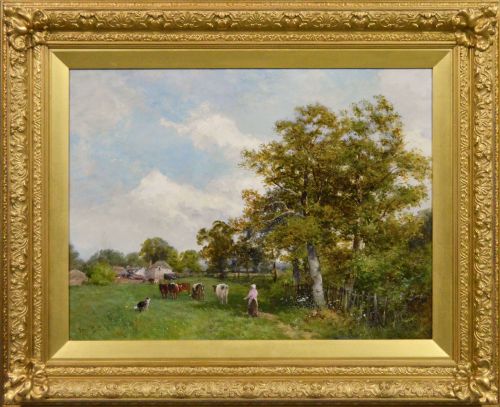
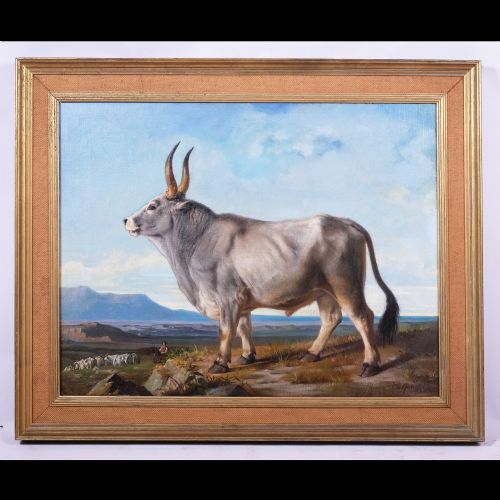
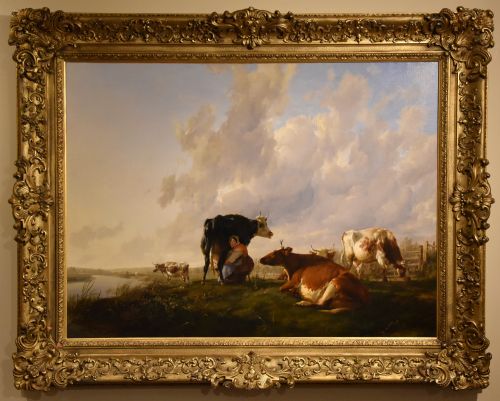
When you search for pastoral cattle artwork, you encounter painted scenes of herds, bulls, and milkmaids set in British and European countryside. The pieces on this page span from the nineteenth century into the early twentieth century, capturing rural life through oil on canvas and watercolour.
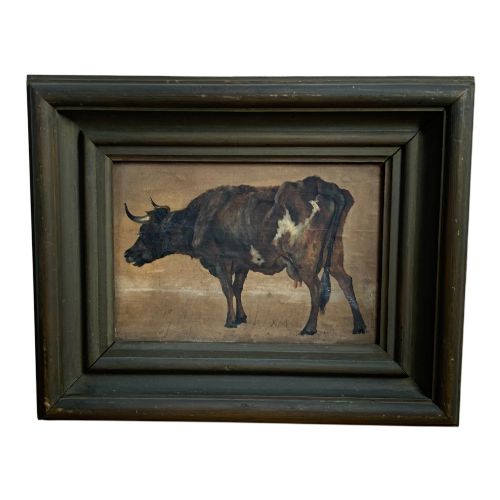
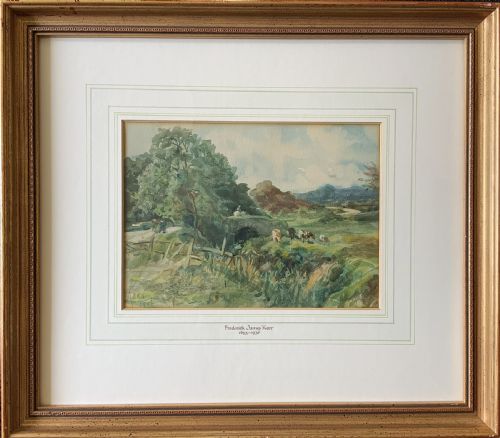
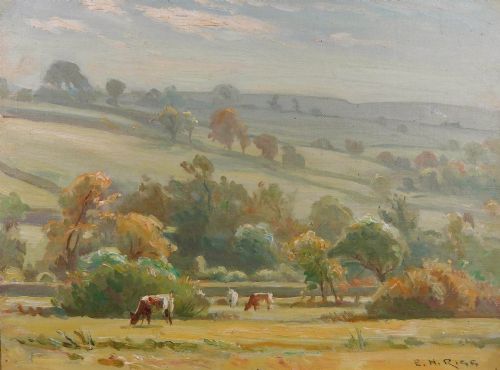
You are most likely to meet framed oil paintings and watercolours depicting cattle by rivers, in woodlands, or within farming landscapes. These works reflect Victorian pastoral and British Impressionist traditions, often focusing on prized shorthorns and beasts of burden.
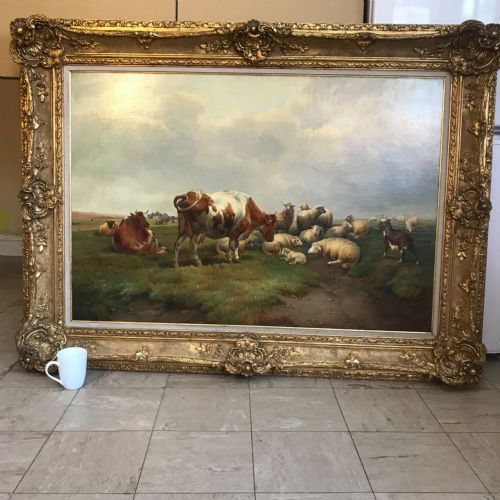
The selection includes both intimate works on paper and larger canvas compositions by named artists and regional schools. Each piece records agricultural scenery and livestock from a period when rural subjects dominated domestic interiors.
How pastoral cattle artwork pieces were made
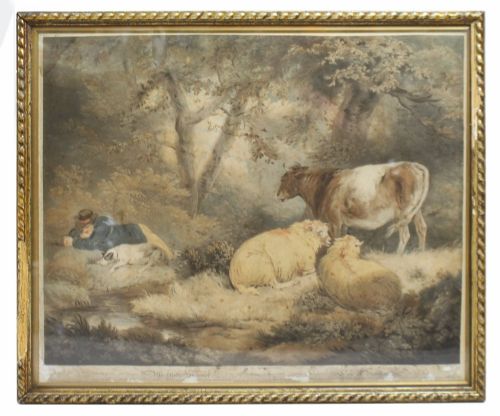
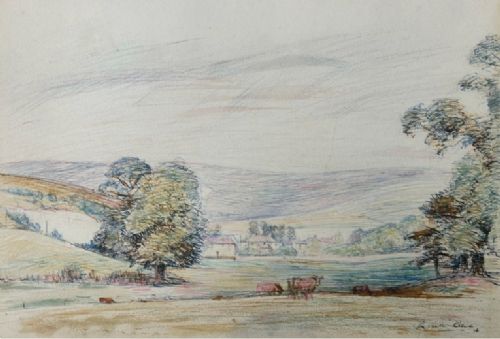
Artists applied oil paint to stretched canvas or wooden board, building up textures to describe the coats of cattle and the surrounding fields. Others worked with watercolour and mixed media on paper, capturing light on rivers and valleys with transparent washes.
Finished works were housed in period frames constructed from wood, gesso, and giltwood, which protected the edges and complemented the tonal palette of the painting. Many retain their original framing from the nineteenth and early twentieth centuries.
Pastoral Cattle Artwork Retail Price Guide 2026
Typical asking prices for pastoral cattle artwork among the pieces listed under this phrase on Sellingantiques today, from the lower quarter to the upper quarter. They describe what is for sale here now, not the wider market.
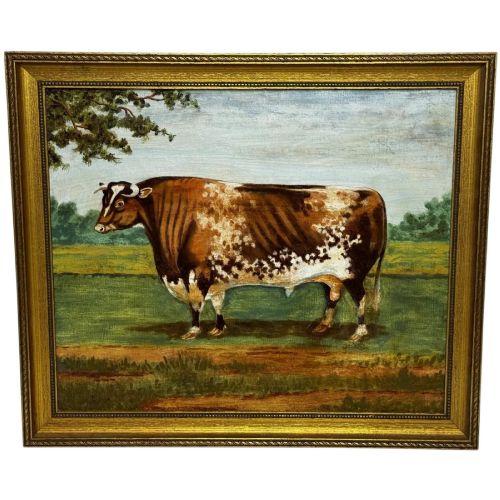
Several prized shorthorn bulls gaze out from these canvases with the stoic dignity of Victorian nobility.
What varies in quality in pastoral cattle artwork pieces
The ability of the artist to render the anatomy and weight of the livestock distinguishes individual pieces. Skilled hands capture the musculature of a shorthorn bull or the gentle posture of resting cows with convincing volume.
Compositional balance between the animals and the wider landscape creates depth and atmospheric perspective. Works that successfully integrate livestock into a detailed woodland, river, or mountain setting demonstrate superior artistic control.
William H Myers·David Bates·Thomas Sidney Cooper·Ernest Higgins Rigg·Frederick James Kerr·Russell Sidney Reeves·William Watson Jnr·Johann Friedrich Voltz·T C Hofland·A M Gauci·Oswald Garside·Ernest Pile Bucknall·Samuel Joseph Clark·Thomas Hunn·George Vicat Cole·Andre de Moller·Sidney Richard Percy·Frederick James Knowles·Robert Thorne Waite·Heinrich Harder·James de Rijk·Eugene Verboeckhoven·C Laine·Pierre Emmanuel Dielmans·Harold Lawes
The Pastoral Cattle Artwork Glossary
- Oil on Canvas
- Pigments suspended in a drying oil applied to a woven fabric support. This medium allowed artists to achieve rich colour saturation and subtle blending in cattle portraits.
- Watercolour
- Pigments suspended in a water-soluble vehicle applied to paper. This technique produces luminous, translucent washes often seen in nineteenth-century landscape studies.
- Giltwood
- Wood carved and coated with a thin layer of gold leaf. Frames finished in this material were commonly used for nineteenth-century oil paintings.
- Gesso
- A paint mixture consisting of a binder mixed with chalk, gypsum, or pigment. It served as a smooth preparation layer on wooden frames before gilding.
- Shorthorn
- A distinct breed of cattle frequently featured in Victorian agricultural paintings. Artists prized them for their sturdy proportions and commercial importance to farming.
Pastoral Cattle Artwork: Frequently Asked Questions
What subjects appear in pastoral cattle artwork?
These works depict cows, bulls, and calves within rural settings such as riversides, farmyards, and mountain valleys. Human figures like milkmaids, shepherds, and farmers often accompany the herds.
Scenes frequently capture daily agricultural routines, including ploughing, feeding, and herding livestock across fields.
How do I date an antique painting of cattle?
Dating relies on stylistic clues, artist signatures, and the materials used for the canvas and frame. Nineteenth-century works often show heavier varnish and traditional framing methods.
Examining the back of the canvas or board can reveal old dealer labels, exhibition stamps, or handwritten inscriptions from the period.
Where were these pastoral paintings displayed?
Original owners hung these framed artworks in domestic reception rooms and studies of Victorian and Edwardian homes. They brought rural peace and agricultural wealth inside urban residences.
Today, they suit similar traditional or contemporary interior settings that celebrate historic landscape art.
How do I care for antique oil paintings?
Keep paintings away from direct sunlight and sources of extreme heat to prevent the canvas and paint layers from drying out. Dust the surface gently with a soft, dry brush without applying pressure.
Avoid using water or liquid cleaners on the paint or the giltwood frame, as moisture damages historic materials.