

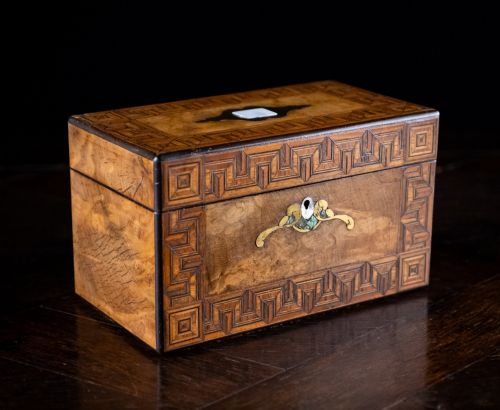
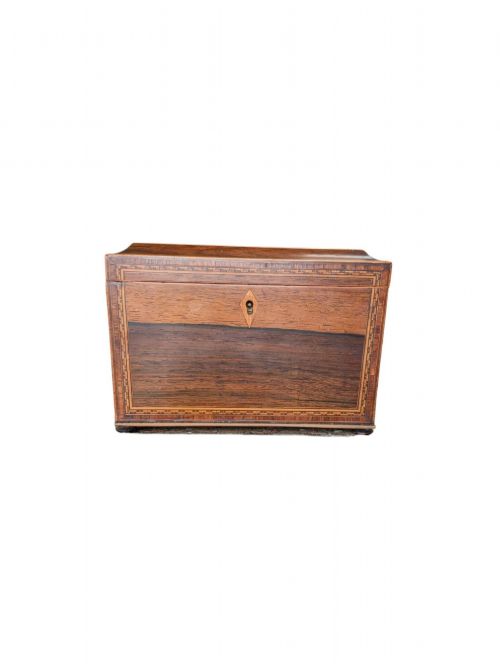


Parquetry Storage Box
These parquetry storage box pieces are timber containers decorated with geometric wood veneers that hold tea, sewing gear or personal items.
Parquetry Storage Box
When you search for parquetry storage box, you find wooden containers designed to hold tea, games, sewing materials or personal valuables. The pieces on this page span several centuries, reaching from seventeenth century lace boxes up to twentieth century blanket chests.
Tea caddies and work boxes form the largest share of what you meet here, often constructed during the Regency and Victorian periods. Makers employed intricate geometric patterns across lids and panels, housing fitted compartments inside for everyday domestic use.
How they were made
Craftsmen built these containers using dense hardwoods such as walnut, rosewood and olive wood as the primary body. They applied thin wood veneers and mixed wood inlays in geometric arrangements across the surfaces.
Specialist workshops utilised boxwood, mother of pearl and brass to accent the patterns. Tunbridge Ware examples incorporate thousands of tiny wood blocks assembled to form pictorial or geometric mosaics.
Parquetry Storage Box Retail Price Guide 2026
Typical asking prices for parquetry storage box among the pieces listed under this phrase on Sellingantiques today, from the lower quarter to the upper quarter. They describe what is for sale here now, not the wider market.
Listings span from the seventeenth century through to nineteen thirty, showing walnut, rosewood and boxwood veneers.
What varies in quality
Quality rests upon the precision of the geometric veneer work and the choice of timbers. Finer boxes display tight, flush joints and rich grain selection in walnut or rosewood.
Internal fittings elevate a piece, particularly original silk linings or compartmentalised trays. Simpler constructions lack the refined internal layout and intricate inlay seen in the top tier.
The Parquetry Storage Box Glossary
- Parquetry
- Geometric mosaic woodwork formed by fitting small wood veneers together to create patterns. It differs from marquetry by using strictly geometric angles rather than curved pictorial designs.
- Tunbridge Ware
- British woodworking style producing items decorated with mosaic patterns made from tiny differently coloured wood segments. The technique creates detailed views or geometric borders.
- Sarcophagus form
- A container shape featuring a domed or stepped lid resting on a tapering body, popular during the Regency period. This profile gives tea caddies and work boxes a substantial architectural presence.
- Tea caddy
- A box designed to store loose tea leaves securely, often featuring internal lidded canisters. Earlier examples included lock and key to protect expensive imported leaves.
Parquetry Storage Box: Frequently Asked Questions
What did people store inside them?
These containers held valuable household commodities, most notably dry tea leaves, sewing gear, lace and playing cards. Wealthy households kept tea locked away to ration consumption.
Smaller receptacles served as work boxes for needles, thread and personal trinkets, keeping daily items organised and protected from dust.
How do I date a box?
Dating relies on timber choices, construction methods and stylistic markers such as feet, handles and escutcheons. Regency pieces frequently feature sarcophagus shapes and rosewood veneers.
Victorian examples often use walnut and incorporate Tunbridge Ware borders, while seventeenth century boxes show heavier solid wood construction with simpler joinery.
Are the interiors usually original?
Interiors vary significantly, with many surviving pieces retaining their original compartments, paper linings or silk pads. Original tea caddy mixing bowls and lidded canisters are particularly prized.
Replacement linings occur frequently due to the fragile nature of nineteenth century textiles and paper, which wore out through regular domestic use.
How should I clean the wood?
Maintenance requires dry dusting with a soft cloth to protect the delicate veneer and inlay work. Avoid modern liquid polishes that can seep beneath loose wood pieces.
Feeding the timber occasionally with appropriate wax helps maintain the lustre of walnut and rosewood without damaging the historic finish.