



Parisian Art Painting
These parisian art painting works capture the shifting light and street life of the French capital across the nineteenth and twentieth centuries.
Parisian Art Painting
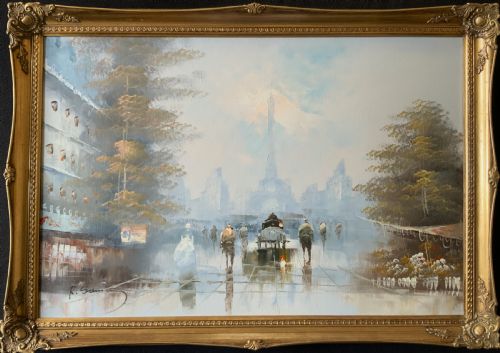
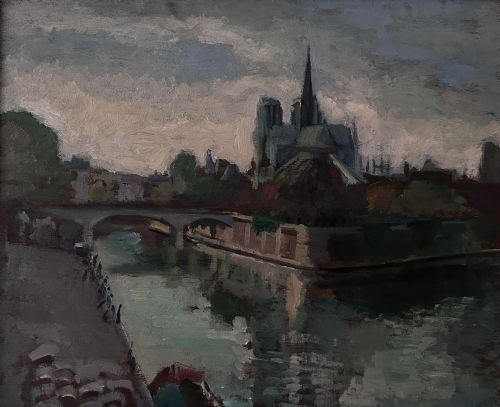
A parisian art painting typically depicts notable landmarks, quiet riverside quays, and bustling street scenes from the heart of France. Works in this selection span periods from the mid-nineteenth century through the mid-twentieth century, recording the visual character of the city over generations.
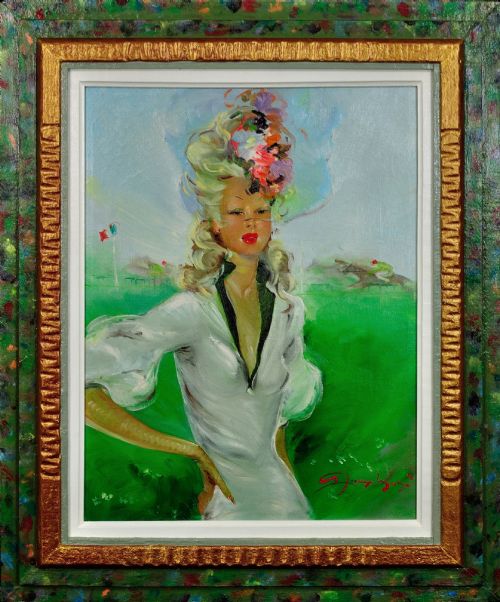
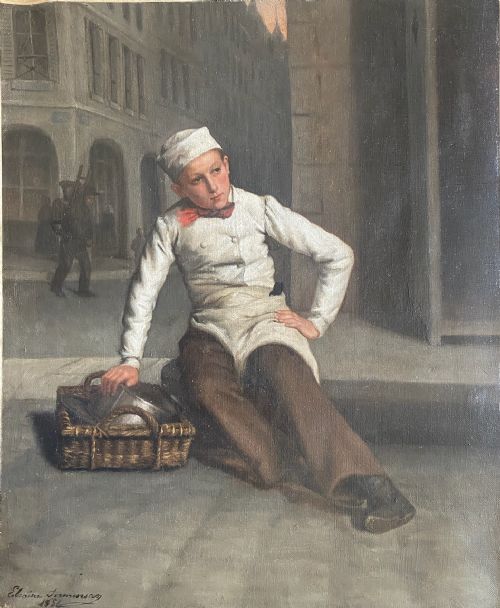
Buyers encounter oil paintings on canvas and board alongside watercolours, housed in wood or gilt wood frames. The selection includes cityscapes, genre scenes, and figurative compositions created in styles ranging from Post-Impressionism to French Realism.
Materials and Techniques
Artists record these urban views using oil paint or watercolour applied to canvas, board, or paper supports. The handling of medium shifts from the careful detail of earlier genre pieces to the looser brushwork characteristic of mid-century impressionist cityscapes.
Many works retain their original or period frames constructed from wood, frequently featuring gilt or gilded surfaces that complement the composition within.
Parisian Art Painting Retail Price Guide 2026
Typical asking prices for parisian art painting among the pieces listed under this phrase on Sellingantiques today, from the lower quarter to the upper quarter. They describe what is for sale here now, not the wider market.
The listings span from 1850 to 1960, featuring oil on canvas, board, and watercolour across styles including Belle Epoque and Mid-Century Modern.
Factors of Quality
The strength of a composition rests on the artist's ability to render the distinctive atmosphere and light of Paris, whether depicting a crowded boulevard or a quiet stretch of the Seine. Stronger works demonstrate confident brushwork and a coherent tonal palette that defines the period style.
The relationship between the painting and its frame also matters, as period gilt wood settings that match the age and character of the canvas enhance the overall integrity of the piece.
Jean-Gabriel Domergue·Caroline Burnett·Gabriel Dauchot·Ron Folland·Merio Ameglio·Eduard Leon Cortes·Albert Guillaume·Hermoine Hammond·Pierre Peltier
The Parisian Art Painting Glossary
- Post-Impressionism
- A French art movement that developed roughly between the late nineteenth century and the early twentieth century, extending impressionist limits while retaining a focus on vivid colours and thick application of paint.
- Belle Epoque
- A period of French history dating from the late nineteenth century to the outbreak of the First World War, characterised by optimism, peace at home, and cultural innovation.
- Oil on Canvas
- A traditional painting technique where pigments suspended in drying oils are applied to stretched woven fabric, allowing for rich colour depth and textured brushstrokes.
- Gilt Wood
- Wood surfaces covered with a thin layer of gold leaf or gilt powder, commonly found on decorative frames from the nineteenth and twentieth centuries.
Parisian Art Painting: Frequently Asked Questions
What subjects appear in these works?
The paintings record recognizable Parisian landmarks such as Notre Dame, the Eiffel Tower, and the Pont Neuf alongside quieter views of the River Seine and Montmartre.
Other compositions focus on genre scenes, fashionable figures, and the bohemian life of the city during the nineteenth and twentieth centuries.
How do I date a Parisian painting?
Dating relies on stylistic clues, framing materials, and the recorded active periods of the artists who signed the canvases.
Pictorial evidence such as clothing fashions, vehicle types, and urban development provides additional chronological markers for street scenes.
How should I hang and display them?
These works require stable indoor conditions away from direct sunlight and excessive humidity to protect the canvas and wood supports.
Matching the painting to a suitable wall space allows the accompanying gilt frames to provide a strong visual boundary.
What is the difference between oil and watercolour?
Oil paint utilises pigments bound in drying oil on canvas or board, offering heavy texture and deep layers of colour.
Watercolour employs water-soluble pigments on paper, producing lighter, translucent effects often used for preparatory or illustrative studies.