



Paris Street Scene
A paris street scene captures the vibrant architecture and daily life of the French capital through the brush of artists spanning multiple generations.
Paris Street Scene
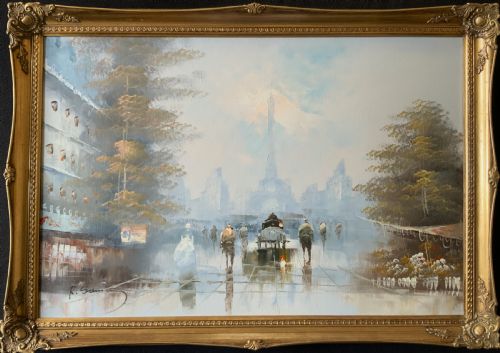
When you search for a paris street scene, you are looking at fine art paintings that capture urban life, iconic landmarks like the Eiffel Tower and Pont Neuf, and historic cityscapes. These works range from grand nineteenth-century salon pieces to mid-century modern interpretations of the French capital.
You are most likely to meet oil paintings on canvas depicting bustling boulevards, snowy Montmartre views, and lively squares framed in wood or gilded surrounds. The selection includes works by notable artists such as Caroline Burnett, Victor Gabriel Gilbert, and Eduard Leon Cortes, alongside atmospheric watercolours and pastels.
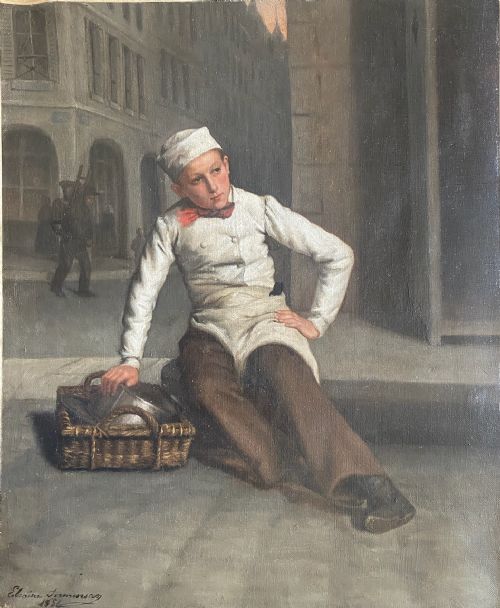
The subjects extend beyond famous monuments to quiet side streets and suburban views populated by figures going about their day. Each piece offers a distinct window into Parisian life, shaped by the prevailing artistic movements of its specific era.
How They Were Made
Artists executed these works primarily using oil paint on canvas or board, applying pigments to build texture and depth in the depiction of city facades and bustling crowds. Some pieces utilise watercolour or pastel on paper, capturing lighter and more immediate atmospheric effects.
The physical presentation relies heavily on traditional framing techniques, with many works housed in wood frames or gilded wood mouldings that complement the French aesthetic of the period.
Paris Street Scene Retail Price Guide 2026
Typical asking prices for paris street scene among the pieces listed under this phrase on Sellingantiques today, from the lower quarter to the upper quarter. They describe what is for sale here now, not the wider market.
Listings feature oil paintings, watercolours, and pastels spanning from the mid-nineteenth century to the mid-century modern period.
What Varies in Quality
The distinction between works rests on the handling of light, atmosphere, and human activity within the composition, where masterly brushwork brings the urban environment to life. Pieces by documented Salon-exhibiting artists or established names carry greater artistic weight.
The integration of the original frame also influences the overall integrity of the piece, as period-appropriate gilded wood enhances the visual impact of the canvas.
The Paris Street Scene Glossary
- Oil on Canvas
- Pigment suspended in drying oil applied to a woven fabric support. This traditional medium allows for rich colour blending and textured impasto work.
- Impressionism
- A nineteenth-century art movement characterised by relatively small, thin, yet visible brush strokes and an open composition. It emphasises accurate depiction of light in its changing qualities.
- Gilded Wood
- Wood surfaces coated with a thin layer of gold leaf or metallic powder. This finish is commonly found on traditional picture frames surrounding nineteenth and twentieth-century artworks.
- Pastel Drawing
- An artwork created using dry pigment sticks on paper. This medium produces soft, velvety colour transitions well suited for atmospheric cityscapes.
Paris Street Scene: Frequently Asked Questions
What periods do these paintings cover?
The works span from the mid-nineteenth century through the mid-twentieth century, encompassing periods like the Belle Epoque and Mid-Century Modern.
This broad timeline shows how artistic interpretations of the French capital evolved over a hundred years.
Who are the notable artists featured?
The collection includes pieces by recognised painters such as Caroline Burnett, Victor Gabriel Gilbert, Eduard Leon Cortes, and Merio Ameglio.
These artists brought distinct styles ranging from French Realism and Impressionism to mid-century interpretations.
How are the artworks framed?
Many pieces come in traditional wood frames, including ornate gilded wood surrounds that match the period of the painting.
Original frames contribute significantly to the historical presentation of the artwork.
What mediums were used for these scenes?
Painters primarily used oil on canvas or board to capture the bustling streets and landmarks of Paris.
Watercolour and pastel on paper also appear among the selections for lighter compositional studies.