

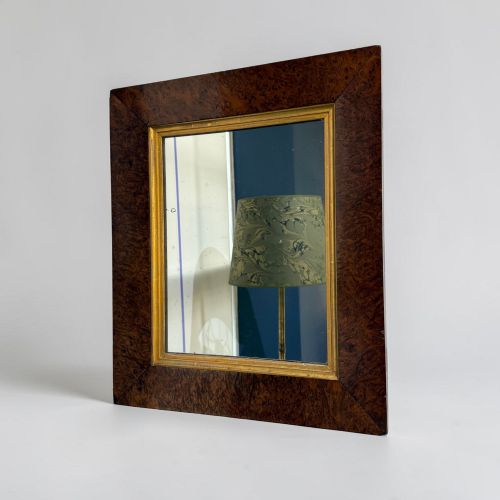
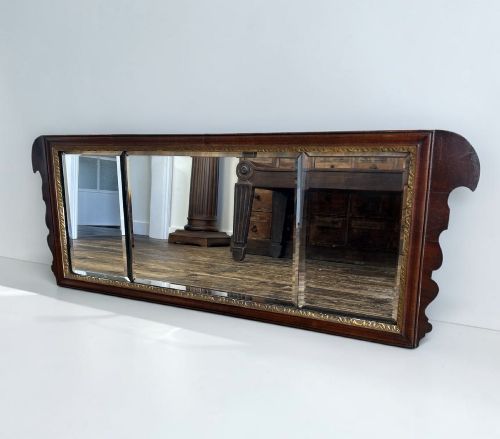


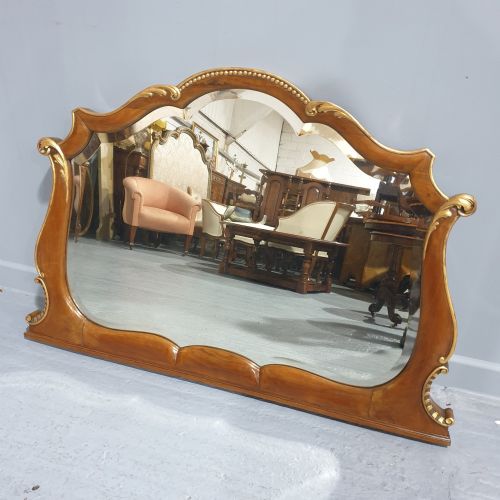


Parcel Gilt Walnut Mirror
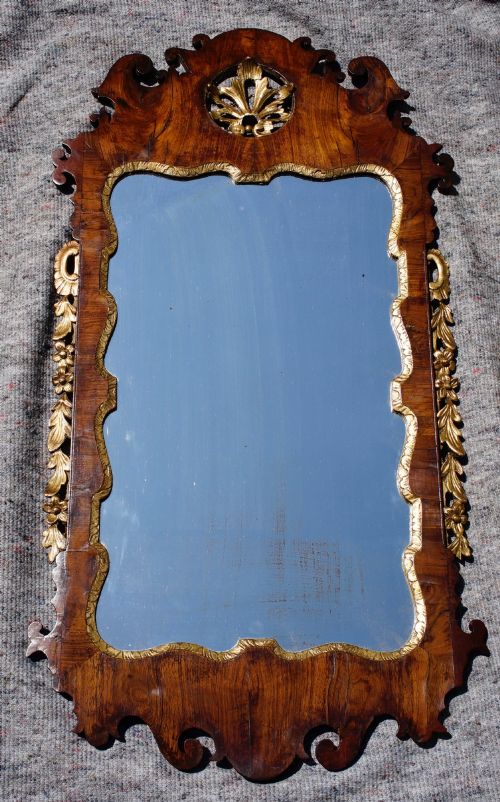
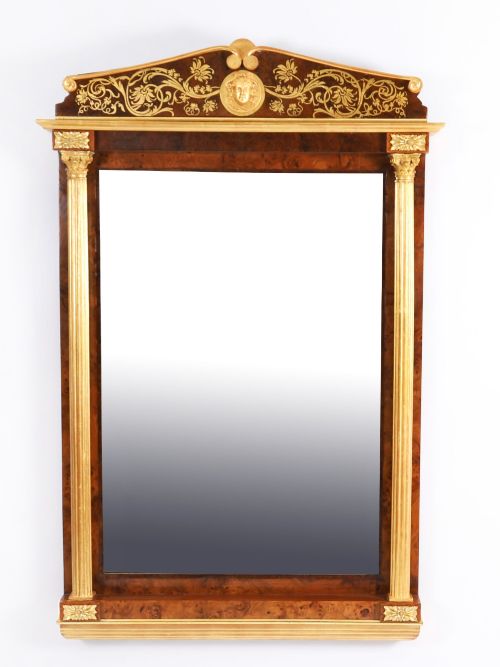
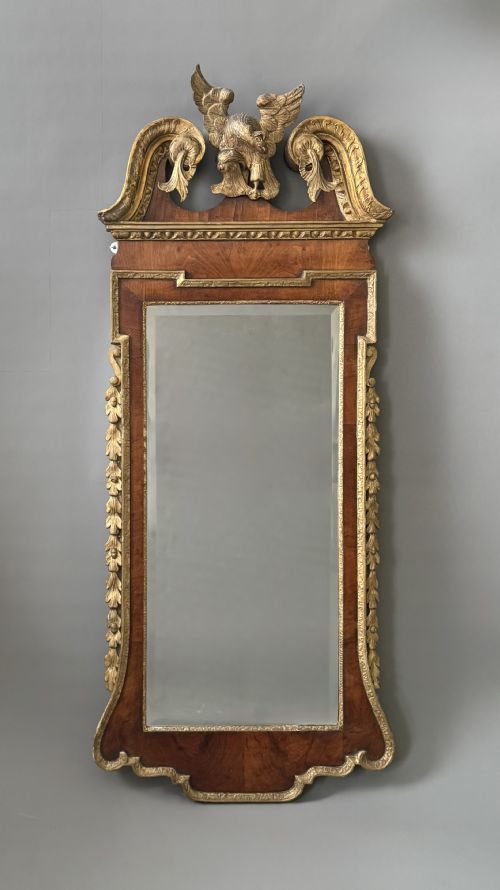
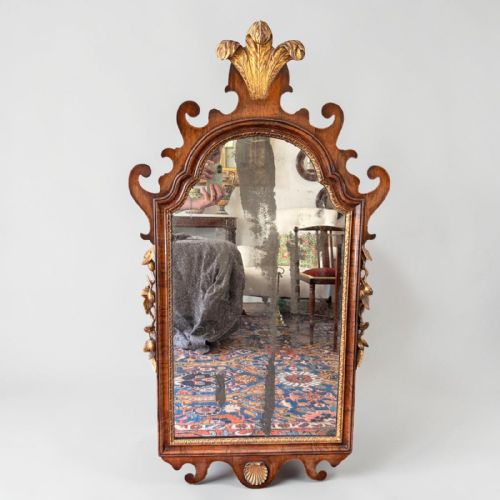
A parcel gilt walnut mirror brings together warm timber grains and bright leaf gilding in forms that date from the eighteenth century onwards.
Parcel Gilt Walnut Mirror
A parcel gilt walnut mirror combines deep brown timber frames with applied gold leaf highlights, a pairing that defines much of the cabinetmaker's art from the Georgian period onward. When searching this phrase, a buyer encounters wall mirrors, pier glasses designed to hang between windows, and larger overmantel examples.
The selection ranges from authentic eighteenth-century survivals to later nineteenth-century revivals in the George II and Chippendale styles. Fretwork plates with scrolling ears and carved crests appear alongside architectural Palladian frames and simpler domestic wall hangings.
How they were made
Makers constructed these frames using solid walnut or applied burr walnut veneers over pine or oak carcasses, selecting timber for rich grain patterns. Artisans then applied thin sheets of gold leaf over a prepared gesso ground to specific carved details such as mouldings, flower rosettes, and scrolling crests.
Early examples often retained original mirror glass plates with hand-beveled edges, held within rebated frames by wooden backing boards. Later revival pieces utilised machinery-cut glass while maintaining traditional joinery and hand-carved fretwork.
Parcel Gilt Walnut Mirror Retail Price Guide 2026
Typical asking prices for parcel gilt walnut mirror among the pieces listed under this phrase on Sellingantiques today, from the lower quarter to the upper quarter. They describe what is for sale here now, not the wider market.
Listings feature walnut, burr walnut, and giltwood materials across eighteenth-century Georgian and nineteenth-century revival periods.
What varies in quality
The distinction between average and exceptional pieces rests upon the crispness of the hand-carved fretwork and the depth of the walnut veneers. Finer items exhibit sharply defined edges on scrolling ears and bird motifs, whereas mass-produced or later revival interpretations display softer, more rounded contours.
The integration of the parcel gilding also indicates workmanship, with superior examples showing gold leaf laid precisely onto carved high points to catch the light. Original mirror plates displaying natural foxing add authenticity and value compared to modern glass replacements.
The Parcel Gilt Walnut Mirror Glossary
- Parcel Gilt
- Partially gilded, describing an object where gold leaf is applied only to specific carved details while the base walnut wood remains visible. This technique highlights particular decorative motifs on the frame.
- Pier Mirror
- A tall vertical glass designed to be hung on the wall space between two windows, often placed above a matching console table. These pieces reflect natural light deeper into the room.
- Fretwork
- Thin panels of wood pierced with decorative patterns using a fretsaw, frequently seen on the outer frames and crestings of eighteenth-century designs. This ornamental technique creates intricate silhouettes.
- Cresting
- The decorative carved wooden ornament mounted at the very top of a mirror frame. It often incorporates scrolling foliage, architectural pediments, or carved birds.
- Burr Walnut
- Wood taken from the gnarled growths of a walnut tree, yielding highly decorative swirling grain patterns. Cabinetmakers used these figured veneers on the flat surfaces of the frame.
Parcel Gilt Walnut Mirror: Frequently Asked Questions
How do I date an old mirror?
Dating relies on examining the construction of the wooden frame, the backing boards, and the characteristics of the glass plate itself. Eighteenth-century pieces typically feature hand-sawn timbers and old pine second woods.
Later nineteenth-century revival items often display machine-cut elements and modern fixings. Comparing the carving style to known period designs helps confirm the era of manufacture.
Where should I hang a pier mirror?
Historically, pier mirrors were positioned on the narrow strip of wall between two windows above a low table. This placement maximised daylight within eighteenth-century reception rooms.
In modern interiors, they work effectively above mantelpieces, in hallways, or on feature walls where their vertical proportions can draw the eye upward.
Are the mirror plates original?
Original glass plates often show signs of age, including light oxidation, tiny dark spots known as foxing, and minor surface scratches. These characteristics confirm that the glass has remained undisturbed within the frame for generations.
Clean, uniformly bright reflection without distortion usually indicates a modern replacement or a later nineteenth-century manufacturing date.