





Papier Mache Tilt Top
These papier mache tilt top tables combine practical ingenuity with decorative flair, offering a versatile surface that folds away neatly when not in use.
Papier Mache Tilt Top
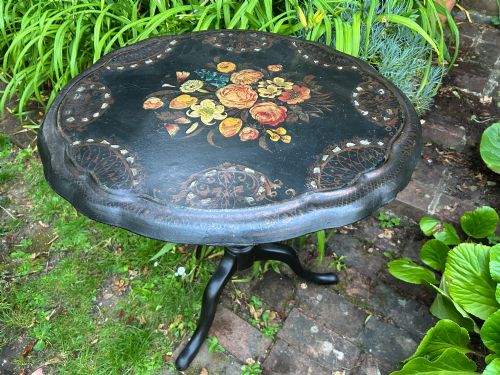
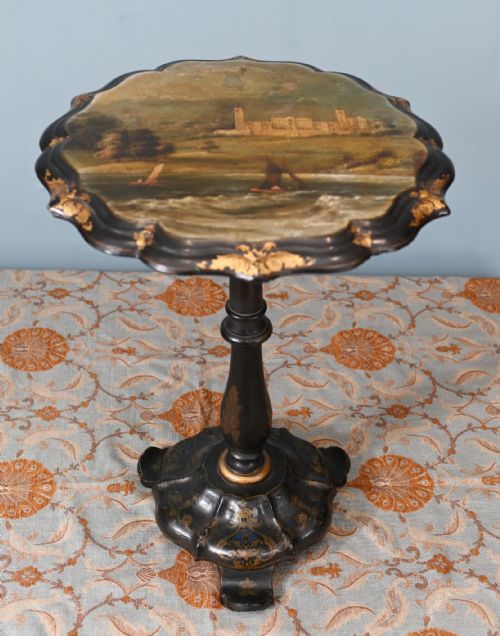
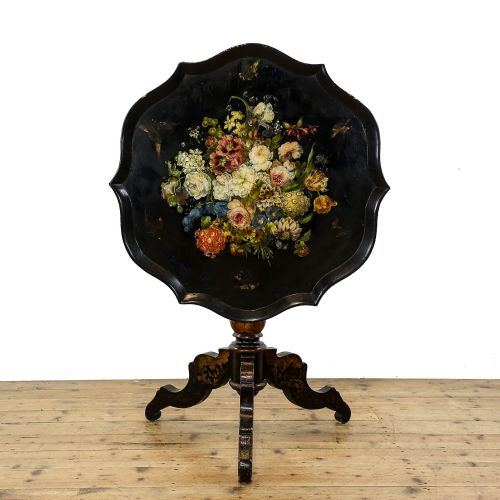
When you search for papier mache tilt top, you are looking at nineteenth-century occasional furniture designed to serve multiple functions in the Victorian interior. The examples you meet on this page take the form of wine tables, supper tables, tea tables, and games tables supported by tripod bases.
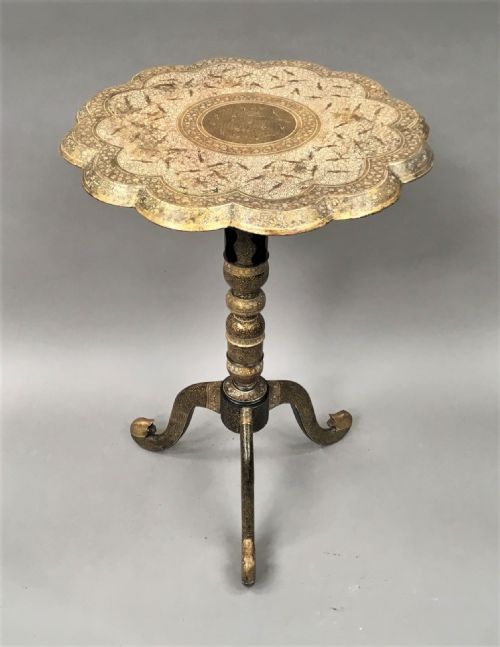
The prevailing style across these pieces is Victorian, alongside variations such as Victorian Chinoiserie and Anglo-Indian designs. These tables functioned as flexible additions to the parlour or drawing room, easily moved and stowed against a wall by tilting the top vertically.
Most pieces date from the nineteenth century, including specific years like 1850, 1860, and 1880. They bridge the gap between sturdy utility and ornate surface decoration, reflecting the domestic habits of the period.
How they were made
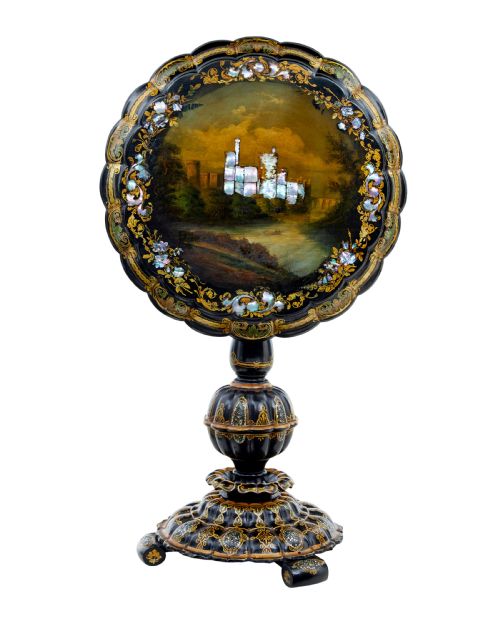
The construction relies on papier-mache combined with wood, often utilising ebonised wood or rosewood for the structural tripod supports and framing. The papier-mache tops were built up from layers of paper and binder pressed into rigid, durable forms capable of bearing weight.
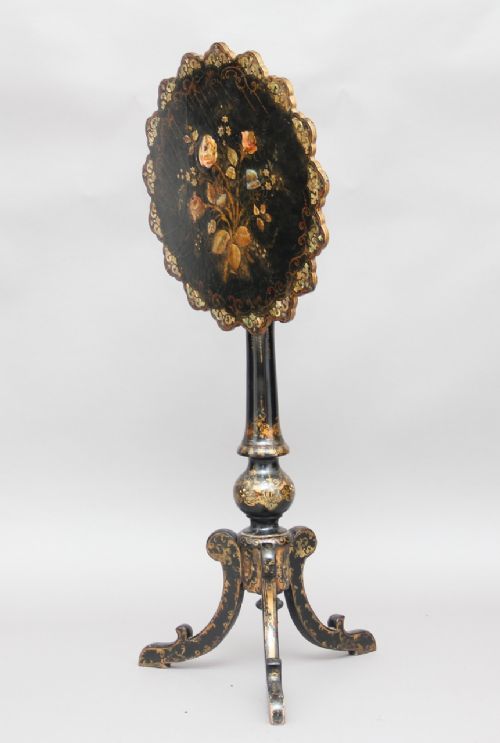
Makers applied lacquer, paint, and gilt directly to the surfaces to create elaborate decorative schemes. Many examples incorporate mother of pearl inlay embedded into the dark finish to catch the candlelight.
What varies in quality
Quality reveals itself in the intricacy of the hand-painted details and the precision of the mother of pearl inlay. Simpler painted motifs sit at one end, while elaborate Chinoiserie scenes and fine detailed paintwork represent the higher tier.
The structural integrity of the tilt mechanism and the stability of the tripod base also dictate the caliber of the piece. Well-executed joinery ensures the heavy papier-mache top tilts smoothly and locks securely into place without wobble.
Gillows
The Papier Mache Tilt Top Glossary
- Papier-mache
- A composite material made from paper pulp or layers of paper reinforced with glue, chalk, and resin, then moulded and dried. This substance provided a lightweight yet remarkably strong foundation for intricate surface decoration.
- Tilt top
- A table mechanism featuring a hinged top that pivots from horizontal to vertical. This clever engineering allowed tables to be pushed out of the way against a wall when the room was needed for other activities.
- Mother of pearl
- An iridescent inner layer of shells embedded into the lacquer surface of the table. Artisans shaped tiny pieces of shell to form floral or geometric patterns that shimmered under gaslight.
- Chinoiserie
- A European artistic style reflecting Chinese motifs and landscapes. Painters used this aesthetic to adorn table surfaces with exotic figures, pavilions, and foliage.
- Tripod base
- A three-legged support structure commonly utilised on small occasional tables. This configuration ensures the table remains stable even on uneven nineteenth-century floorboards.
Papier Mache Tilt Top: Frequently Asked Questions
What was a papier mache tilt top used for?
These tables served primarily as occasional surfaces for tea, wine, supper, or games in the Victorian home. Their folding mechanism meant servants could clear them quickly and store them flat against the perimeter of the room.
They moved easily from room to room depending on where guests gathered. This adaptability made them indispensable for entertaining during the nineteenth century.
How do I date a papier mache table?
Dating relies on stylistic clues, construction methods, and materials such as the presence of mother of pearl inlay or specific painted motifs. Most examples date from the Victorian era, specifically the mid-to-late nineteenth century.
Cabinetmakers often combined traditional timber framing with moulded paper pulp, a technique that peaked in popularity during this period. Comparing the tripod base and hinge mechanism to dated examples helps narrow down the decade.
Are these tables sturdy enough for daily use?
While the papier-mache material is surprisingly resilient and strong, these are antique pieces requiring a degree of care. They handle drinks, books, and decorative objects comfortably, but heavy loads or rough treatment should be avoided.
The tilt mechanism and tripod legs should be handled gently to preserve the original joints and hinges. Placing them away from direct heat sources protects the lacquer and paintwork.
How do I clean and care for the surface?
Dust the surface regularly with a soft, dry cloth to prevent particles from scratching the delicate lacquer and paint. Avoid harsh chemical cleaners, modern polishes, or excessive water, which can damage the historic finish.
If the table has mother of pearl inlay or gilt details, keep it out of direct sunlight to prevent fading. A gentle touch preserves the original patina built up over generations.