






Papier Mache Tilt Top Table
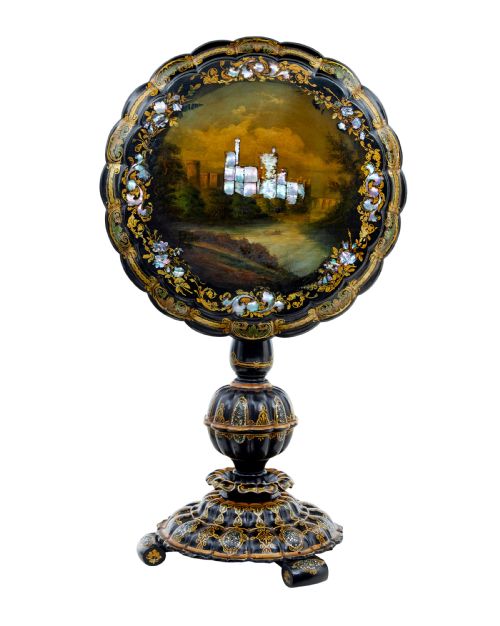
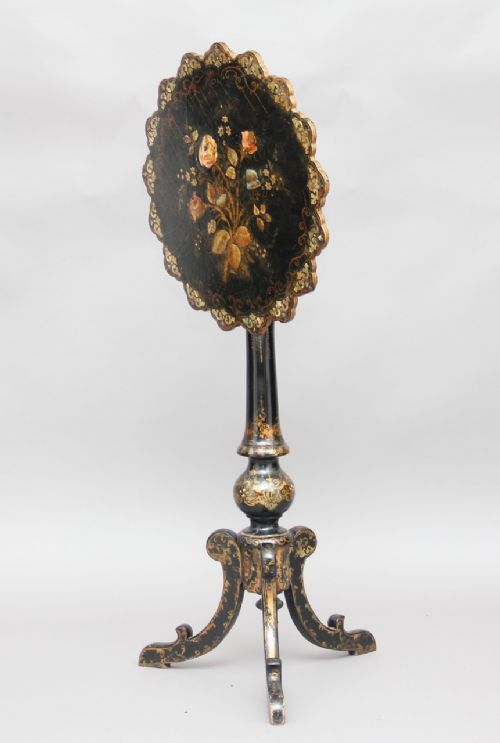
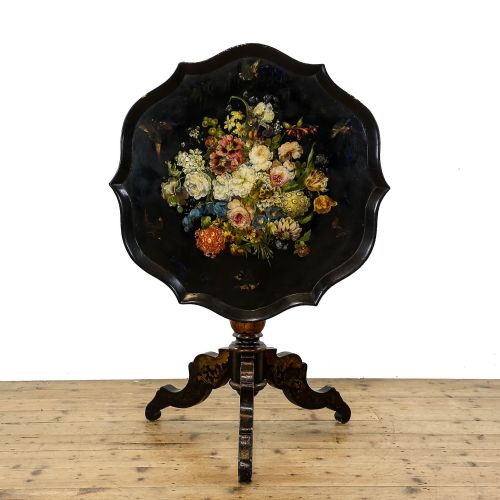
A papier mache tilt top table brings nineteenth century lacquer and inlaid mother of pearl into a room with clever folding action.
Papier Mache Tilt Top Table
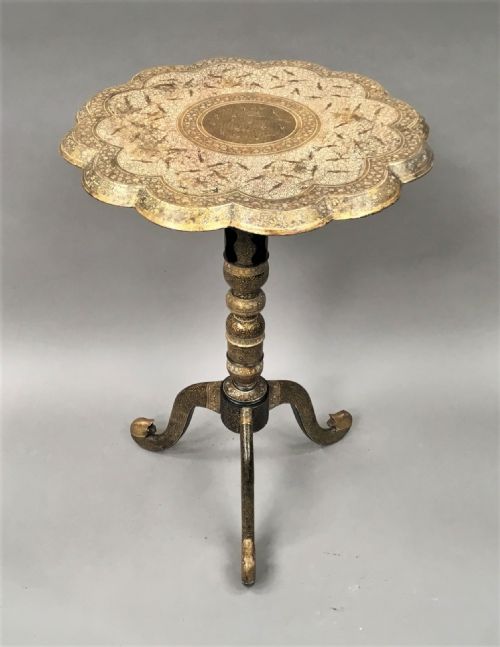
A papier mache tilt top table stands as a versatile nineteenth century occasional piece designed to fold flat against a wall when not in use. These forms include wine tables, side tables, and tray tables originating from Victorian workshops and Anglo-Indian traditions.
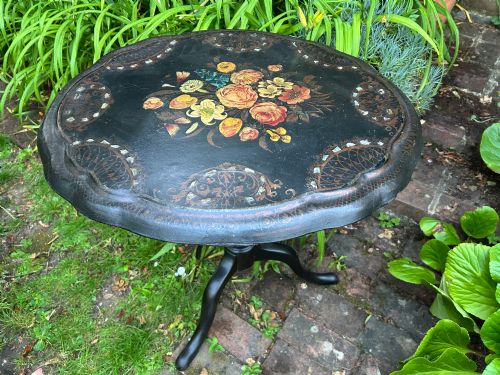
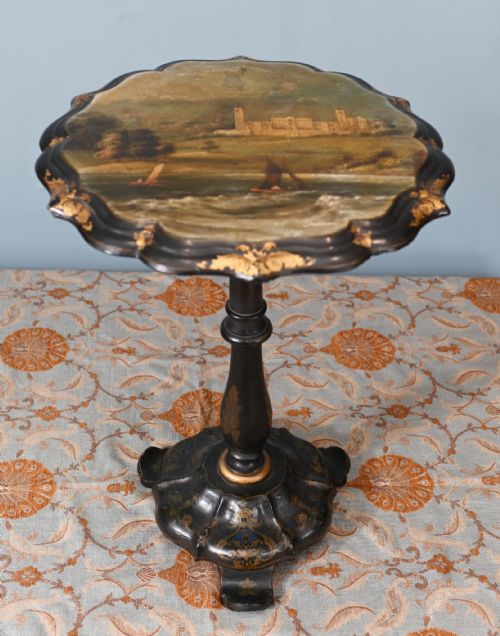
The most common version met on this page is the Victorian tilt top table featuring a hand painted surface supported by a tripod base. Makers often combined papier mache with ebonised wood or rosewood to create sturdy surfaces for drawing rooms.
Buyers seek these objects for their combination of useful surface area and compact storage. The pivoting mechanism allows the top to lock vertically, displaying the painted decoration as a panel.
How they were made
Craftsmen built the top by pressing layers of paper pulp with glue and resin over a metal or wooden mould before baking and smoothing the dense composite material. This created a stable board far less prone to warping than solid timber.
Makers applied dark lacquer and oil paint across the surface, frequently embellishing the design with iridescent pieces of mother of pearl and fine gilt detailing. The pivoting mechanism relied on a wooden or brass catch fitted to a tripod base made from ebonised wood or rosewood.
Papier Mache Tilt Top Table Retail Price Guide 2026
Typical asking prices for papier mache tilt top table among the pieces listed under this phrase on Sellingantiques today, from the lower quarter to the upper quarter. They describe what is for sale here now, not the wider market.
Listings feature nineteenth century pieces incorporating lacquer, paint, gilt, and mother of pearl inlay on wooden tripod bases.
What varies in quality
The refinement of the hand painted detail and the intricacy of the mother of pearl inlay set the better examples apart from simpler pieces. Skilled artisans created depth in Chinoiserie landscapes and floral scenes through layered pigments and delicate brushwork rather than stencils.
The stability of the tilt mechanism and the joinery of the tripod base dictate the structural integrity of the table. Superior examples maintain a tight, level lock when horizontal and a smooth pivot without wobbling on the feet.
Gillows
The Papier Mache Tilt Top Table Glossary
- Papier-mache
- A composite material made from layered paper pulp mixed with binding agents, pressed and dried to form a rigid board suitable for painting and polishing.
- Tilt-top table
- A small occasional table featuring a hinged mechanism that allows the surface to rotate ninety degrees into a vertical position.
- Mother of pearl
- An iridescent inner layer of mollusc shell cut into thin pieces and inlaid directly into the dark lacquer surface of the table.
- Chinoiserie
- A European artistic style reflecting Chinese motifs and landscapes, frequently rendered in gold and colour on black lacquered grounds.
- Ebonised wood
- Timber treated with chemical stains or dark paint to imitate the dense, black appearance of genuine ebony.
Papier Mache Tilt Top Table: Frequently Asked Questions
What is a papier mache tilt top table used for?
These tables served as portable surfaces for serving wine, holding books, or displaying decorative objects in nineteenth century sitting rooms.
Because the top pivots vertically, the table could easily be tucked against the perimeter of a room to save floor space when empty.
How do I identify a Victorian tilt top table?
Look for a compressed paper composite core finished with dark lacquer, resting on a three-legged tripod pedestal.
Many examples feature hand painted floral or Chinoiserie scenes combined with inlaid mother of pearl elements typical of mid nineteenth century production.
Are these tables stable enough for daily use?
Yes, the compressed paper material provides a remarkably tough and rigid surface that resists splitting under normal household conditions.
The tripod base distributes weight evenly, though care should be taken with the pivoting mechanism when tilting the heavy top.
How should I clean a lacquered table surface?
Dust the surface gently with a soft, dry cloth to prevent micro-abrasions on the delicate painted and lacquered finish.
Avoid chemical polishes, moisture, and direct sunlight, as excess water or heat can damage nineteenth century lacquer and lift the inlaid mother of pearl.