





Paper Silhouette Artwork
Paper silhouette artwork captures the crisp shadows of Georgian, Regency, and Victorian life.
Paper Silhouette Artwork
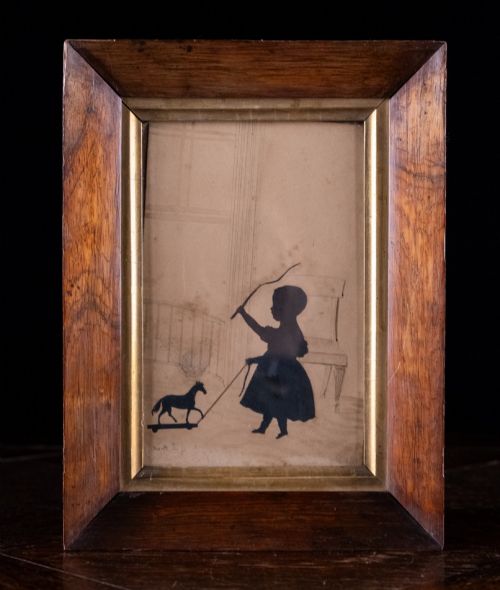
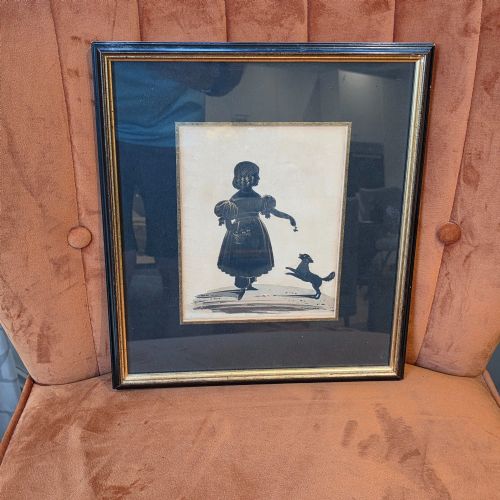
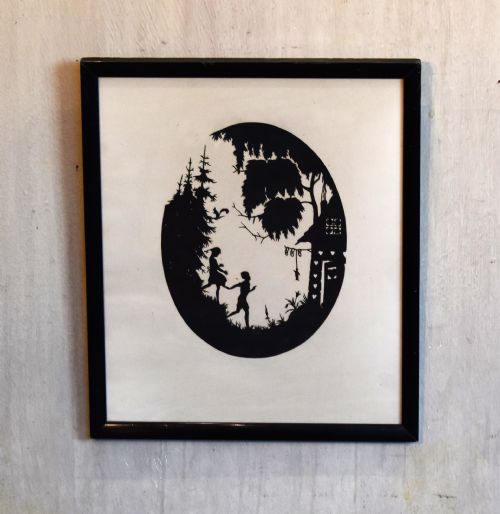
Paper silhouette artwork brings together profile portraits, conversation pieces, and botanical cutouts spanning the eighteenth, nineteenth, and early twentieth centuries. A buyer searching for paper silhouette artwork encounters framed wall art depicting children, gentlemen, families, and animals in precise profile. These pieces appear in styles ranging from Georgian and Regency to Victorian, Art Nouveau, and Folk Art, housed behind glass in period frames.
The most common examples on this page are nineteenth-century framed silhouette portraits and conversation pieces created by professional cutters and galleries. Portrait subjects include standing gentlemen, children with horses or dogs, and family groups rendered through meticulous cutting and painting. Alongside these portraits, buyers find collage works, floral pictures, and literary scenes reflecting the changing tastes of the period.
How they were made
Makers produced these works using paper, ink, and watercolour mounted on contrasting grounds, often highlighting details with gold leaf or paint. Artists cut freehand from black paper or painted directly onto cards and glass, capturing likenesses with remarkable economy of line. The resulting imagery relied entirely on outline and contrast rather than internal modeling.
Framing protected these delicate paperworks, utilising maple veneer, wood, brass, and gilt surrounds fitted with glass. Glazing kept dust and moisture away from the vulnerable paper and watercolour pigments over generations. Makers selected frames that complemented the dark tones of the cut paper against light backgrounds.
Paper Silhouette Artwork Retail Price Guide 2026
Typical asking prices for paper silhouette artwork among the pieces listed under this phrase on Sellingantiques today, from the lower quarter to the upper quarter. They describe what is for sale here now, not the wider market.
Listings feature paper silhouette artwork from the eighteenth, nineteenth, and early twentieth centuries, incorporating materials such as glass, gold leaf, and maple veneer.
What varies in quality
Quality rests in the precision of the cutting, the strength of the composition, and the presence of documented authorship. Top-tier works display fluid, confident scissor work that captures posture and expression without hesitation, while lesser examples show stiff outlines and hesitant snips. Signed pieces and those retaining period provenance or gallery trade labels sit firmly at the higher end of the range.
Materials and framing also distinguish superior pieces from ordinary ones. Original frames in maple veneer or gilt wood with period glass elevate a work's standing, whereas later replacements diminish it. The crispness of the ink work and the subtlety of any watercolour or gold leaf embellishments further mark out the better productions.
Augustin Edouart·William James Hubard·Frederick Frith·Alfred Darbyshire·John Smith of Edinburgh·Skeolan
The Paper Silhouette Artwork Glossary
- Silhouette
- A portrait or scene represented as a solid shape of a single colour, usually black, showing the profile of the subject. The technique originated long before photography as a quick and affordable method of capturing a likeness.
- Conversation piece
- An informal group portrait, typically depicting family members or friends engaged in a common activity. In silhouette work, these scenes capture domestic life and social interaction with intricate detail.
- Hollow cut
- A silhouette created by cutting the profile out of a sheet of white paper and mounting it over a dark background. The resulting image relies on the shadow cast by the aperture.
- Gilt
- A thin layer of gold applied to wood, paper, or metal frames to provide a decorative metallic finish. It reflects light and frames the dark silhouette profile effectively.
- Maple veneer
- A thin decorative slice of maple wood applied to a framing structure to provide a figured, warm surface. This timber choice was popular for framing nineteenth-century portraits.
Paper Silhouette Artwork: Frequently Asked Questions
How do I date a silhouette?
Dating relies on costume details, hair styles, and framing materials visible in the artwork. Eighteenth-century pieces often feature powdered wigs and distinct neckwear, while Regency items display high-waisted attire and specific bonnet shapes.
Signatures, trade labels on the reverse, and the type of paper or backing board also provide firm clues to the decade of creation. Comparing the mounting style with known dated examples helps narrow the timeline further.
Where should I hang these?
These delicate works require walls protected from direct sunlight to prevent the fading of dark paper and watercolour pigments. Grouping several framed silhouettes together on a neutral wall creates a striking traditional display.
Avoid damp areas such as kitchens or bathrooms, as moisture damages vulnerable paper and encourages foxing under the glass. Stable indoor temperatures preserve both the frame and the paper within.
What is a hollow cut?
A hollow cut is a technique where the artist uses scissors to snip the profile portrait out of a piece of white paper. The remaining sheet with the cutout hole is then laid over a dark backing material.
This method allows the background fabric or paper to show through the aperture, creating the final contrasting image. Many Regency era artists favoured this approach for its crisp finish.
Are all silhouettes signed?
Most historical silhouette artworks remain unsigned because many were produced as rapid, inexpensive keepsakes by travelling artists. Unsigned pieces are common and usually attributed to periods rather than specific makers based on style.
Signed works typically carry the artist's signature in ink beneath the portrait or on the backing paper. Gallery stamps or handwritten attribution notes on the reverse also point to the creator.