




Paper Architectural Etching
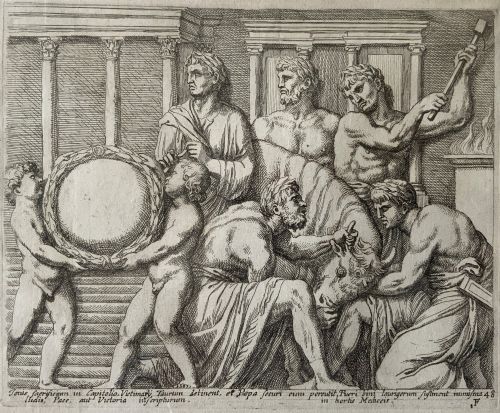
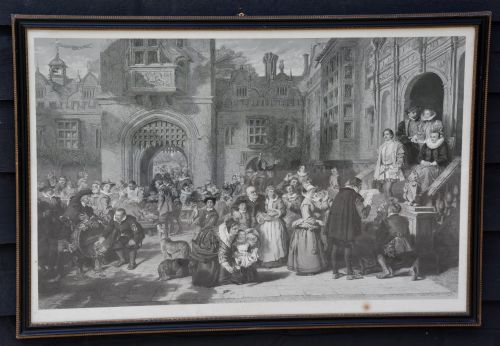
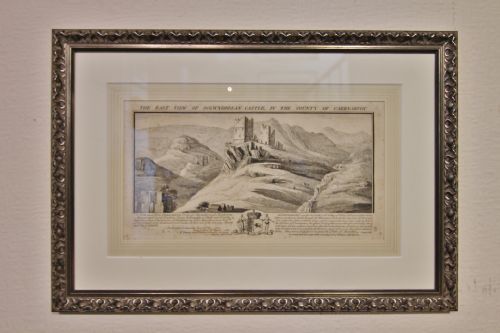
These paper architectural etching works capture classical antiquity and grand buildings through ink on paper, offering collectors a tangible piece of historical draftsmanship.
Paper Architectural Etching
When you search for paper architectural etching, you encounter detailed prints and engravings depicting classical buildings, ancient ruins, and historic structures from various centuries.
The pieces on this page span from the seventeenth century through the Edwardian period, with eighteenth-century depictions of Athens and the Vatican Loggie forming a significant portion.
Formats range from single framed prints to sets of engravings, often presented in period wood or gilt wood frames under glass.
How they were made
The process relies primarily on ink applied to paper through etching, engraving, or drypoint techniques, sometimes enhanced with watercolour or hand colouring.
Many works are housed in original Hogarth frames or constructed with wood, glass, and gold leaf components to preserve the delicate paper sheets.
Listings feature paper works spanning the seventeenth, eighteenth, nineteenth, and early twentieth centuries, utilising ink, watercolour, and gold leaf.
What varies in quality
Quality rests upon the crispness of the ink lines and the depth of the architectural detail recorded by the printmaker.
The preservation of the paper sheet and the authenticity of the accompanying period frame distinguish the finer examples in the range.
François Perrier·T.A Prior·Claes Jansz Visscher·Edgar J. Maybery·Frank Greenwood·James Basire·Giovanni Ottaviani·Edward Rooker·CB Prescott
The Paper Architectural Etching Glossary
- Etching
- A printmaking process where lines are incised into a metal plate with acid before ink is applied and transferred to paper.
- Engraving
- A technique where an artisan cuts lines directly into a metal plate using a sharp tool called a burin.
- Drypoint
- A printmaking method where a design is scratched directly into the metal plate, producing a characteristically soft line in the printed ink.
- Lithograph
- A planographic printing process based on the repulsion of oil and water, utilised for creating pictorial works on paper.
- Grand Tour
- A traditional trip through Europe undertaken by upper-class young men in the eighteenth and nineteenth centuries, often resulting in the acquisition of architectural prints.
Paper Architectural Etching: Frequently Asked Questions
How should I hang my framed prints?
Keep them away from direct sunlight to protect the ink and paper from fading over time.
Ensure the room humidity remains stable to prevent warping in the wood frames.
Are these prints original period works?
The inventory includes items originating from the seventeenth, eighteenth, and nineteenth centuries alongside early twentieth-century examples.
Each listing specifies the period tied to the creation of the piece.
What is a drypoint etching?
Drypoint is a printmaking variation where the artist scratches the image directly into the plate without acid.
This method leaves a distinctive velvety burr of metal that holds extra ink during printing.
How do I identify eighteenth-century engravings?
Eighteenth-century works often focus on classical antiquity, such as the architecture of Athens or the Vatican Loggie.
Look for the paper texture and plate marks characteristic of hand-operated printing presses from that era.