

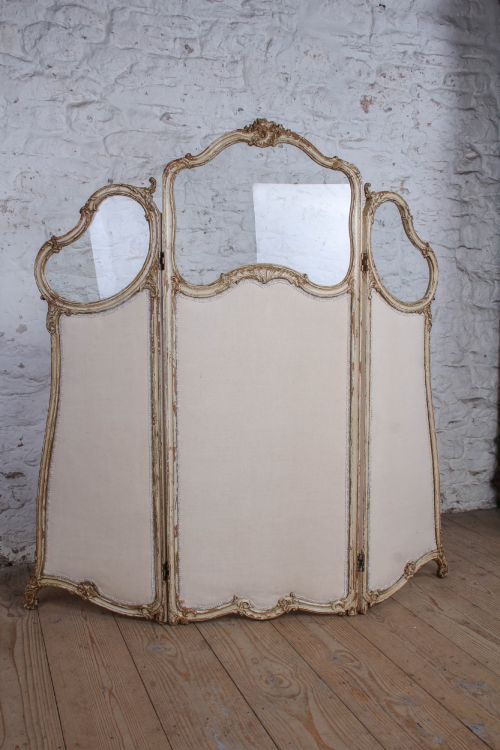
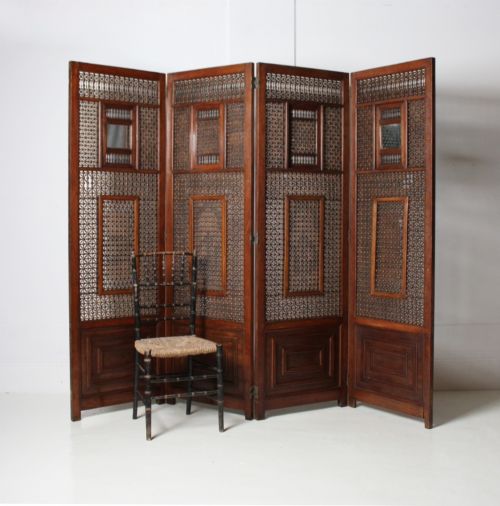


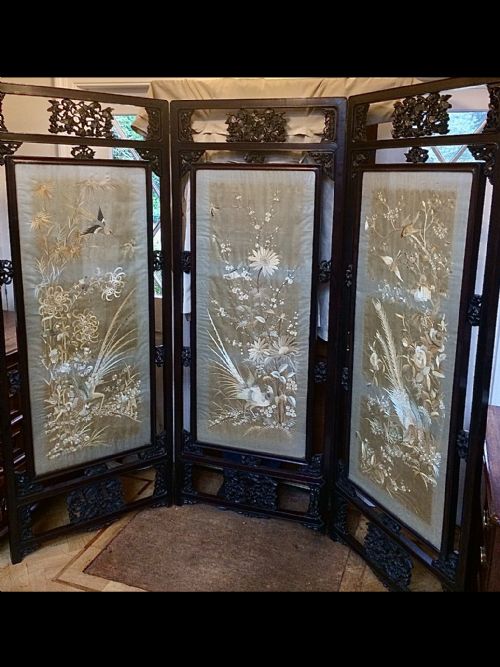

Panelled Timber Screen
These panelled timber screen examples range from grand room dividers to carved panels, offering clever ways to partition a room with genuine character.
Panelled Timber Screen
When you search for a panelled timber screen, you are looking at architectural room dividers, folding screens, and carved panels designed to partition spaces or adorn walls. The selection draws on global traditions, spanning Chinese Qing Dynasty woodwork, Indian Padauk pieces, and mashrabiya designs alongside European examples like Victorian vestibules and Swedish painted screens.
You are most likely to meet multi-fold room dividers and carved wooden panels originating from the nineteenth and early twentieth centuries. These pieces utilise hard timber or pine, often featuring detailed hand-carved motifs, painted surfaces, or integrated glass and silk elements.
The assortment also includes specialised items such as fire screens, theatre scenery boards, and wall plaques. These smaller formats share the same timber construction and decorative focus as their larger folding counterparts.
How they were made
These screens rely on traditional joinery and woodwork, utilising hardwoods like Padauk and teak alongside pine and general timber. Craftsmen carved intricate motifs into the wood, seen in Chinese dragon carvings, Islamic Revival mashrabiya latticework, and Indian panels.
Surface decoration extends beyond bare wood through the application of paint, silk inserts, and glass panels. Swedish country pieces employ painted finishes, while other items incorporate brass, iron, and tapestry to accent the timber structure.
Panelled Timber Screen Retail Price Guide 2026
Typical asking prices for panelled timber screen among the pieces listed under this phrase on Sellingantiques today, from the lower quarter to the upper quarter. They describe what is for sale here now, not the wider market.
The styles represented include Anglo-Indian, Islamic Revival, Qing Dynasty, Scandinavian Country, and Victorian Folk Art.
What varies in quality
Quality in these pieces rests upon the depth and precision of the hand carving and the integrity of the original timber. Superior examples display crisp detail in the woodwork, whether in deep dragon reliefs or complex geometric latticework, whereas simpler items feature flatter execution.
The choice of material and structural complexity also divide the range, with dense hardwoods like Padauk or palisander offering greater durability than softer pines. Original elements such as surviving paint, antique glass, and period brass hardware elevate an item above heavily restored or altered pieces.
The Panelled Timber Screen Glossary
- Mashrabiya
- A traditional projecting window enclosed with carved wood latticework. It provides ventilation and shade while offering privacy.
- Padauk
- A heavy, durable tropical hardwood prized for its rich reddish-brown colour and strength. It is frequently used in fine nineteenth-century Asian furniture and screens.
- Palisander
- A term applied to various richly coloured and figured rosewoods. It is often utilised in high-status nineteenth-century European furnishings.
- Fire screen
- A small ornamental screen placed in front of a fireplace when not in use. It shields the room from radiant heat and hides the hearth.
- Vestibule screen
- An interior architectural screen forming an entrance lobby within a larger room or hallway. It typically incorporates doors to draught-proof a doorway.
Panelled Timber Screen: Frequently Asked Questions
How do I use a folding screen at home?
Folding screens partition large rooms, create private dressing areas, or simply serve as decorative wall backdrops. Their mobility allows you to alter the flow and layout of a space without structural changes.
Heavier architectural screens, such as entrance vestibules, require permanent installation in a hallway or doorway. Smaller fire screens and wall panels function best as focal points in a reception room or study.
How do I care for antique timber screens?
Keep wooden screens away from direct heat sources and strong sunlight to prevent the timber from warping or splitting. Dust the carved surfaces regularly with a dry, soft cloth.
Avoid using harsh chemical polishes, particularly on painted or silk-accented panels. A light application of natural wax preserves untreated hardwood.
What is the difference between a room divider and a fire screen?
Room dividers are tall, multi-panel structures designed to partition floor space or conceal parts of a room. They feature three to six folds and stand high enough to block sightlines.
Fire screens are much smaller single-panel or low folding pieces meant to sit directly before a fireplace. They focus on decorative needlework, tapestry, or carved wood rather than spatial division.
How can I tell the age of a carved wooden panel?
Examine the tool marks, timber shrinkage, and joinery methods visible on the reverse of the panel. Hand-cut joints and uneven weathering indicate older craftsmanship.
The style of the carving and the type of wood also provide clues, aligning with periods such as the Qing Dynasty or Victorian era. Comparing the piece to documented regional woodwork helps confirm its era.