
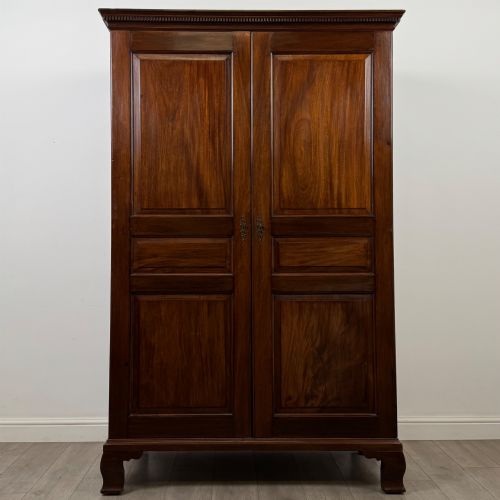
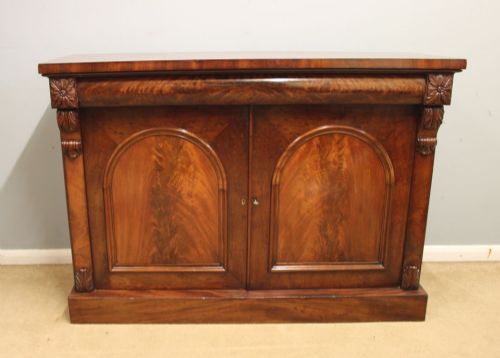
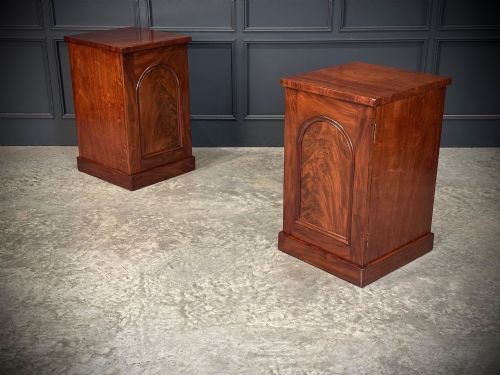
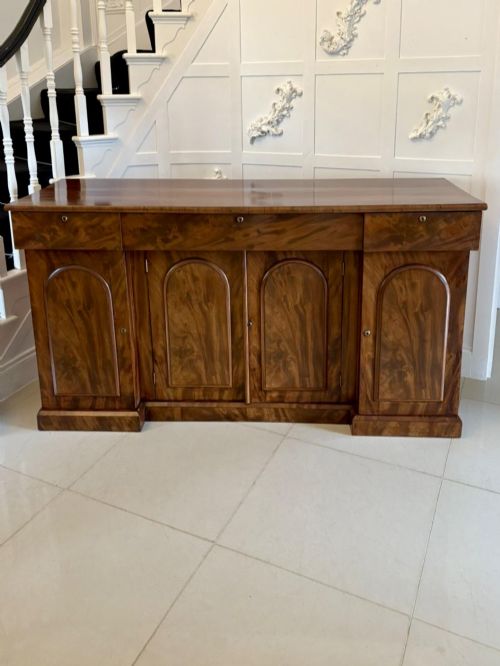
Panelled Mahogany Cabinet
A panelled mahogany cabinet brings architectural warmth to a room, offering sturdy storage with the rich grain of solid timber and veneer.
Panelled Mahogany Cabinet
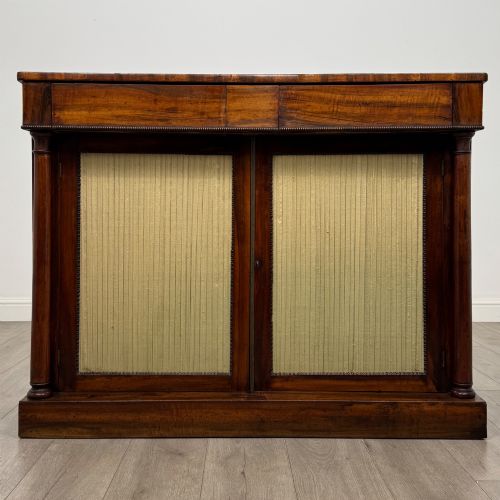
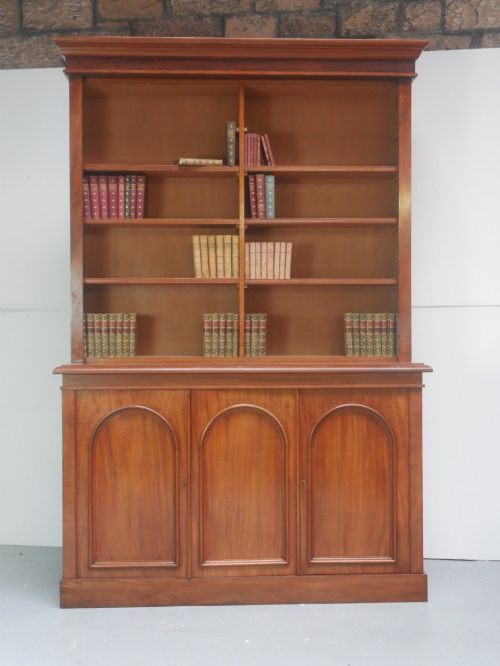
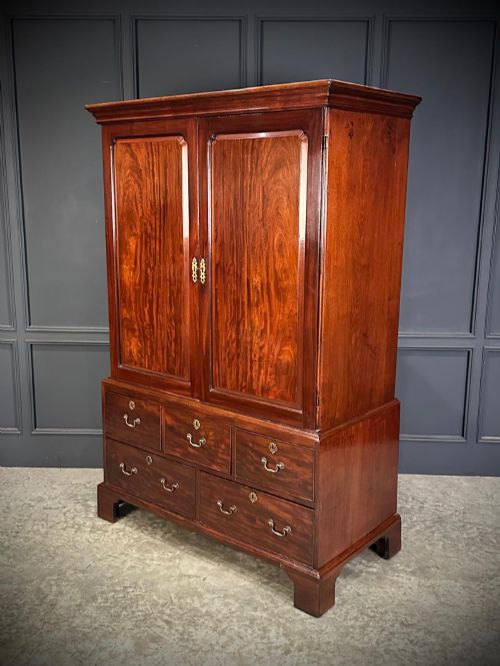
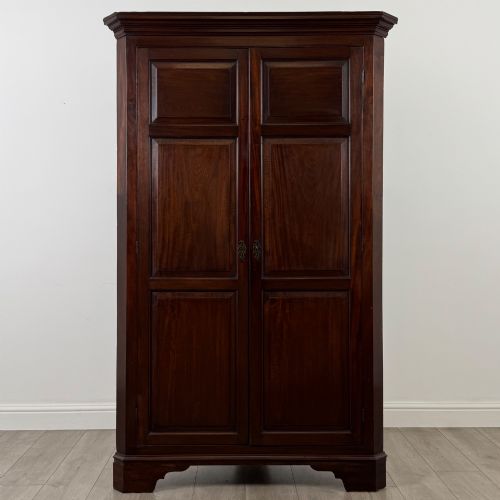
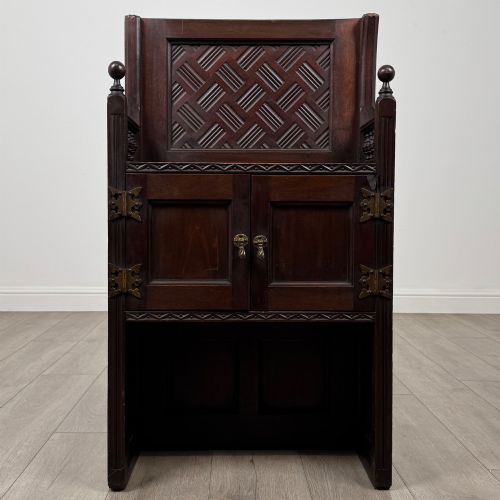
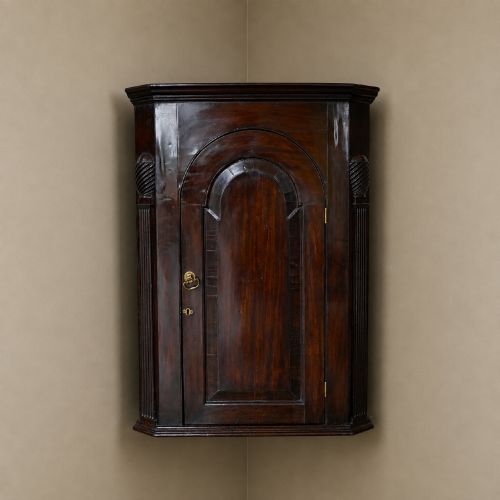
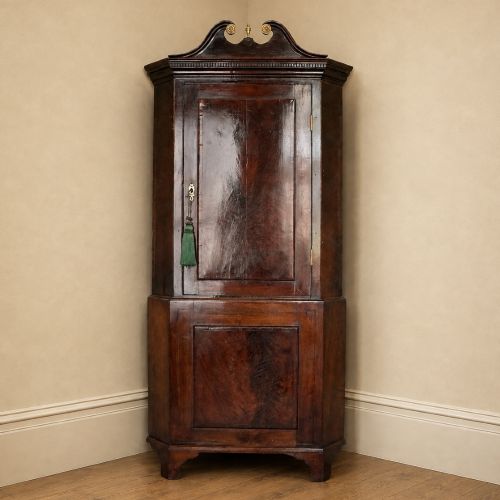
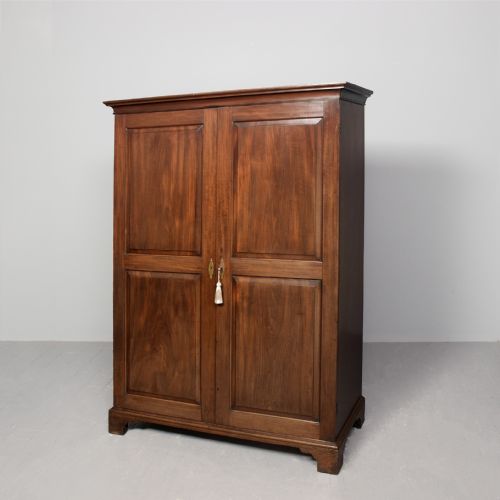
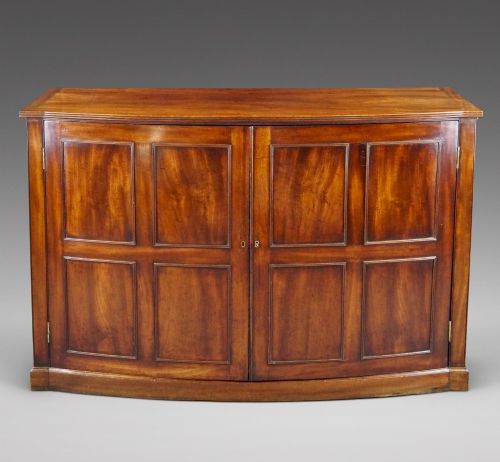
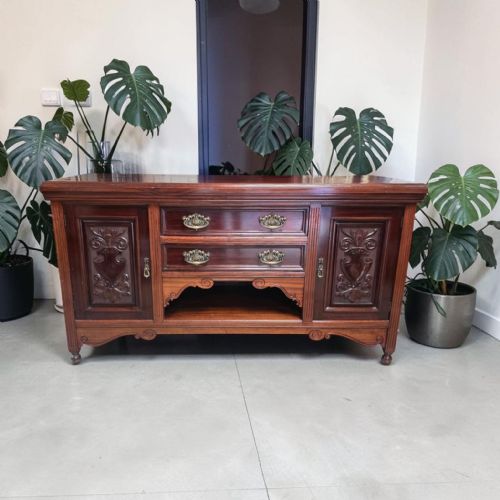
When you search for a panelled mahogany cabinet, you encounter a diverse group of storage furniture spanning several centuries of British and European design. These pieces range from tall linen presses and bookcases to compact bedside cupboards and corner units, each designed to conceal or display household goods with architectural order.
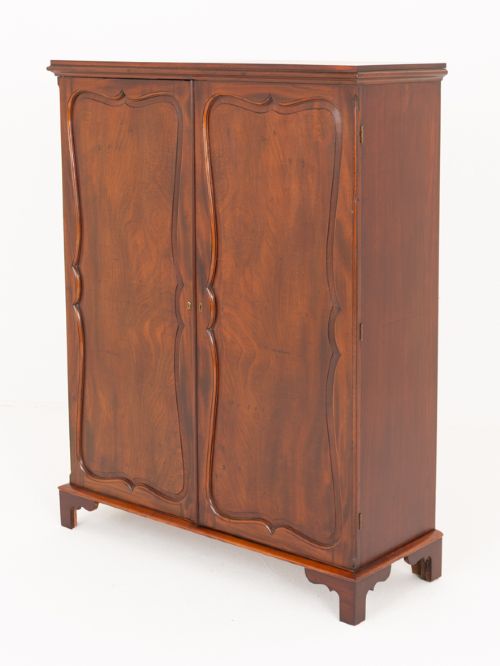
The versions you are most likely to meet on this page hail from the Georgian and Victorian eras, alongside later nineteenth and early twentieth-century interpretations. They frequently utilise recessed timber panels within their doors and sides to give depth and structure to the surface, breaking up the expanse of dark wood.
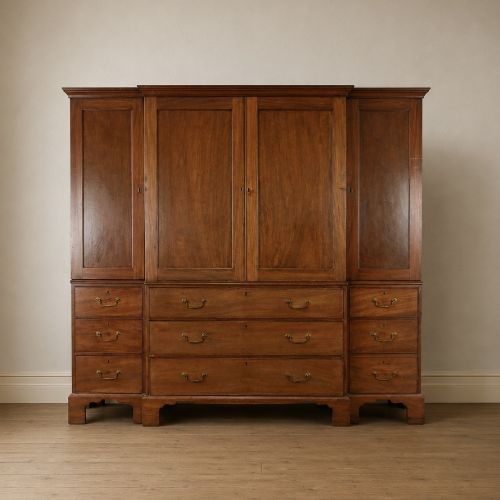
Forms vary from grand breakfront wardrobes and bookcases down to modest bedside pot cupboards and narrow side cabinets. Many retain original brass hardware, while others incorporate glass doors, mirrored panels, or fabric inserts to vary their function from utility storage to formal display.
How they were made
Cabinet makers constructed these pieces primarily from solid mahogany or by applying flame mahogany veneers over secondary foundational timbers like oak. The application of veneer required great skill to align the dramatic figuring of the grain symmetrically across doors and drawer fronts, creating bold visual patterns.
Structural integrity relied on traditional joinery techniques, such as mortise and tenon frames holding the recessed panels in place, allowing the timber to expand and contract with seasonal changes in humidity. Brass hinges, locks, and handles were integrated to secure the doors, occasionally complemented by gilt bronze mounts or ormolu on revival pieces.
Listings feature items built from solid mahogany, oak, and glass, embellished with brass, gilt bronze, and velvet elements.
What varies in quality
The distinction between ordinary utility storage and a finer piece rests largely on the selection of timber and the ambition of the joinery. Cabinets featuring highly figured flame mahogany veneers or dense Cuban mahogany display a depth of grain and warm reddish-brown hue that lesser boards lack.
Construction details also separate the standard from the exceptional, such as the weight and finish of the brass hardware, the crispness of any inlaid crossbanding, and the thickness of the secondary woods used inside drawers and backboards. Proportion and restraint in decoration ultimately determine whether a cabinet holds its presence in a room.
M. D. Miller and Sons
The Panelled Mahogany Cabinet Glossary
- Flame mahogany
- A distinctive veneer cut from the branch junctions of the tree, producing a swirling, flame-like grain pattern. It was favoured by cabinet makers for principal display surfaces.
- Linen press
- A tall cupboard originally designed for storing folded linen on sliding trays or shelves behind upper doors, often sitting atop a chest of drawers base.
- Crossbanding
- A narrow strip of veneer laid around the border of a panel or drawer front with the grain running at right angles to the surrounding wood. This technique creates a neat framing effect.
- Pot cupboard
- A small bedside cabinet originally constructed to house a chamber pot. They typically feature a single door and sometimes a pull-out shelf.
- Vitrine
- A glass-fronted display cabinet used for showcasing porcelain, books, or curiosities. These pieces often incorporate glazed sides to maximise illumination of the contents.
Panelled Mahogany Cabinet: Frequently Asked Questions
How do I date a mahogany cabinet?
Dating relies on examining the construction methods, handles, and secondary woods used inside the piece. Georgian pieces often show hand-cut dovetails and simpler interior arrangements, whereas Victorian examples may utilise machine-sawn timbers and heavier brass or ceramic hardware.
Style indicators also help narrow down the period, such as the architectural cornices of the eighteenth century compared to the more eclectic revival styles of the later nineteenth century.
Were these cabinets used in bedrooms?
Many of these pieces served domestic sleeping quarters, particularly linen presses, wardrobes, and bedside pot cupboards. Their internal configurations of sliding trays and hanging space catered specifically to garments and personal linens.
Smaller side cabinets and bookcases were generally placed in reception rooms, libraries, or hallways to store books, papers, and household provisions.
How do I care for mahogany timber?
Mahogany benefits from a stable indoor environment away from direct sunlight and sudden temperature fluctuations, which can dry out the timber and crack veneers. Regular dusting with a soft, dry cloth maintains the finish without building up heavy wax residues.
Occasional application of a suitable beeswax polish helps nourish the wood and preserve the natural warmth of the grain over time.
What is the difference between solid and veneered mahogany?
Solid mahogany consists of planks milled entirely from the single timber species, offering robust durability throughout the structure. Veneered mahogany applies thin, decorative slices of high-grade timber over a stable secondary wood like oak or pine.
Veneering allowed makers to display dramatic grain patterns, such as flame figures, that would be unstable or too costly to produce from solid blocks of timber.