



Panelled Headboard Bed
Panelled headboard beds bring solid timber structure and architectural presence to a bedroom, offering a grounding focal point that simpler frames lack.
Panelled Headboard Bed
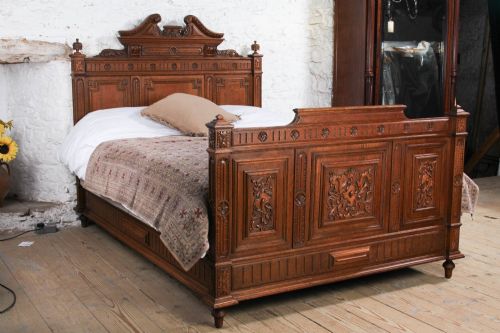
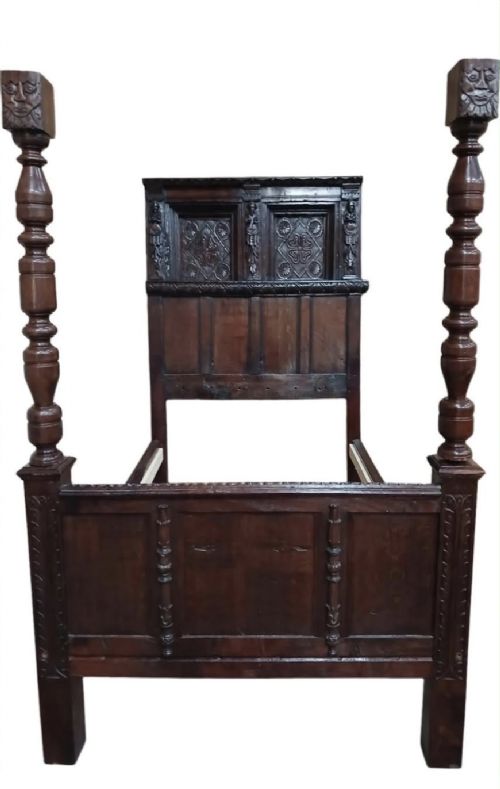
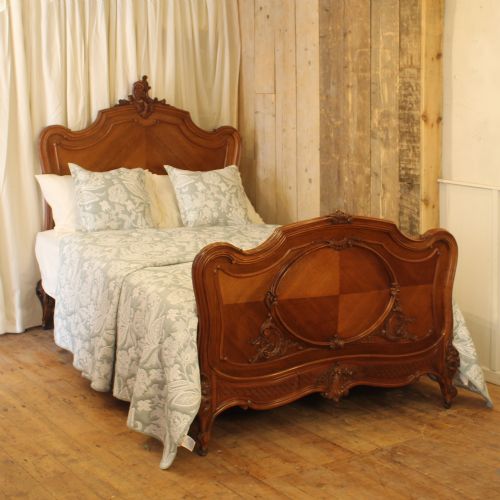
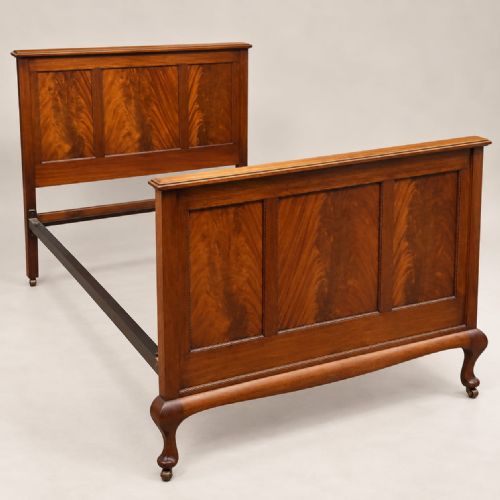
A panelled headboard bed centres on a solid vertical wooden backrest constructed with framed panels, ranging from seventeenth century oak designs to twentieth century Edwardian and walnut interpretations. These pieces appear as single beds, doubles, kings, and four poster testers across periods including the Victorian era and nineteen-twenties.
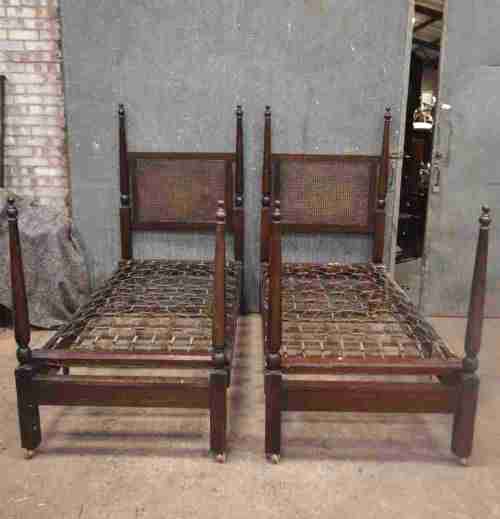
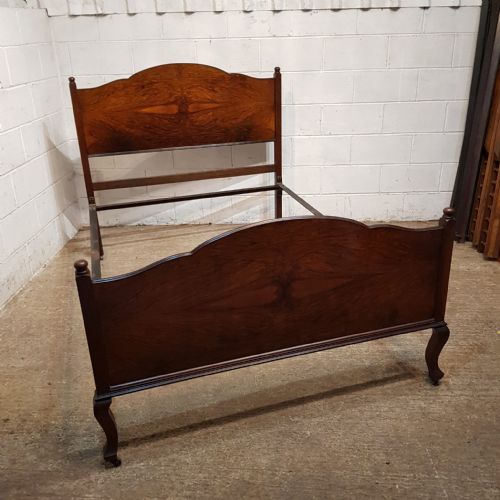
The selection here includes carved oak panelled bedsteads, mahogany rail and panel designs, and walnut frames featuring cane or painted leather panels. Buyers encounter both full bedsteads with matching footboards and simpler formats such as single bedheads designed to attach to modern frames.
Materials and construction methods
Makers utilised dense hardwoods including oak, walnut, and mahogany, often combining solid timbers with decorative veneers like burr walnut or satinwood. Fruitwood inlay appears on early pieces, while metal components such as iron and brass form the structure of related Victorian bedsteads.
Joinery relies on traditional framing techniques where floating panels sit within grooved stiles and rails to accommodate seasonal wood movement. Carving, turning, and cane work add texture and ornamentation to the structural timber framework.
Panelled Headboard Bed Retail Price Guide 2026
Typical asking prices for panelled headboard bed among the pieces listed under this phrase on Sellingantiques today, from the lower quarter to the upper quarter. They describe what is for sale here now, not the wider market.
Listings span multiple centuries, ranging from seventeenth century oak four poster tester beds to nineteen-forties oak single beds.
Distinctions in construction and design
Quality rests in the depth and crispness of carved detail, the selection of figured timber veneers, and the integrity of the original joints. Superior examples display balanced proportions and thoughtful integration of panels within the headboard design.
The presence of matching footboards, original side rails, and integrated tester frames elevates a piece above modified or adapted formats. Finer variations also show careful secondary timber selection and harmonious grain matching across the visible surfaces.
Heals·Maple and Co
The Panelled Headboard Bed Glossary
- Bedstead
- A framework of a bed supporting the mattress and springs. It incorporates the headboard, footboard, and side rails into a complete unit.
- Bergere
- A type of upholstered armchair or bed panel featuring woven cane work. This technique uses rattan to create a light, porous textured surface.
- Stile and rail
- The vertical and horizontal members of a frame that hold a central panel. This time tested joinery method accommodates timber expansion.
- Fruitwood
- Dense timber derived from fruit bearing trees such as pear or apple. Makers utilised it for contrasting inlay work and decorative details.
Panelled Headboard Bed: Frequently Asked Questions
How do I choose the right size?
Review the listed dimensions carefully against your bedroom space, noting that older bed frames often deviate slightly from modern standard mattress sizes. Check whether the listing includes side rails to ensure standard slats and bases will fit properly.
Measure doorways and stairwells before purchasing large four poster or solid walnut frames, as historical headboards and testers can present access challenges during delivery and installation.
Are these beds compatible with modern mattresses?
Many historical bedsteads require custom mattress sizing or subtle internal adjustments to support modern pocket sprung or foam mattresses securely. Consult the specific frame dimensions and rail setup before ordering a new mattress.
Adding discreet wooden support slats or a low profile base platform often solves compatibility without altering the historic structure of the bed frame.
How do I care for wooden bed frames?
Maintain finished oak, walnut, and mahogany surfaces by dusting with a soft, dry cloth and applying occasional quality beeswax to nourish the timber. Avoid placing wooden beds near direct heat sources or in fluctuating humidity to prevent panel splitting.
Protect cane panels by keeping them lightly hydrated with a damp sponge occasionally to prevent the rattan from becoming brittle over time.
How can I tell different periods apart?
Seventeenth century pieces display heavy oak construction, deep hand carving, and tester frames with geometric panelling. Edwardian and nineteen-twenties examples often feature lighter mahogany or walnut framing with simpler moulded panels and occasional inlaid details.
Victorian and late nineteenth century frames frequently introduce contrasting materials, bolder proportions, and occasional painted leather or exotic wood veneers.