

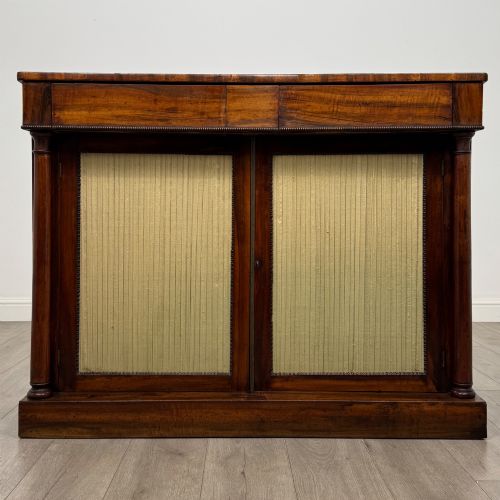
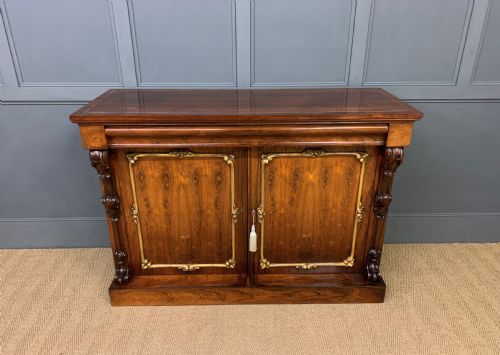
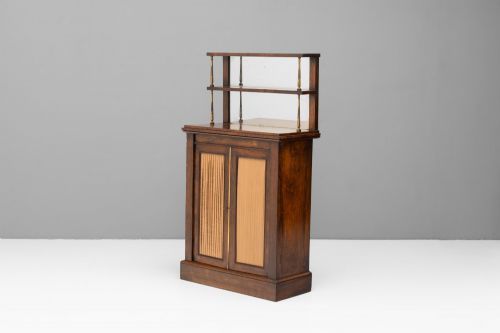


Panelled Door Chiffonier
A panelled door chiffonier is a low cabinet for the parlour, prized for practical storage and formal timber grain.
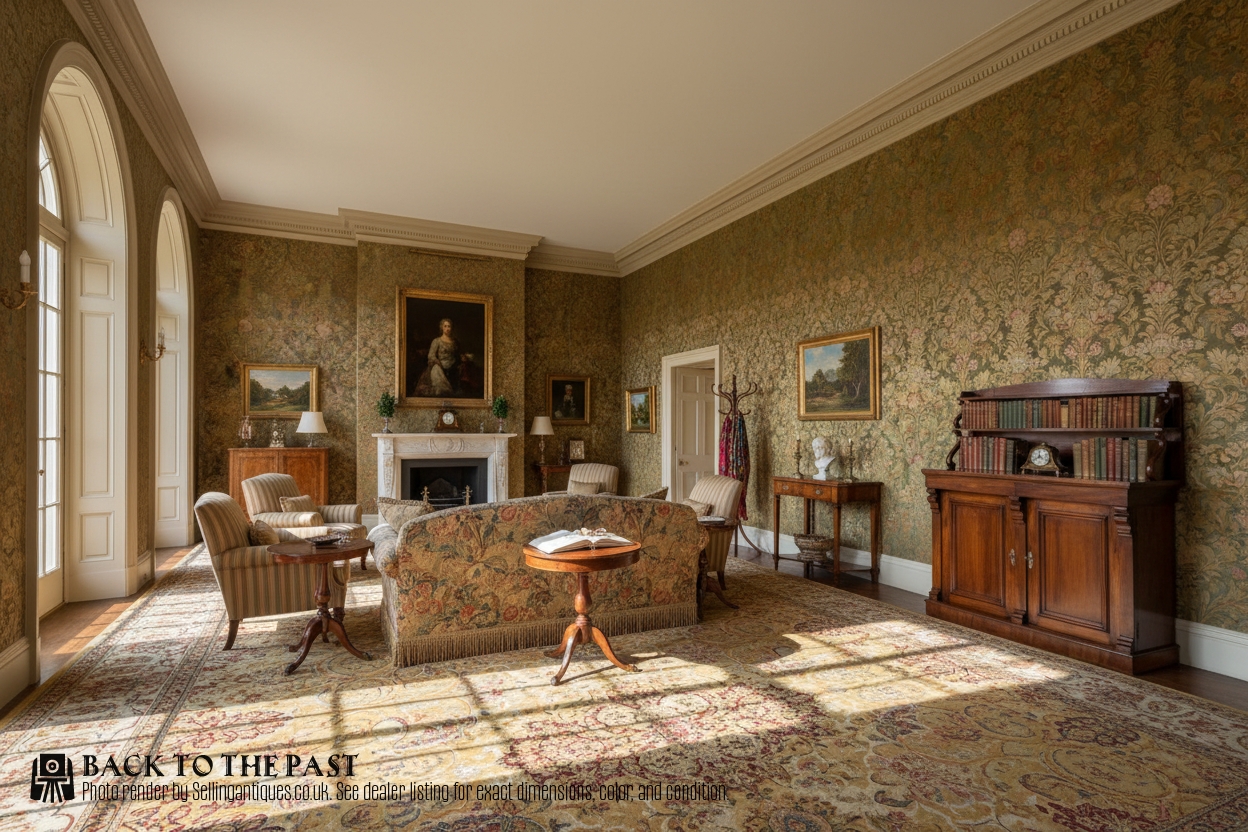
Panelled Door Chiffonier
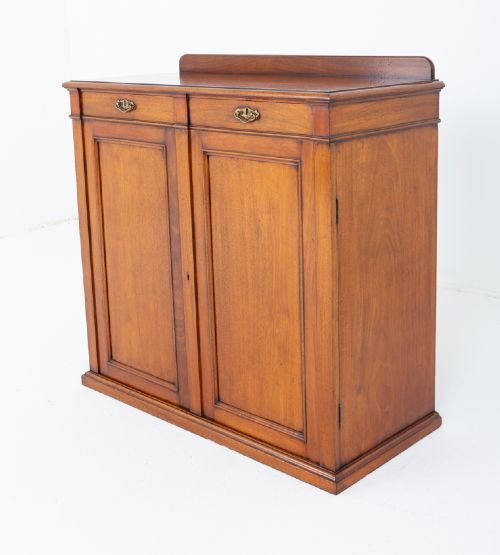
When you search for panelled door chiffonier, you enter a selection of low sideboards, side cabinets, and cupboards built during the Georgian, Regency, William IV, and Victorian eras. These pieces typically combine a lower enclosed cupboard section with doors, often panelled or carved, designed to stand neatly against a parlour or dining room wall.
The versions you are most likely to meet on this page span the nineteenth century, with Victorian and Regency examples appearing frequently. They take forms ranging from compact dwarf cabinets to broader breakfront sideboards with two or four doors.
Makers from these periods utilised rich timbers, creating functional serving surfaces for the top while keeping dining or writing accessories hidden below. Each item reflects the domestic habits of the nineteenth century, functioning as a versatile side cabinet.
How they were made
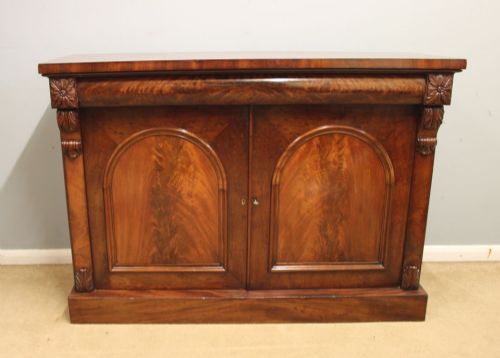
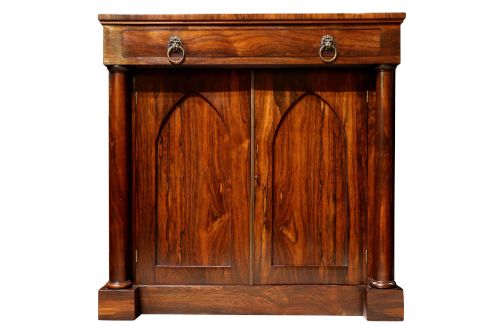
Cabinet makers constructed these pieces primarily from solid wood and veneer, selecting mahogany, flame mahogany veneer, and rosewood for their rich figure and deep natural colour. These timbers were carefully laid over sturdy carcases to create smooth, durable surfaces for everyday use.
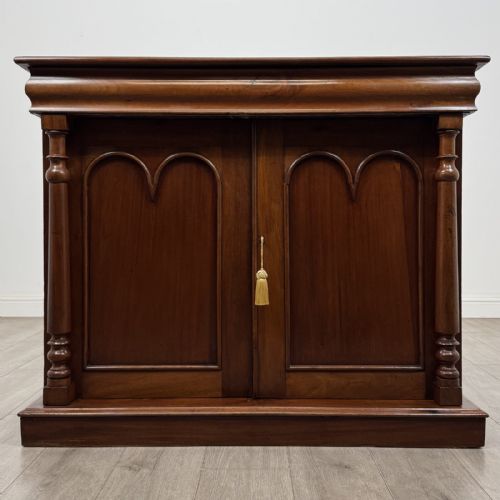
Metal mounts in brass and ormolu often accent the design, appearing on key escutcheons, door trims, or structural mounts. Details such as Gothic panelling and carved barley twist columns demonstrate the specialist joinery techniques applied to nineteenth-century case furniture.
Panelled Door Chiffonier Retail Price Guide 2026
Typical asking prices for panelled door chiffonier among the pieces listed under this phrase on Sellingantiques today, from the lower quarter to the upper quarter. They describe what is for sale here now, not the wider market.
Listings feature items spanning the Georgian, Regency, William IV, and Victorian periods, constructed from mahogany, rosewood, brass, and ormolu.
What varies in quality
Quality in these pieces depends heavily on the selection of timber and the precision of the veneer work, where highly figured flame mahogany or richly grained rosewood elevates a standard utility cupboard into a statement piece. Finer examples display meticulous attention to timber matching across the doors and panels.
The refinement of structural details also separates the levels of production, distinguishing simple utilitarian storage from master joinery. Elements such as crisply executed carvings, integrated brass fittings, and well-balanced proportions indicate superior craftsmanship.
The Panelled Door Chiffonier Glossary
- Chiffonier
- A low sideboard or cabinet featuring a cupboard base, frequently topped with a shelf or serving surface, developed during the nineteenth century for dining and drawing rooms.
- Breakfront
- A cabinet design where the central section projects forward from the flanking outer cupboards, creating a tiered architectural facade.
- Flame mahogany veneer
- A thin slice of mahogany timber cut from the fork of the tree, displaying a fiery, undulating grain pattern applied over a secondary wood base.
- Barley twist
- A carved wooden column or support shaped in a continuous spiral resembling a twist of barley sugar, popular in nineteenth-century furniture.
- Ormolu
- Gilt bronze ornamentation applied to furniture mounts, cast and finished to resemble polished gold.
Panelled Door Chiffonier: Frequently Asked Questions
What is a panelled door chiffonier?
A panelled door chiffonier is a low nineteenth-century cabinet featuring enclosed cupboard storage beneath a flat top surface. These pieces were designed to serve sideboards in dining rooms or parlours.
They combine practical enclosed shelving with decorative timber panels, often utilising mahogany or rosewood. Their compact proportions make them suitable for modern living spaces requiring traditional storage.
How were these cabinets used?
Historically, these cabinets served as sideboards or serving tables for dining accessories, linens, and silver. The top surface held serving dishes or decorative objects.
In modern rooms, they function well as side cabinets, media consoles, or hallway storage units. The enclosed cupboards keep clutter hidden while providing a sturdy surface for lamps or displays.
How do I identify Regency pieces?
Regency items date from the early nineteenth century and frequently showcase dark exotic timbers like rosewood alongside classical architectural motifs. Look for restrained lines and occasional brass inlay or ormolu mounts.
They often feature simpler, cleaner silhouettes than heavily carved Victorian alternatives, reflecting the neoclassical tastes of the period.
What distinguishes Victorian examples?
Victorian pieces often feature substantial mahogany construction, sometimes with flared cornices or more robust proportions. Carved details such as barley twists or Gothic panels frequently appear on these designs.
They represent the industrial and domestic expansion of the mid to late nineteenth century, prioritizing sturdy utility alongside decorative warmth.