


Paired Lounge Chairs
Paired lounge chairs bring balanced seating into a room, offering matching comfort through designs ranging from Victorian button-backs to Art Deco club chairs.
Paired Lounge Chairs
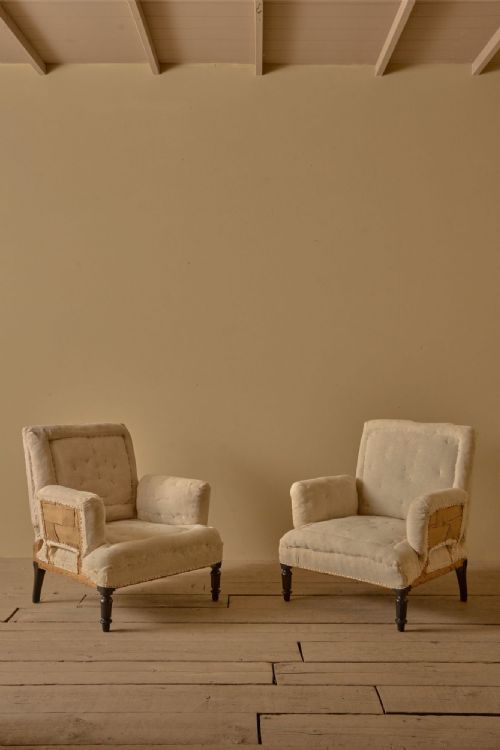
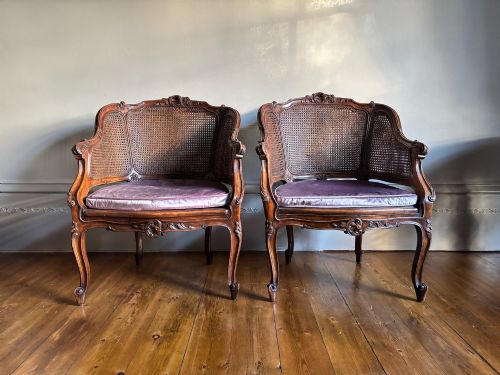
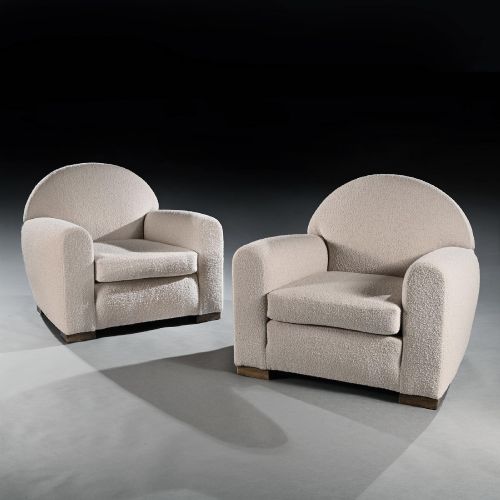
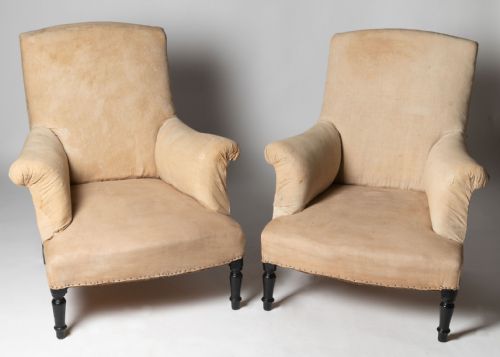
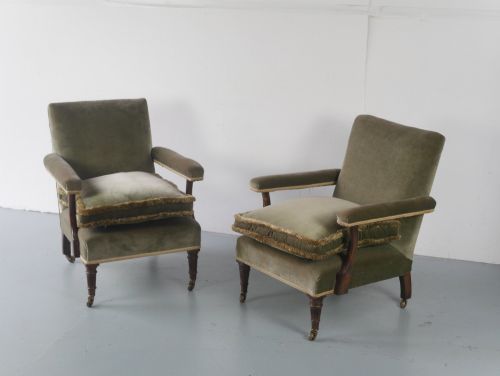
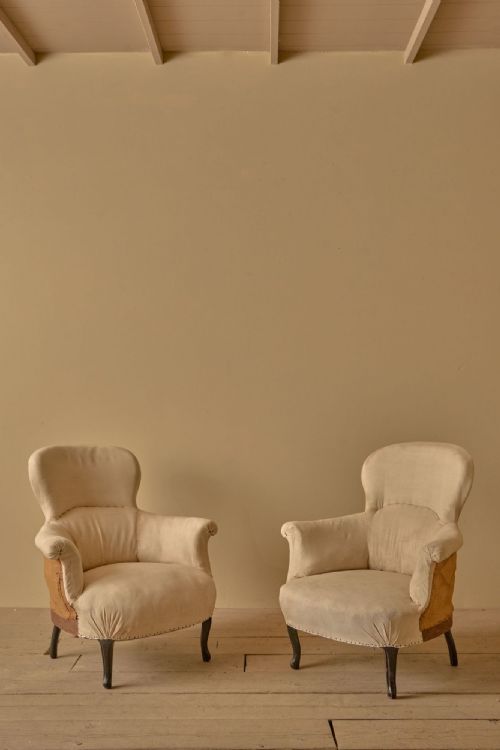
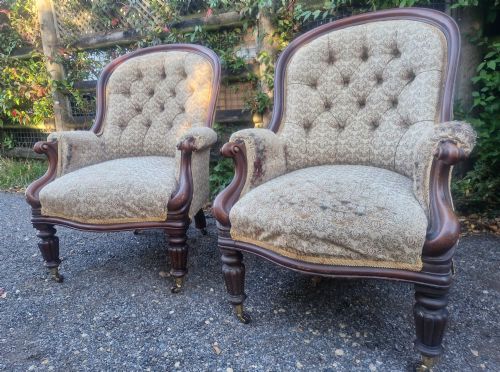
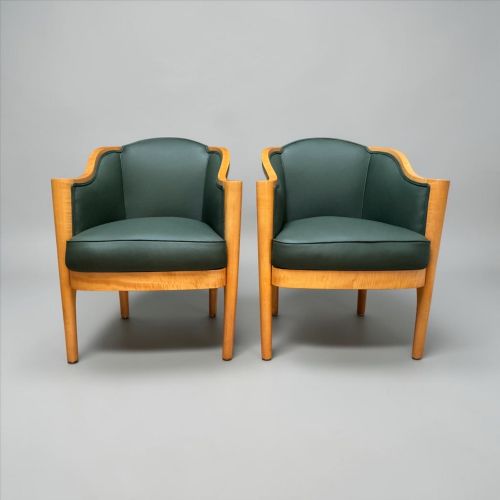
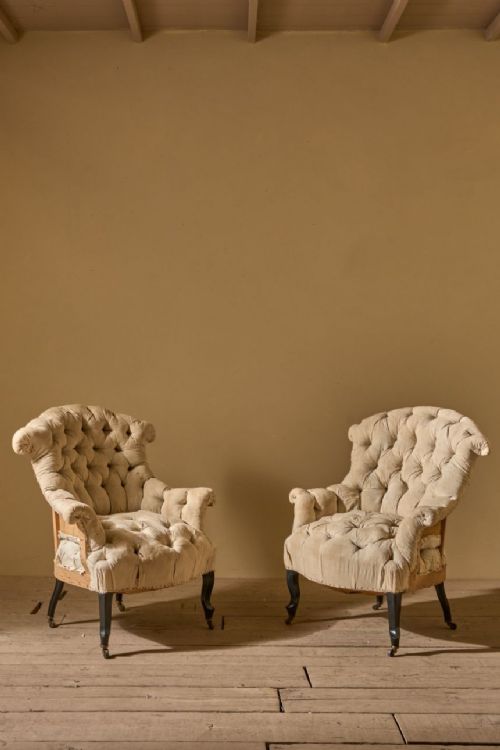
Paired lounge chairs encompass matching sets of comfortable seating, frequently found as armchairs, club chairs, and bergères. These duplicates provide symmetry for a room layout, whether sourced from Victorian, Edwardian, or Art Deco periods.
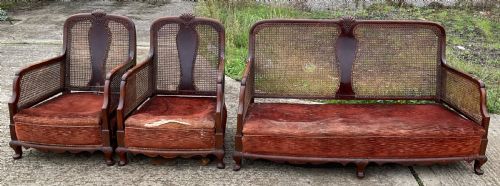
The selection on this page leans heavily toward French and English origins, alongside Swedish examples in satin birch. Pieces range from carved giltwood and mahogany frames to upholstered club chairs designed for deep seating.
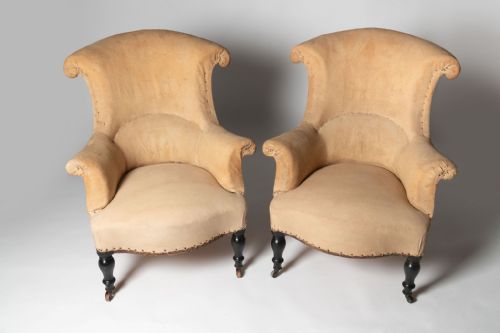
Buyers encounter everything from formal nineteenth-century spoon-back armchairs to twentieth-century occasional chairs by notable makers. Matched pairs supply uniform style and support across domestic spaces.
Materials and Construction
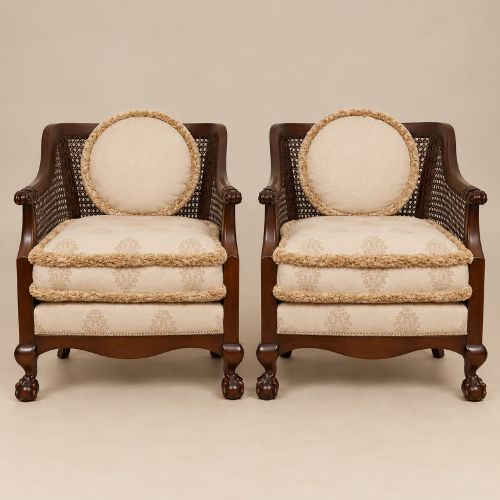
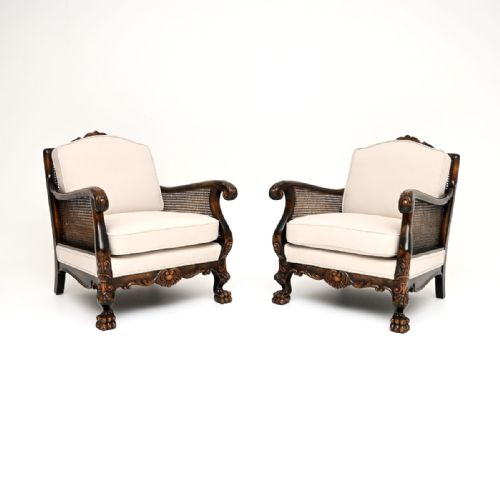
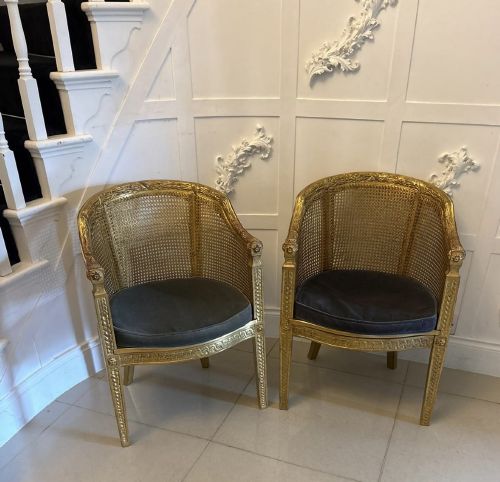
Frames rely on timber and hardwoods such as walnut, mahogany, oak, and satin birch, often shaped with carved details or curved scroll backs. Some examples incorporate split cane work or giltwood surfaces for decorative effect.
Upholstery employs traditional fabrics including leather, velvet, calico, and plain fabric, sometimes finished with button-backed detailing. Brass accents occasionally appear on frames and castors to complete the construction.
Paired Lounge Chairs Retail Price Guide 2026
Typical asking prices for paired lounge chairs among the pieces listed under this phrase on Sellingantiques today, from the lower quarter to the upper quarter. They describe what is for sale here now, not the wider market.
Burmese conservatory suites bring unexpected carved tropical flair straight into the traditional English country house.
Quality and Craftsmanship
The distinction between standard production and superior craftsmanship rests in the execution of the timber frame and upholstery work. Hand-carved details on walnut or giltwood demonstrate greater skill than simpler moulded components.
The choice of covering material and the precision of buttoning or stitching dictate the finish of the seat. Superior examples combine robust structural timber with well-maintained leather, velvet, or satin birch.
Maurice Adams·Whytock and Reid·Hille·Howard and Sons·Jacob-Desmalter
The Paired Lounge Chairs Glossary
- Bergère
- An enclosed upholstered armchair with wooden frames exposed at the sides and back. These seats often feature cane panels or upholstered cushions.
- Fauteuil
- An open-armed upholstered armchair originating in France, characterised by exposed wooden framing. The arms typically have padded elbow rests.
- Club Chair
- A heavily upholstered comfortable armchair designed for deep seating and relaxation. Versions from the twentieth century frequently utilise leather upholstery.
- Spoon Back
- An upholstered chair back shaped in the concave contour of a spoon. This style is commonly associated with Victorian seating.
- Wing Back
- An armchair with side panels attached to the backrest to shield the occupant from drafts. These pieces often stand on wooden legs.
Paired Lounge Chairs: Frequently Asked Questions
How do I identify Art Deco paired lounge chairs?
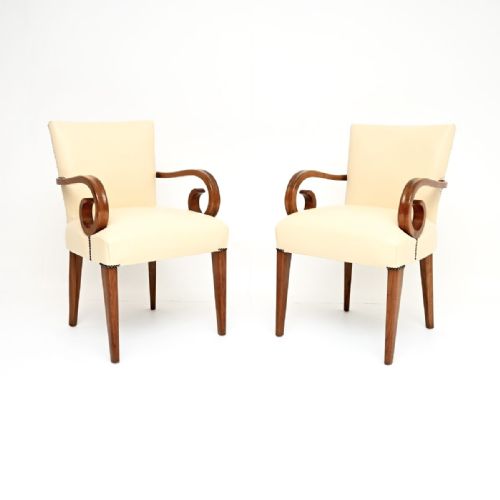
Art Deco paired lounge chairs typically date from the 1930s and display streamlined forms constructed from walnut or satin birch. They often feature leather upholstery and geometric styling.
These chairs favour functional comfort alongside sleek materials, distinguishing them from heavily carved Victorian or Edwardian seating.
What is the difference between club chairs and bergère chairs?
Club chairs are heavily upholstered low seats designed for relaxation, frequently finished in leather. They prioritise deep padding over exposed wooden frames.
Bergère chairs expose the wooden frame, such as walnut or satin birch, and often incorporate cane panels or loose cushions for a lighter appearance.
Are these chairs suitable for modern living rooms?
Many paired lounge chairs offer deep seating and sturdy wooden frames that suit contemporary spaces. Styles range from French Parisian club chairs to English country house armchairs.
Matching pairs provide visual symmetry, allowing them to anchor a seating arrangement opposite a sofa or fireplace.
How do I date a Victorian pair of armchairs?
Victorian armchairs often feature dense timber frames like mahogany or oak, alongside button upholstery or spoon backs. Design motifs reflect nineteenth-century revival styles.
Construction techniques and fabric choices such as red velvet help indicate the nineteenth-century origins of the seating.