




Paired Chinoiserie Table Lamps
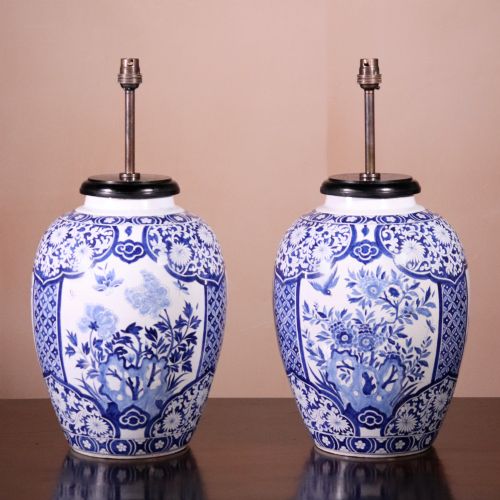
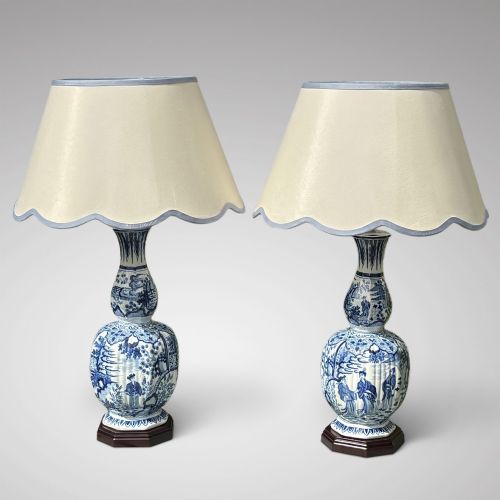
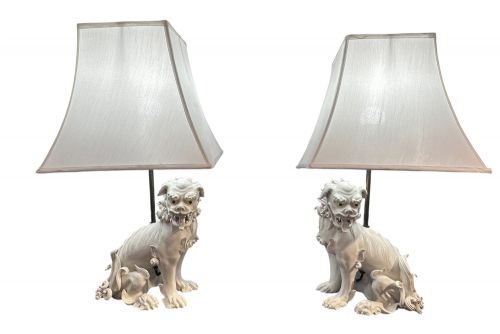
These paired chinoiserie table lamps bring symmetry and decorative painted scenes to an interior.
Paired Chinoiserie Table Lamps
Paired chinoiserie table lamps are matching lighting fixtures created from converted vessels or decorative objects displaying European interpretations of East Asian motifs. When searching for paired chinoiserie table lamps, a buyer encounters matching sets derived predominantly from nineteenth-century porcelain vases, ginger jars, and cloisonné enamel pieces.
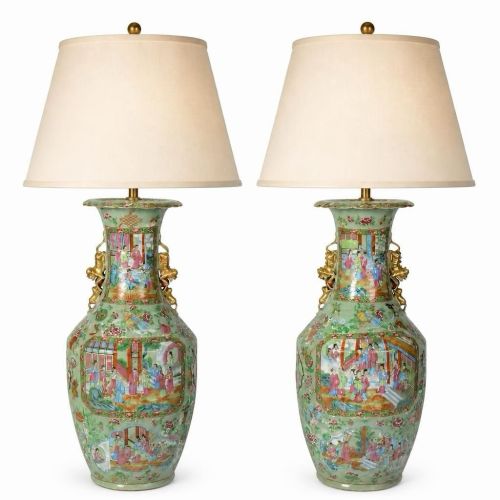
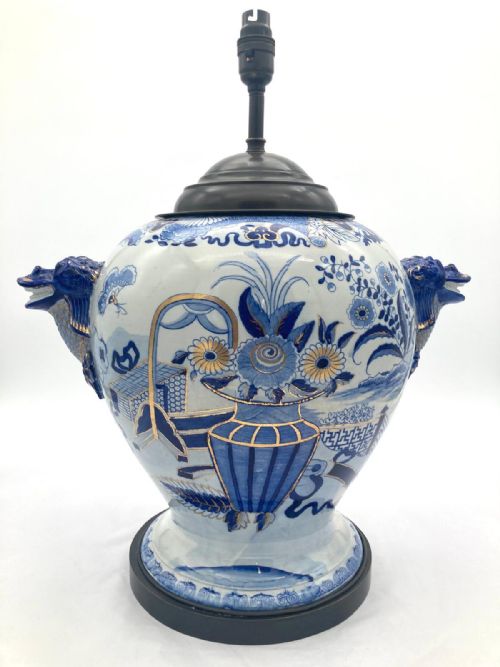
The selections span various periods including the eighteenth century, the nineteenth century, and early twentieth century dates such as 1920 and 1930. Forms often originate from converted Chinese Canton, Rose Medallion, or blue and white porcelain alongside Japanese Arita Imari and Dutch Delftware.
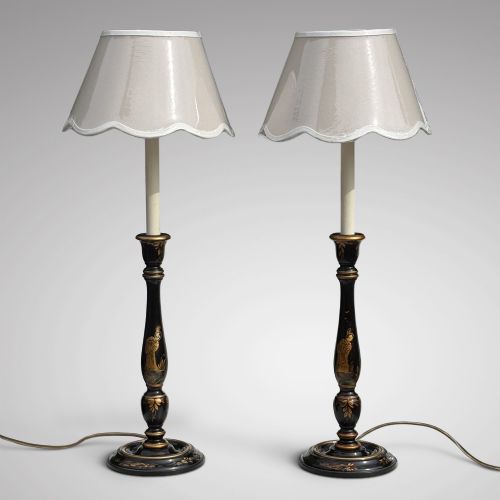
Beyond ceramic vessels, the listings include lacquered wooden bodies and toleware paired configurations. These items function simultaneously as sculptural focal points and functional illumination for side tables and cabinets.
Materials and construction methods
Construction relies heavily on the conversion of existing ceramic, bronze, and cloisonne enamel vessels into wired lighting. Artisans mount these bodies onto stable bases, frequently incorporating ormolu mounts, gilt brass, or carved wood components to secure the electrical fittings.
Surface decoration combines hand-painted enamels, underglaze blue, crackleware glazes, and applied lacquer finishes. Fabric shades are paired with these constructed bases to complete the lamp assemblies.
Listings feature materials including porcelain, brass, lacquer, ormolu, and cloisonne enamel across eighteenth and nineteenth-century forms.
Assessing quality and execution
Quality separates through the crispness of the hand-painted enamel details on the porcelain bodies and the weight of the metal mounts. Superior examples exhibit finely detailed figures, vibrant famille rose or blue and white pigments, and well-integrated ormolu fittings.
The harmony of the matched pair dictates overall success, ensuring both vessels share consistent scale, glaze tones, and symmetrical decorative panels. The integration of the electrical hardware without compromising the historic vessel body also defines superior conversion work.
Hicks and Meigh
The Paired Chinoiserie Table Lamps Glossary
- Chinoiserie
- European artistic style reflecting Chinese and East Asian artistic influences. This aesthetic dominated decorative arts through painted motifs, lacquerwork, and porcelain designs.
- Ormolu
- Gilt bronze mounted onto furniture and decorative objects. This technique adds metallic enrichment to the base or collar of a lamp.
- Cloisonne
- Enamel work created by pouring coloured pastes into compartments formed by soldered metal wires. The surface is subsequently fired and polished smooth.
- Famille Rose
- Chinese ceramic palette characterised by opaque pink enamel introduced during the Qing dynasty. It appears frequently on Cantonese export porcelain.
- Crackware
- Ceramic glaze featuring a network of fine intentional cracks across the surface. This decorative texture is common on specific historical Chinese porcelain types.
Paired Chinoiserie Table Lamps: Frequently Asked Questions
What periods do these lamps come from?
The pieces originate from the eighteenth century, nineteenth century, and early twentieth century. Dates span specific years such as 1880, 1890, 1900, 1920, and 1930 alongside broader Regency periods.
Most surviving examples utilise nineteenth-century Chinese export porcelain vessels that were adapted into lighting during later decades.
Were these originally made as lamps?
Most items started as decorative vases, ginger jars, or oil lanterns before conversion into table lamps. Artisans fitted these historic vessels with electrical components and bases to suit modern interiors.
This adaptive reuse preserves painted ceramic and cloisonne bodies while updating their function for domestic lighting.
How do I match them in a room?
Display the pair symmetrically on matching side tables, bedside cabinets, or side cabinets. Their balanced forms and shared motifs provide visual anchors on either side of a bed or seating arrangement.
Consider the scale of the room and the height of the shades when placing large porcelain bodies in domestic spaces.
What materials are used in the bases?
Bases incorporate porcelain, ceramic, lacquer, brass, bronze, ormolu, and toleware. Metal mounts in brass or ormolu frequently secure the lower sections of the ceramic bodies.
Wooden elements and fabric shades complete the structural assembly of each lamp.