



Paired Ceramic Lamps
Paired ceramic lamps bring symmetry and substance to a room, uniting pottery traditions from Qing Dynasty vases to Victorian stonewares.
Paired Ceramic Lamps
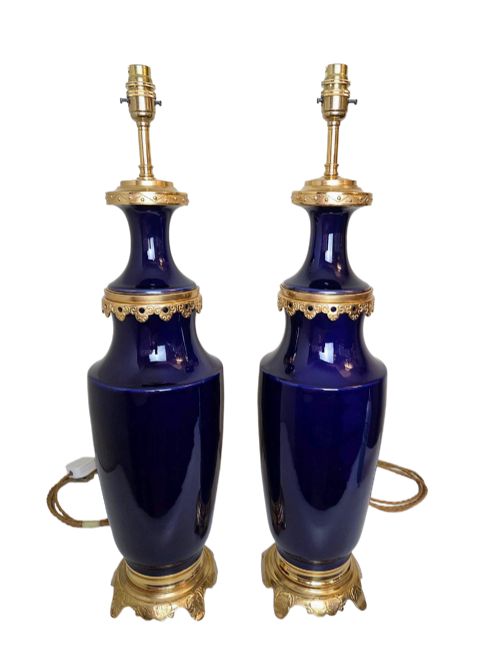
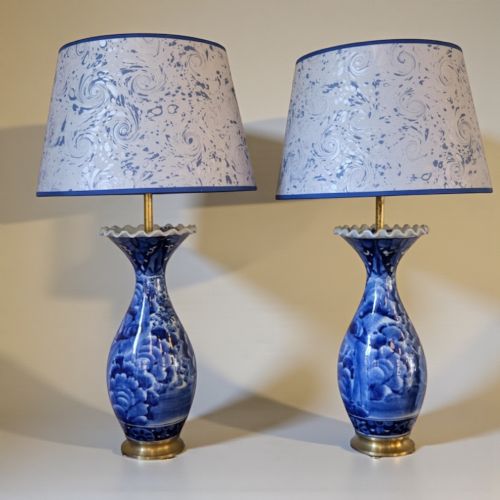
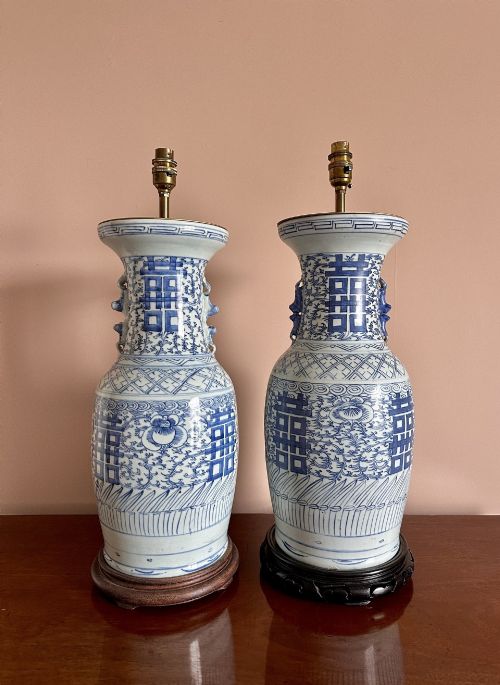
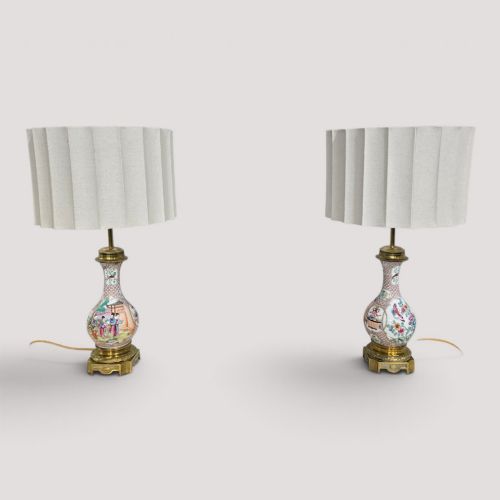
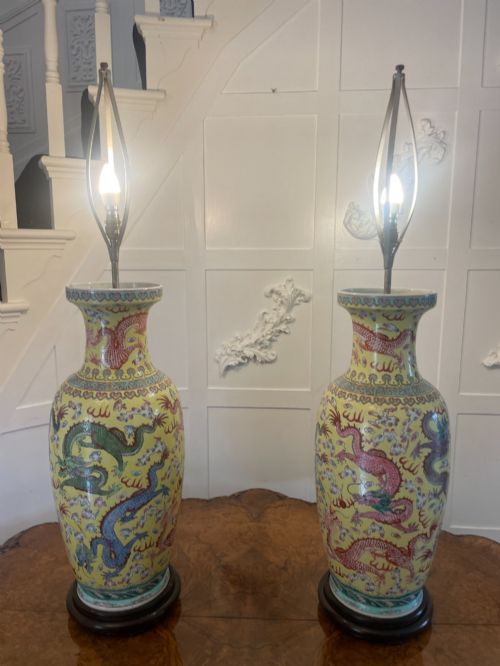
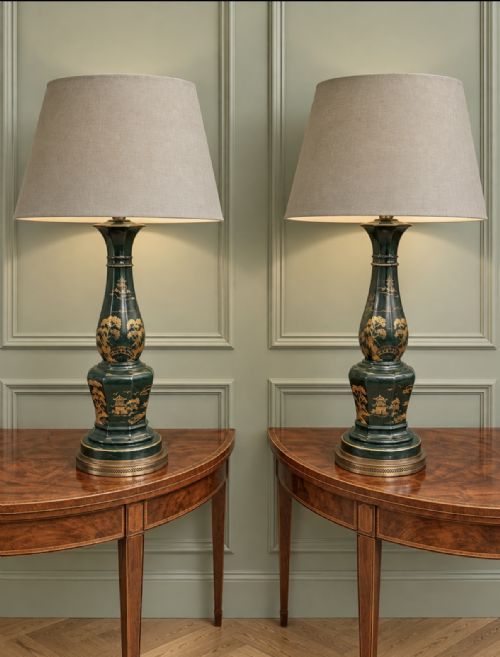
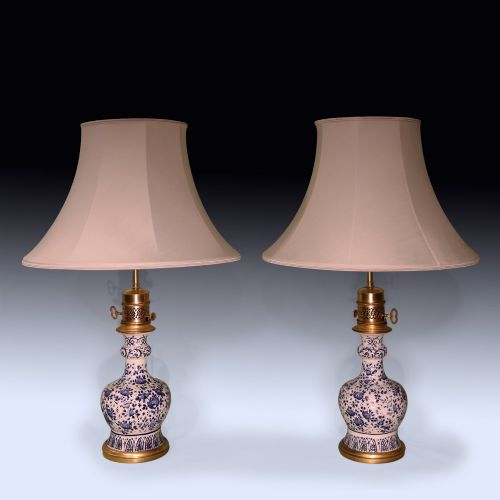
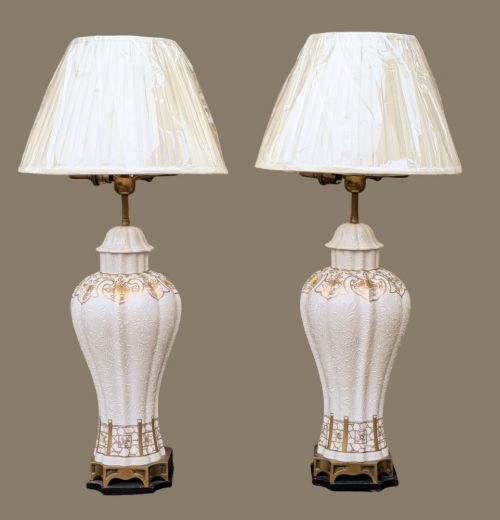
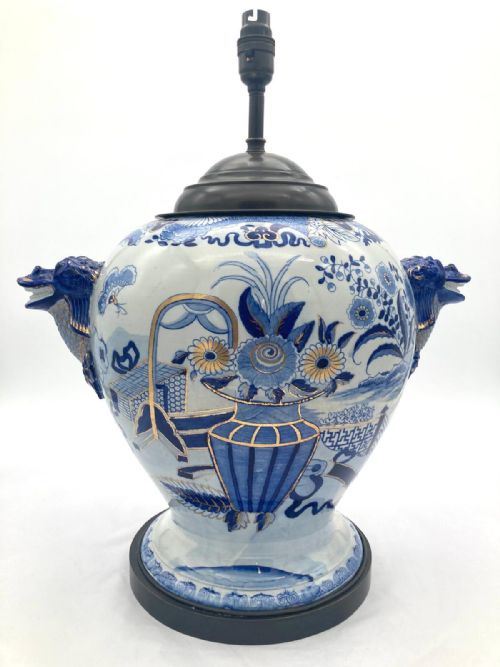
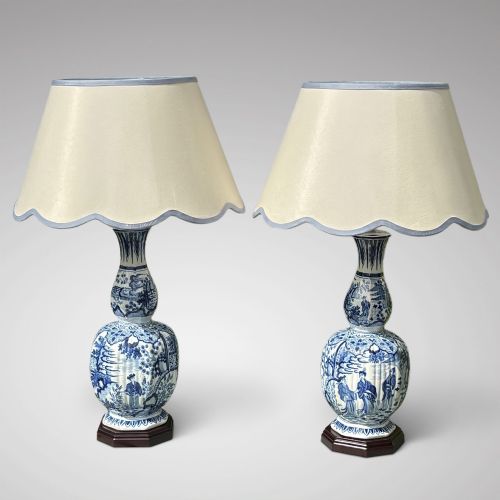
Paired ceramic lamps consist of matched pottery bodies adapted for domestic illumination, frequently utilising converted vases, ginger jars, and apothecary jars. These matching pairs establish formal balance when placed on side tables, sideboards, or mantelpieces.
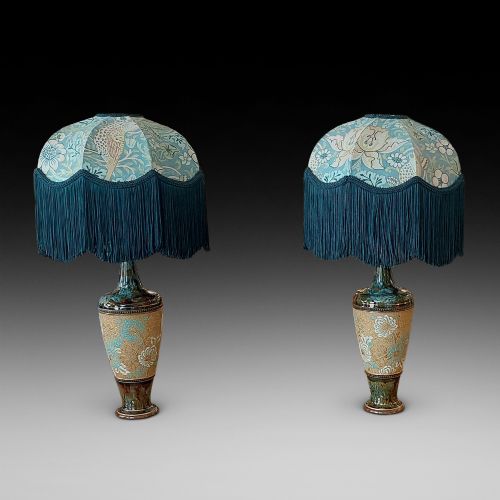
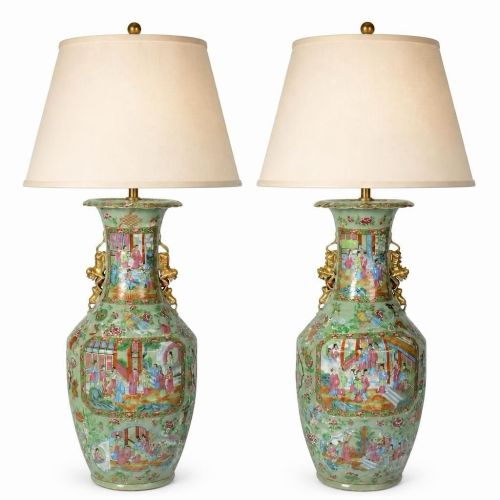
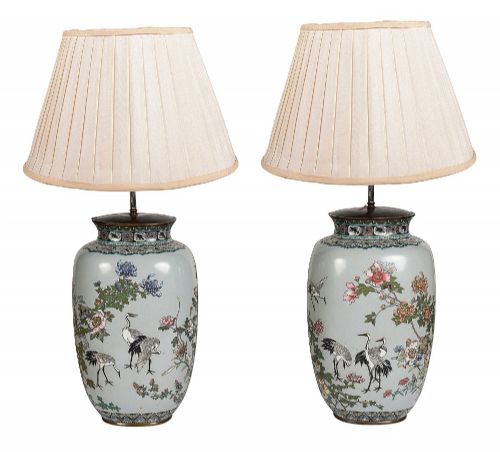
The selections available range from 18th-century Delft earthenware to early 20th-century Royal Doulton stonewares and Japanese Meiji period Satsuma porcelains. Chinese export wares, including Famille Rose, Famille Verte, and powder blue finishes, appear frequently among the listings.
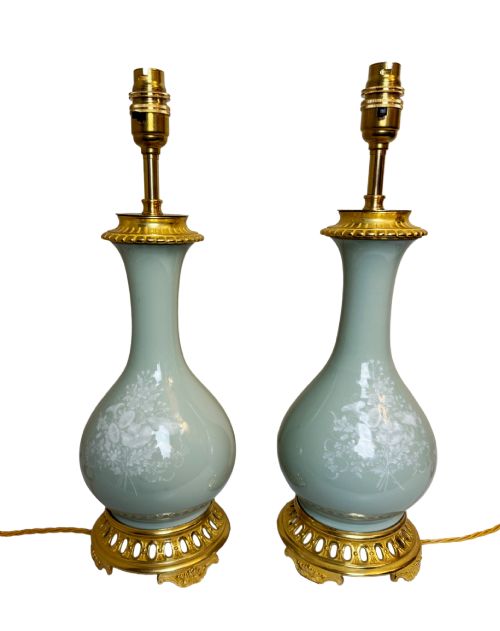
Many examples incorporate manufactured mounts in brass, ormolu, or gilt bronze, securing the ceramic body and raising the overall height for functional lighting. These vessels retain their original painted, glazed, or crackleware surfaces beneath fitted fabric or silk shades.
How they were made
Potters shaped the ceramic bodies using earthenware, stoneware, or porcelain clays, applying lead or tin glazes before hand-painting intricate motifs in blue, green, and polychrome pigments. Japanese Satsuma and Chinese export pieces often relied on enamel work and raised gilt detailing applied over the fired glaze.
Metalworkers contributed cast and chased mounts in brass, ormolu, and bronze to secure the bases and collars, adapting hollow ceramic vessels to house electrical wiring or oil fittings. Fabric and silk shades completed the assembly, often supported by bespoke metal hardware tailored to the proportions of the vase.
Paired Ceramic Lamps Retail Price Guide 2026
Typical asking prices for paired ceramic lamps among the pieces listed under this phrase on Sellingantiques today, from the lower quarter to the upper quarter. They describe what is for sale here now, not the wider market.
Listings feature 19th-century Chinese porcelain, Japanese Meiji period Satsuma, and early 20th-century Royal Doulton stonewares fitted as table lamps.
What varies in quality
Quality rests upon the precision of the hand-painted decoration, the crispness of the porcelain or stoneware body, and the harmony between the ceramic vessel and its metal mounts. Pieces with finely delineated enamel work and uniform glazing sit at the upper end of the scale.
The integration of the conversion matters significantly, as superior examples maintain the structural integrity of the original vase without damaging key decorative zones. Matched pairs displaying identical kiln firing results and symmetrical proportions demonstrate greater initial intent than assembled pairs.
Royal Doulton·Sitzendorf·Hicks and Meigh·Gien
The Paired Ceramic Lamps Glossary
- Famille Rose
- A palette of opaque enamels dominated by pink or rose colours, introduced to Chinese porcelain during the Qing dynasty. This technique allowed for nuanced shading in floral and figural scenes.
- Ormolu
- Gilded brass or bronze applied to furniture and decorative objects as mounts. The technique involves treating base metal with a mercury-gilding process to achieve a rich golden finish.
- Satsuma
- Japanese earthenware pottery featuring a crackled ivory glaze decorated with intricate polychrome enamels and raised gold. Production expanded significantly during the Meiji period for export markets.
- Crackleware
- Pottery featuring a network of fine intentional cracks in the glaze layer. This stylistic effect occurs due to the differential cooling rates of the clay body and the glaze.
- Pâte-sur-Pâte
- A ceramic decorating technique where liquid clay is built up in successive layers on a contrasting background to create a low relief cameo effect. French workshops utilised this method extensively in the 19th century.
Paired Ceramic Lamps: Frequently Asked Questions
How do I clean paired ceramic lamps?
Dust the ceramic bodies and shades regularly with a soft, dry cloth to prevent grime accumulation on textured glazes and gilt mounts.
Avoid liquid cleaners on painted enamel or gilt bronze surfaces, as moisture can degrade delicate pigments and metallic finishes.
Were these always lamps?
Many examples began life as decorative vases, ginger jars, or apothecary jars before being converted into lamps at a later date.
Craftsmen added drilled bases, weighted interiors, and electrical fittings while preserving the original ceramic vessel.
How do I identify Japanese Meiji period Satsuma?
Look for a finely crackled ivory-coloured earthenware glaze decorated with dense polychrome enamels and raised gilt work.
These pieces typically date between the late 19th and early 20th centuries and often feature figural or floral motifs.
Can I replace the fabric shades safely?
Fabric and silk shades can be replaced provided the fitter matches the original gallery or harp dimensions required by the mount.
Choose shade proportions that complement the height and weight of the ceramic base without overwhelming the painted decoration.