

Paired Bedroom Cabinets
Paired bedroom cabinets offer symmetry beside a bed, holding night essentials while anchoring the room's design.
Paired Bedroom Cabinets
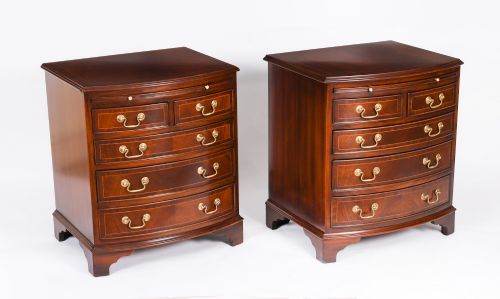
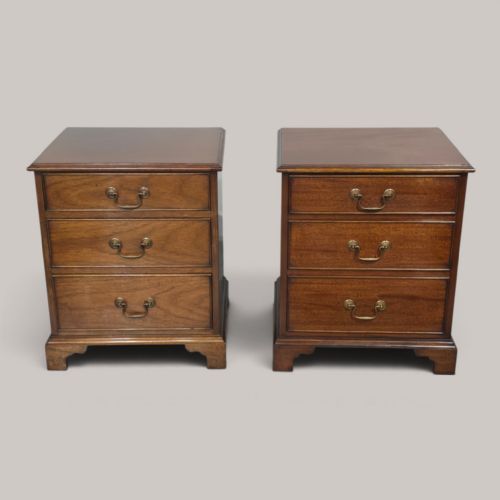
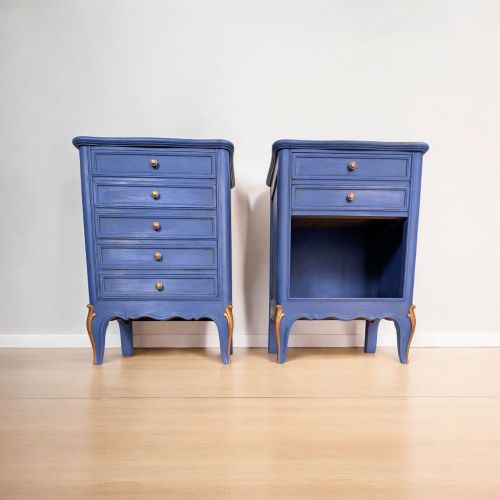
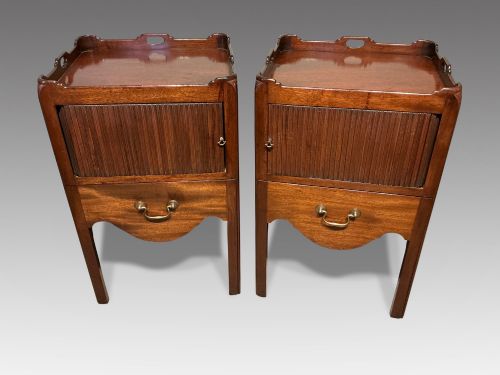
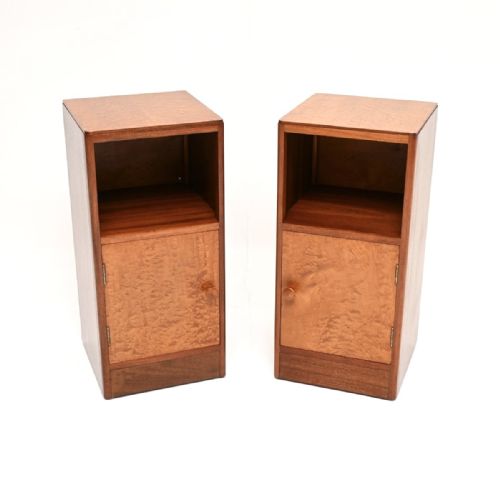
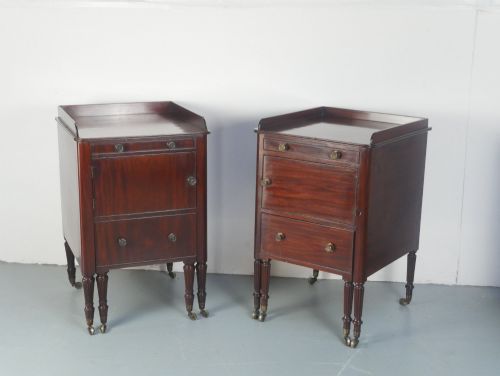
When you search for paired bedroom cabinets, you encounter matching companions designed to flank a bed, providing balanced storage for night-time essentials. These matched pieces range from compact bedside tables to more substantial bedside chests and cupboards.
The versions you are most likely to meet on this page hail primarily from the Victorian era and the 1920s, with robust representation from the nineteenth century alongside later Art Deco and Edwardian examples. Woods like mahogany predominate, often complemented by walnut, oak, satinwood, and marble tops.
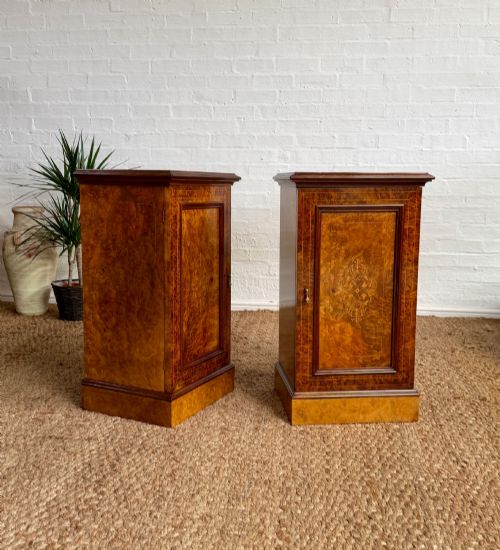
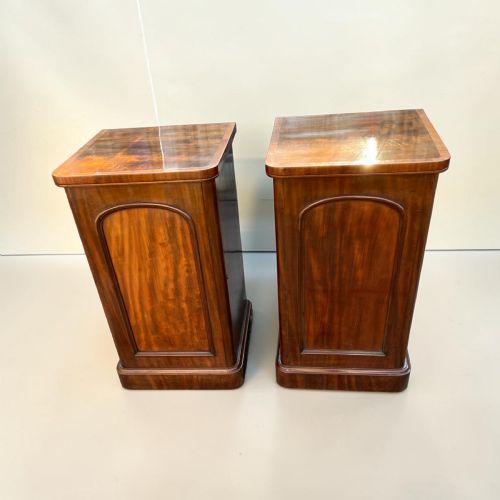
Makers historically produced these pairs to sit symmetrically on either side of a bedstead, though many easily double as lamp tables in a sitting room. Their forms span simple open tables, enclosed cupboards with single doors, and multi-drawer chests configured specifically for night-time utility.
Materials and Craftsmanship
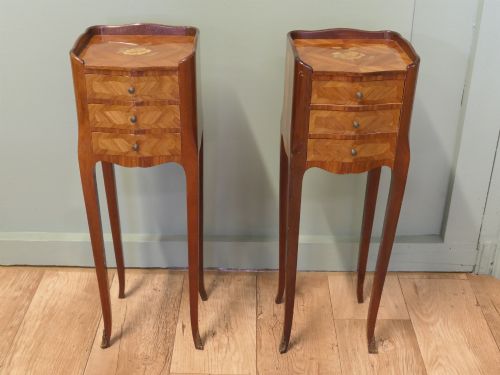
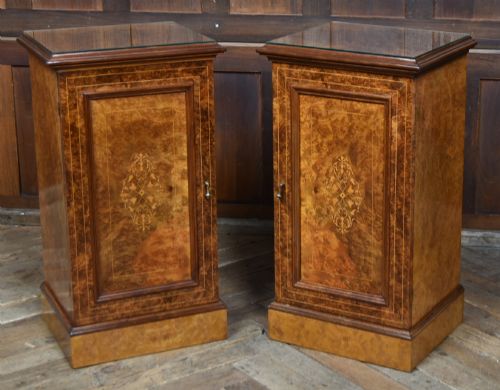
Cabinet makers relied heavily on solid and veneered timbers, utilising rich mahogany, burr walnut, and oak to construct the carcasses and drawers of these bedside pieces. Inlaid satinwood and marquetry frequently decorate the surfaces of Sheraton and Edwardian styles, adding contrasting botanical detail.
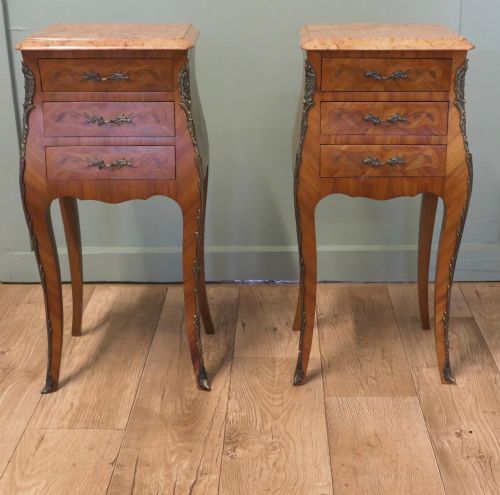
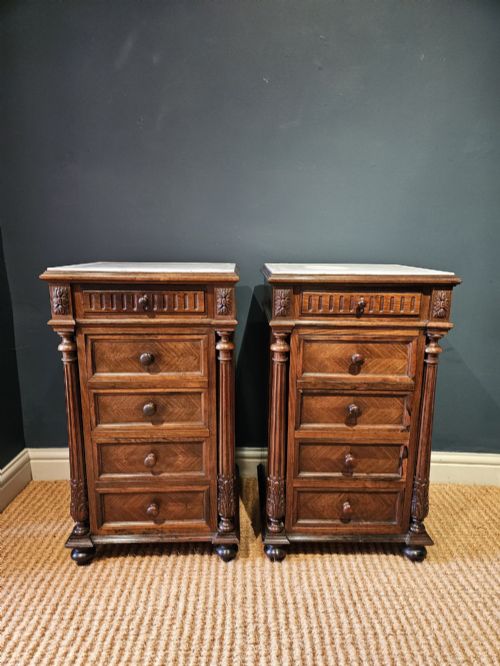
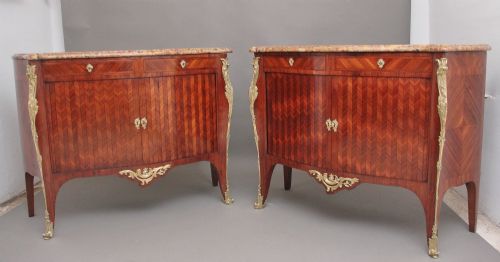
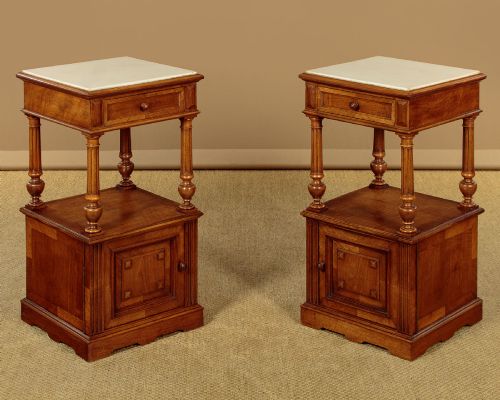
Functional stone surfaces appear regularly, with white or coloured marble slabs fitted to the tops of French and East European cabinets to provide a durable, wipe-clean stage for bedside items. Brass handles, escutcheons, and occasional metal mounts finish the hardware, securing doors and drawer fronts with period appropriate fastenings.
Paired Bedroom Cabinets Retail Price Guide 2026
Typical asking prices for paired bedroom cabinets among the pieces listed under this phrase on Sellingantiques today, from the lower quarter to the upper quarter. They describe what is for sale here now, not the wider market.
Listings feature periods spanning from the Victorian era and 19th Century through Edwardian, Art Deco, and 1930s designs.
Assessing Quality and Distinction
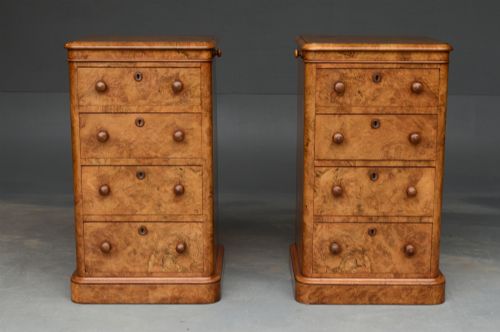
The distinction between standard pairs and exceptional examples rests in the selection of timber and the precision of the grain. Flame mahogany or figured burr walnut elevate a pair visually, showing deliberate book-matching across both cabinet doors or drawer fronts to maintain absolute symmetry.
Construction methods likewise separate ordinary utility from finer cabinet-making, evident in the tightness of dovetail joints within the drawers and the crispness of inlaid stringing or marquetry. Original marble tops, untouched brass hardware, and well-preserved French polish or painted finishes retain the integrity intended by the original workshop.
The Paired Bedroom Cabinets Glossary
- Bedside chest
- A miniature chest of drawers designed for the bedroom, typically featuring two or three small drawers stacked vertically to hold personal items.
- Cabriole leg
- A furniture leg that curves outward at the knee and tapers inward toward the ankle, reminiscent of animal limbs and common on French provincial pieces.
- Marquetry
- Decorative patterns formed by fitting small pieces of veneer into a wooden background, creating intricate floral or geometric designs.
- Sheraton style
- A neoclassical furniture design characterised by straight lines, tapered legs, and delicate inlay work inspired by late eighteenth-century aesthetics.
- Bombe
- A swollen or bulging convex shape associated with continental case furniture, swelling outward toward the base for a dramatic silhouette.
Paired Bedroom Cabinets: Frequently Asked Questions
How do I match these to my bed?
Consider the height of your mattress relative to the tabletop surface so that reaching for a glass of water remains effortless. Matching the primary timber, such as mahogany or walnut, to your existing bed frame or bedroom furniture creates a cohesive aesthetic.
Alternatively, contrasting a painted pine or light satin birch pair against a dark bedstead introduces deliberate texture and visual balance without needing an exact wood match.
Can I use them as lamp tables?
Many of these pieces function exceptionally well as lamp tables in a sitting room, hallway, or study. Their compact footprints allow them to fit snugly beside sofas or reading chairs while providing useful surface area.
Enclosed cupboard versions also offer discreet storage for books, chargers, or paperwork away from the bedside.
How do I identify a Victorian pair?
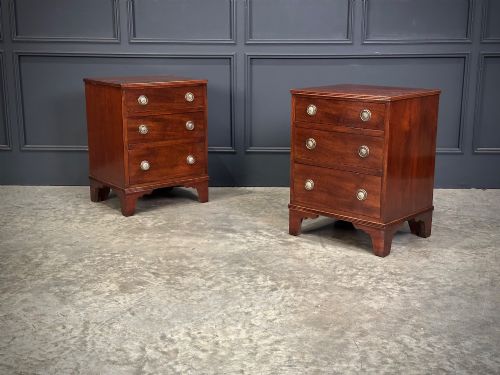
Victorian examples typically utilise solid mahogany or burr walnut, featuring sturdy construction with hand-cut dovetails inside the drawers. They often take the form of cupboards with panelled doors or three-drawer chests designed to bear daily use.
Look for traditional amber patination in the wood finish and heavier proportions compared to lighter Edwardian or Art Deco counterparts.