



Pair Wooden Twin Beds
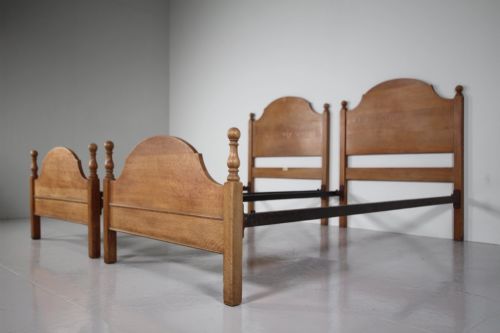
Pair wooden twin beds bring matched symmetry to a guest room, offering twin sleeping frames crafted from period timbers.
Pair Wooden Twin Beds
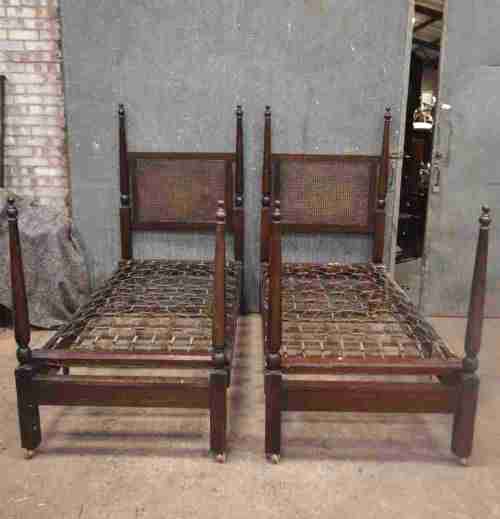
When you search for pair wooden twin beds, you encounter matched sets of single sleeping frames constructed from timber rather than metal alone. These pieces range from the Edwardian era through the 1920s and 1930s, alongside examples from the nineteenth century. They appear in forms such as single beds, bed frames, and four poster variants.
The materials and styles span oak, mahogany, walnut, satinwood, and fruitwood, running through Edwardian designs, Art Deco, Queen Anne style, and French revivals. Many examples originate from workshops such as Heal and Son, while others reflect continental or English country house traditions.
You are most likely to meet Edwardian mahogany or oak bedframes on this page, often bearing inlaid decoration or maker labels. These listings provide twin configurations designed to match precisely in wood, proportion, and decorative idiom.
How they were made
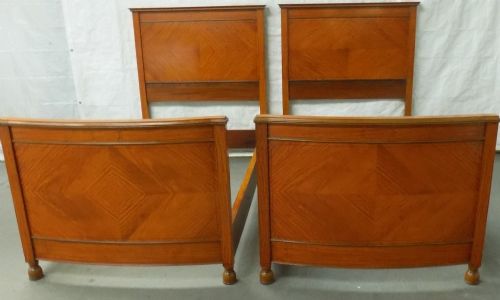
Cabinetmakers constructed these pairs using solid timbers like oak, mahogany, walnut, and fruitwood, frequently applying veneers such as burr walnut or satinwood across larger surfaces. Parquetry and intricate inlay work added geometric or botanical patterns to headboards and footboards.
Structural elements incorporated carved details, painted finishes, or upholstered panels such as bergere canework and embossed leather. Frames utilised traditional joinery to ensure stability across twin proportions, while makers like Heal and Son added paper or wooden labels to identify their output.
Pair Wooden Twin Beds Retail Price Guide 2026
Typical asking prices for pair wooden twin beds among the pieces listed under this phrase on Sellingantiques today, from the lower quarter to the upper quarter. They describe what is for sale here now, not the wider market.
Listings feature timber varieties including oak, mahogany, walnut, burr walnut, satinwood, fruitwood, and iron.
What varies in quality
The distinction between standard commercial output and superior craftsmanship lies in the selection of timbers and the precision of decorative details. Finer examples display carefully chosen grain patterns in mahogany, satinwood, or burr walnut, matched evenly across both beds in the pair.
Execution of carving, parquetry, and inlay separates simpler frames from high-status commissions. Labelled pieces from established makers retain a documented provenance that elevates their standing above unsigned workshop production.
Heal and Son·Heals
The Pair Wooden Twin Beds Glossary
- Bergere
- A closed-arm upholstered armchair or in this context a bed panel featuring woven canework. This technique introduces light and texture into solid wood headboards.
- Parquetry
- A geometric mosaic of wood pieces used for decorative effect on furniture surfaces. It creates patterned wooden floors and headboard panels.
- Satinwood
- A durable, lustrous timber from tropical trees yielding a yellowish or golden sheen. It was frequently used for fine inlay and banding during the Edwardian period.
- Corbeille
- A French bed style featuring a rounded, basket-like curved headboard and footboard. These painted or polished frames often display rococo revival influences.
- Bedstead
- The framework of a bed consisting of posts, headboard, and footboard supporting the mattress. Period bedsteads often require custom mattress sizing to fit historical dimensions.
Pair Wooden Twin Beds: Frequently Asked Questions
Will modern mattresses fit antique twin beds?
Historical twin beds often deviate from current standard mattress dimensions. It is essential to measure the internal rails carefully before ordering a new mattress.
Custom mattress makers can supply bespoke sizes to fit older wooden frames accurately without damaging the side rails.
How do I care for wooden bed frames?
Maintain polished timber surfaces by dusting regularly with a soft cloth and applying bees-wax polish periodically. Avoid placing wooden beds near direct heat sources or strong sunlight.
Check and tighten structural bolts gently over time to prevent strain on historical joints during everyday use.
Are these beds easy to assemble?
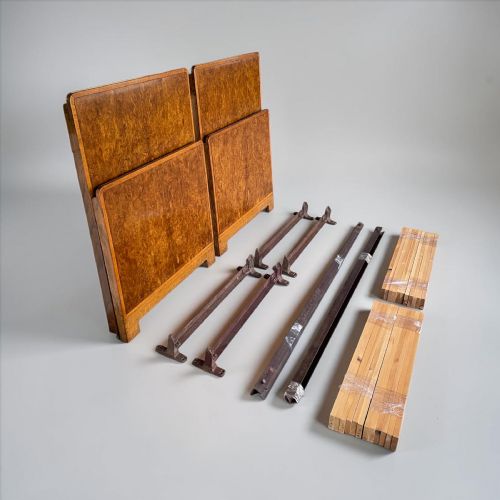
Most period wooden twin beds utilise traditional metal bolt-in side rails or slot-in joints. Two people can typically assemble them using basic spanners.
Keep all original iron bolts and brackets together when moving the furniture to ensure secure reassembly.
How do I distinguish Edwardian beds from nineteenth century ones?
Edwardian frames often feature lighter satinwood inlay, mahogany veneers, or simpler neoclassical revival lines. Nineteenth-century examples tend to display heavier proportions and deeper hand-carved walnut or oak detailing.
Maker labels and registration numbers found on the timber frame frequently help confirm an Edwardian or earlier date of manufacture.