
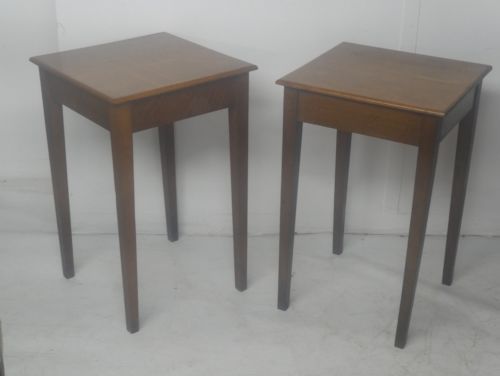
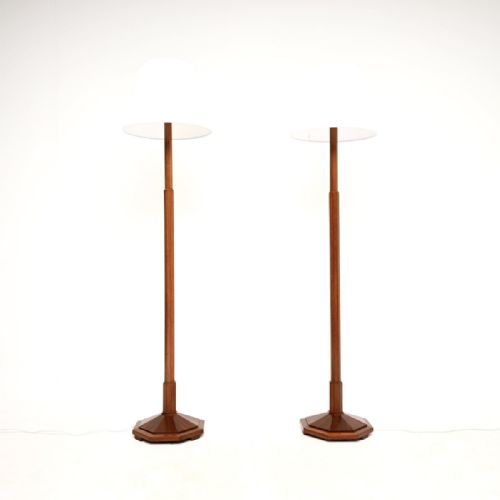


Pair Wooden Lamp Stands
Pair wooden lamp stands bring warmth and symmetry to a room, offering practical lighting raised on handsome timber bases.
Pair Wooden Lamp Stands
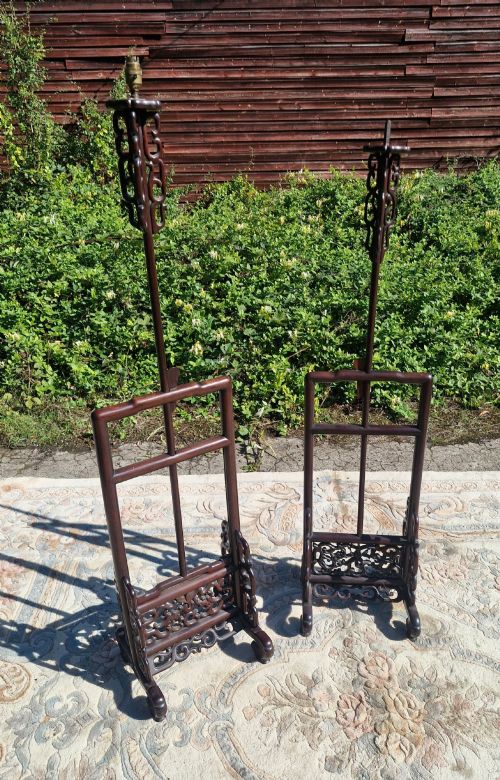
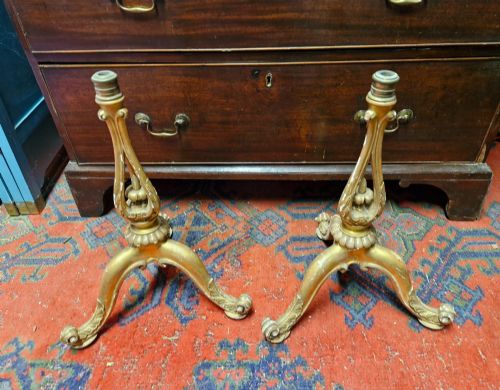
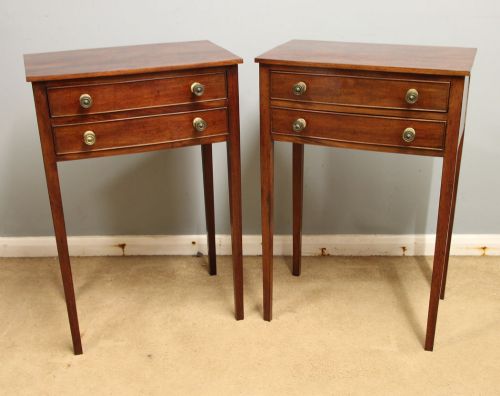
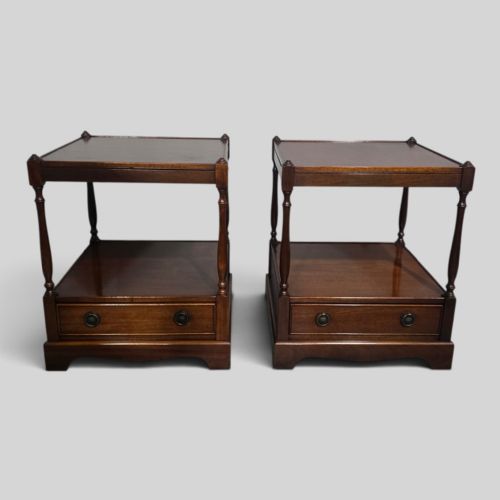
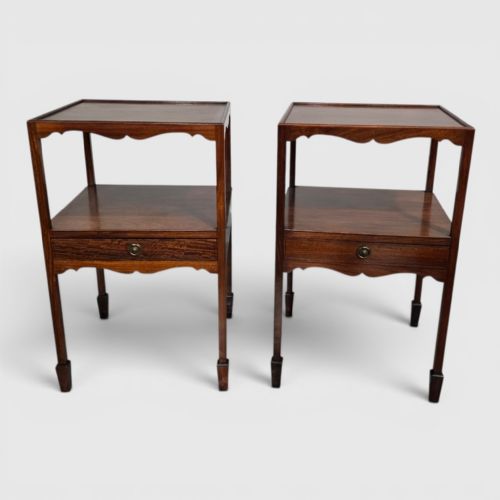
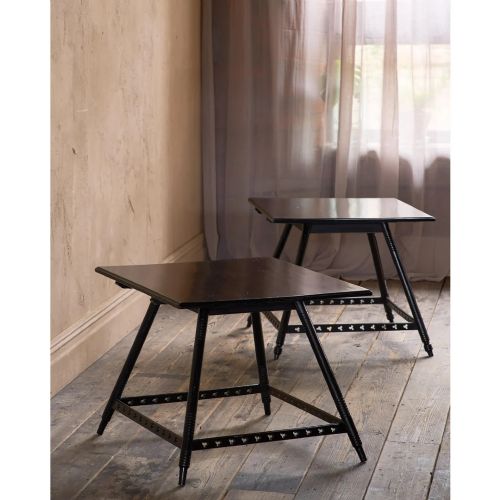
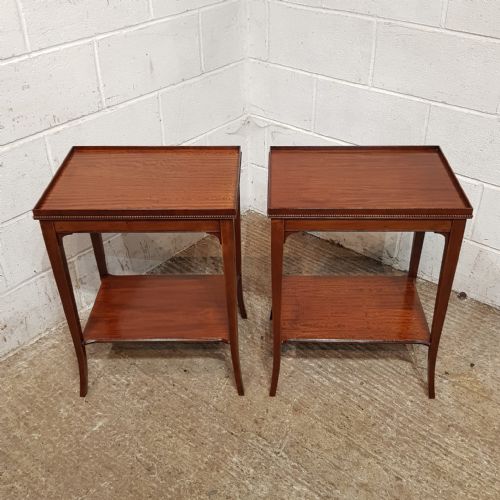
When you search for pair wooden lamp stands, you encounter a selection spanning several centuries and styles, from Georgian and Regency forms to Edwardian and Art Deco designs. These pairs include standard lamps, floor lamps, and various table forms adapted for lighting.
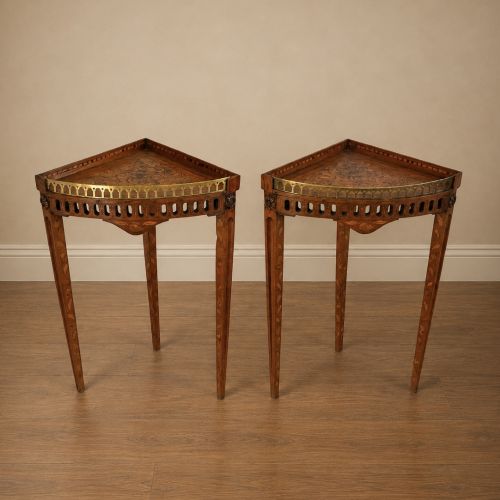
The versions most commonly met on this page range from modest hardwood and oak lamp tables to elaborate inlaid mahogany bedside cabinets and tall Victorian lampstands. Many pieces double as functional tables with brass galleries or carved details, originating from English, Chinese, Indian, and Italian workshops.
These items reflect the domestic habits of the nineteenth and early twentieth centuries, providing balanced illumination and surface space in sitting rooms and bedrooms. The grouping into pairs offers a cohesive decorative scheme for mantels, corners, or bedside placement.
What varies in quality
The standard of a pair depends on the selection of timber, the crispness of the carving or inlay, and the integrity of the original construction. Fine examples show thoughtful grain matching in woods like mahogany and burr elm, alongside neatly executed joinery that withstands daily use.
Proportion and balance separate standard items from superior pieces, particularly in tall floor-standing standards and tripod bases where stability is crucial. Original metal accents, such as brass galleries, and intact surface finishes elevate the character of a pair.
Some tall standards come ready to cast light over reading chairs that have long since vanished into history.
The Pair Wooden Lamp Stands Glossary
- Tripod base
- A three-legged support structure commonly found on floor lamps and small tables to ensure stability on uneven floors. This form provides a compact footprint while maintaining balance.
- Standard lamp
- A tall floor-standing lighting fixture designed to illuminate a room from standing height. These pieces often feature turned wooden shafts and weighted bases.
- Brass gallery
- A low pierced metal rail fitted around the edge of a table top to prevent objects from sliding off. They appear frequently on refined bedside and lamp tables.
Pair Wooden Lamp Stands: Frequently Asked Questions
How do I choose between tall floor lamps and table stands?
Floor lamps provide general illumination and stand directly on the floor, making them suitable for corners or beside seating. Table stands require a surface like a side table or cabinet, combining lighting with storage or display space.
Consider the scale of the room and the existing furniture layout when deciding which form fits your space. Matching pairs ensure a balanced visual weight in either configuration.
Are these stands wired for modern electricity?
Many older lamp standards have been adapted over time to accept modern wiring and plugs, while others retain older fittings that may require rewiring by a professional. It is wise to inspect the electrical components upon acquisition.
Because standards and table lamps span different eras, the wiring methods vary from piece to piece. A qualified electrician can safely update the internal hardware without altering the antique timber structure.
How do I care for wooden lamp stands?
Protect timber surfaces by keeping them away from direct heat sources and strong sunlight, which can dry out or fade the wood. Regular dusting with a soft, dry cloth preserves the finish.
Occasional application of a suitable wax helps maintain the lustre of mahogany, walnut, and oak. Avoid using harsh chemical sprays that might damage antique polishes or veneers.
How can I tell the period of a wooden lamp stand?
The period is often indicated by the stylistic details, such as Regency curves, Edwardian inlay, or Art Deco geometric lines. Construction methods and the choice of primary timbers also offer clues to the date of manufacture.
Comparing the turning, joinery, and decorative motifs with documented examples helps narrow down the era. Subtle signs of hand-working point towards earlier nineteenth-century and eighteenth-century craftsmanship.