
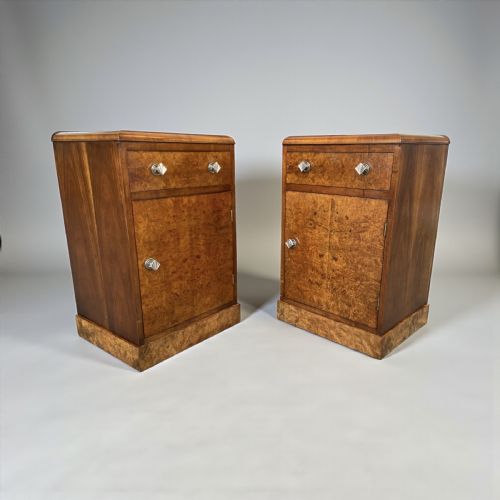


Pair Walnut Pot Cupboards
Pair walnut pot cupboards are matched bedside storage pieces offering warm timber tones and practical enclosed shelving for the bedroom.
Pair Walnut Pot Cupboards
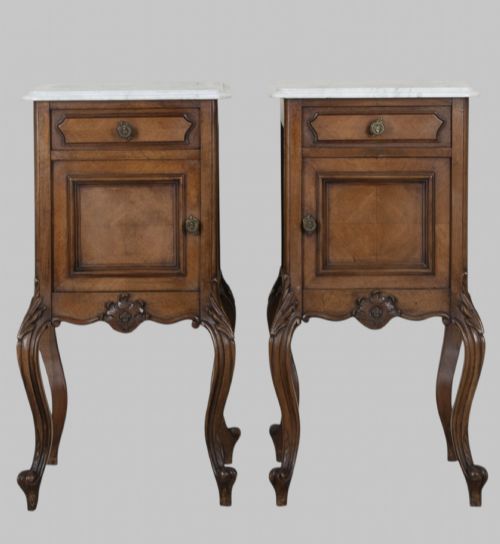
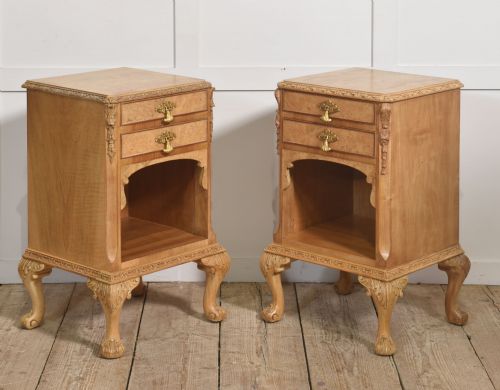
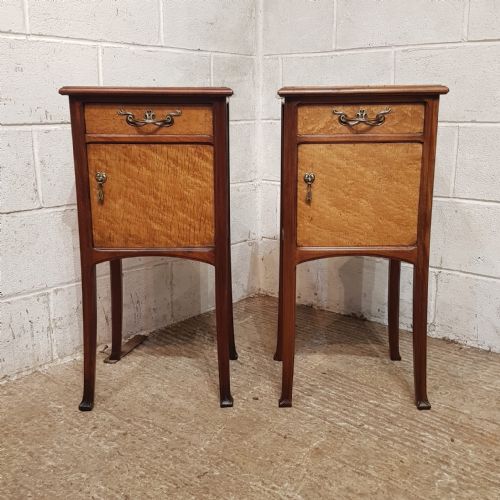
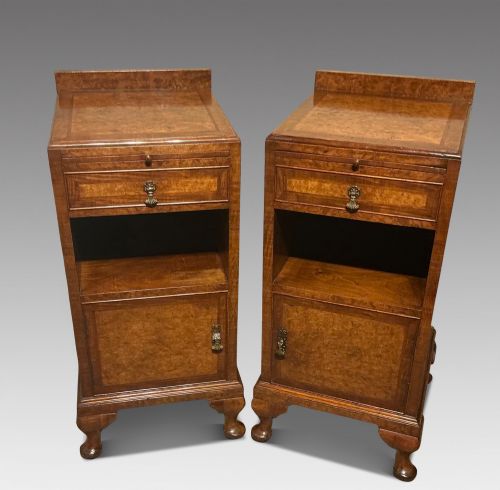
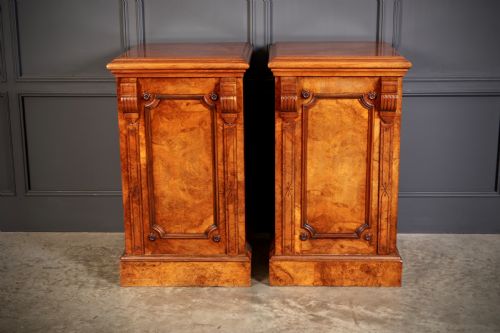
Pair walnut pot cupboards are matching bedside cabinets designed to hold chamber pots or night essentials, appearing frequently in French and English designs from the late nineteenth century through to the art deco period. These pieces function primarily as bedside tables or lamp stands, offering a compact surface above a cupboard door and internal shelf.
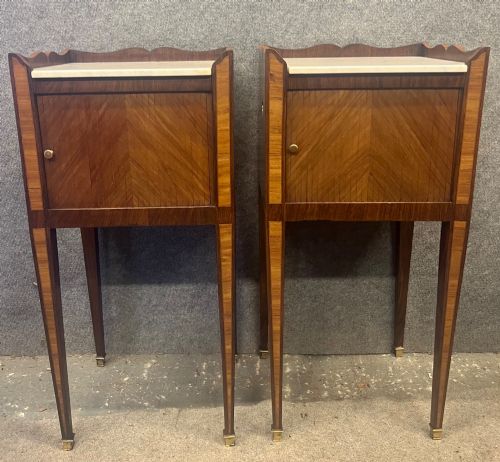
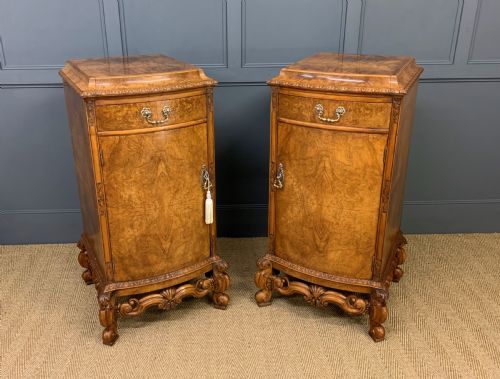
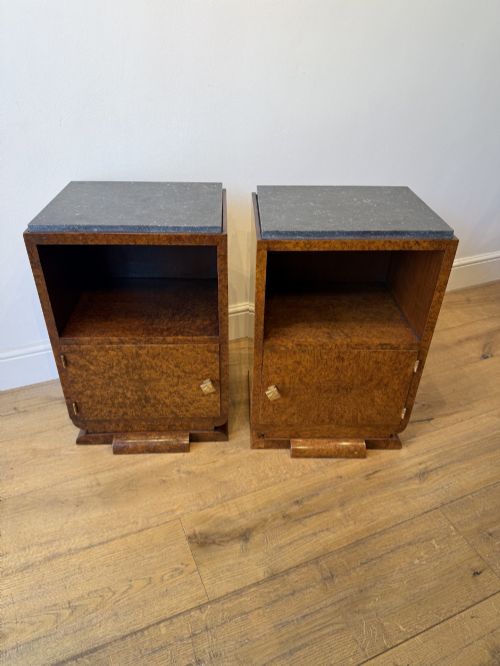
The selections available range from tall Victorian pedestal cupboards to French provincial styles and streamlined nineteen-twenties art deco models. Buyers will frequently encounter variations featuring marble tops, inlaid veneers, and carved wooden details across different regional workshops.
How they were made
Cabinet makers utilised solid walnut, burr walnut, and figured walnut veneers applied to carcases of secondary timbers, sometimes incorporating mahogany or tulipwood for contrast. Surfaces were frequently polished to highlight the rich grain patterns inherent in walnut timber.
Stone and marble inserts were fitted to the tops of many nineteenth-century French examples to provide a durable, wipe-clean surface. Brass and metal fittings such as handles, hinges, and occasional mounts completed the construction.
Listings feature walnut, burr walnut, figured walnut, mahogany, and tulipwood, alongside marble and brass elements.
What varies in quality
The distinction between standard utility pieces and finer examples rests upon the selection of timber veneers, such as highly figured burr walnut, and the crispness of hand-carved details. Superior pairs demonstrate careful matching of the wood grain across both cabinet doors, creating a symmetrical appearance.
Structural integrity, the precise fit of heavy marble tops, and the quality of original brass hardware elevate the status of individual pieces. Well-executed marquetry inlay and sound joinery indicate superior workshop production.
The Pair Walnut Pot Cupboards Glossary
- Burr walnut
- A veneer taken from the wart-like growths on walnut trees, prized for its swirling, highly decorative grain pattern. It appears frequently on finer Victorian and art deco cabinets.
- Pot cupboard
- A small bedside cabinet originally built to enclose a chamber pot behind a single door. Modern users repurpose them as general bedside storage or lamp stands.
- Marquetry
- Decorative patterns formed by the insertion of small pieces of wood veneer into a fitted surface. French examples often utilise this technique for floral or geometric motifs.
- Pedestal cupboard
- A tall, narrow freestanding cabinet with a single door enclosing vertical storage space. These pieces maximise storage while occupying a minimal floor footprint.
Pair Walnut Pot Cupboards: Frequently Asked Questions
How were pot cupboards used?
These cabinets were originally designed for bedrooms to conceal a chamber pot on the lower shelf, keeping sanitary items out of sight. The flat top surface held a water jug, basin, or candle during the night.
Over time, changing domestic habits transformed their function into standard bedside tables for lamps, books, and personal items. Today they serve identical bedside roles in modern homes.
Are matching pairs common?
Finding two identical bedside cabinets is achievable because many workshops produced them concurrently as matching pairs for double beds. Slight variations between the two pieces sometimes occur due to hand-finishing.
Original pairs maintain greater decorative harmony and collecting interest than assembled matches. Examining the internal construction helps confirm whether two cabinets originated together.
How do I date these cabinets?
Stylistic clues such as geometric art deco lines, carved Victorian motifs, or French provincial curves provide the primary indicator of age. Construction methods and secondary timbers exposed inside the cabinet also assist in determining the period.
Marble tops and brass hardware styles further narrow down the decade of manufacture. Comparing these elements with documented nineteenth and twentieth-century designs secures an accurate date.