


Pair Victorian Glass Bottles
Pair victorian glass bottles bring matched symmetry to the table, combining nineteenth-century utility with deep colour and brilliant facets.
Pair Victorian Glass Bottles
When searching for pair victorian glass bottles, buyers encounter matched sets of glass vessels intended for the dining table, the dressing room, or the apothecary counter.
The selections span functional forms such as decanters for spirits, cruet bottles for oils, and smaller scent or perfume bottles fitted with precious metal collars.
Most pieces date from the nineteenth century, including specific iterations from the Victorian era alongside related nineteenth-century French and English examples.
How they were made
Maker operations utilised lead crystal, cut glass, and coloured glass alongside mounts of sterling silver, silver plate, and base metal.
Techniques combined free-blowing or mould-blowing with deep surface cutting, wheel engraving, and acid etching to create tactile faceted patterns and decorative motifs.
The listings feature diverse materials including lead crystal, sterling silver mounts, and coloured glass in ruby, green, and amethyst.
What varies in quality
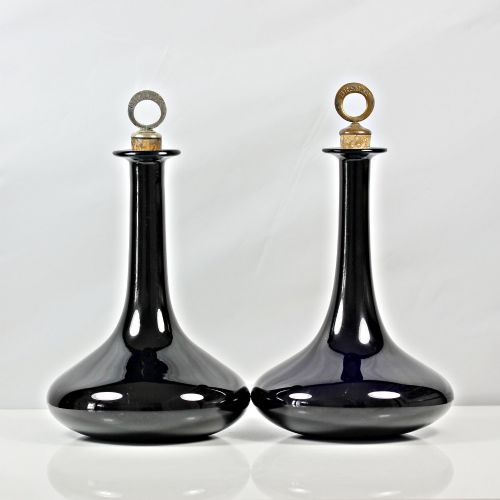
Distinctions in standard depend upon the crispness of the glass cutting, the weight of the metal mounts, and the depth of colour in ruby, green, amethyst, and Bristol blue specimens.
Superior items maintain matching profiles across both vessels, crisp hallmarks on silver collars, and well-balanced proportions that demonstrate skilled craftsmanship.
John Newton Mappin
The Pair Victorian Glass Bottles Glossary
- Bristol blue
- A deep cobalt blue glass traditionally produced in the Bristol area during the eighteenth and nineteenth centuries. It was frequently utilised for spirit decanters and serving bottles.
- Cut glass
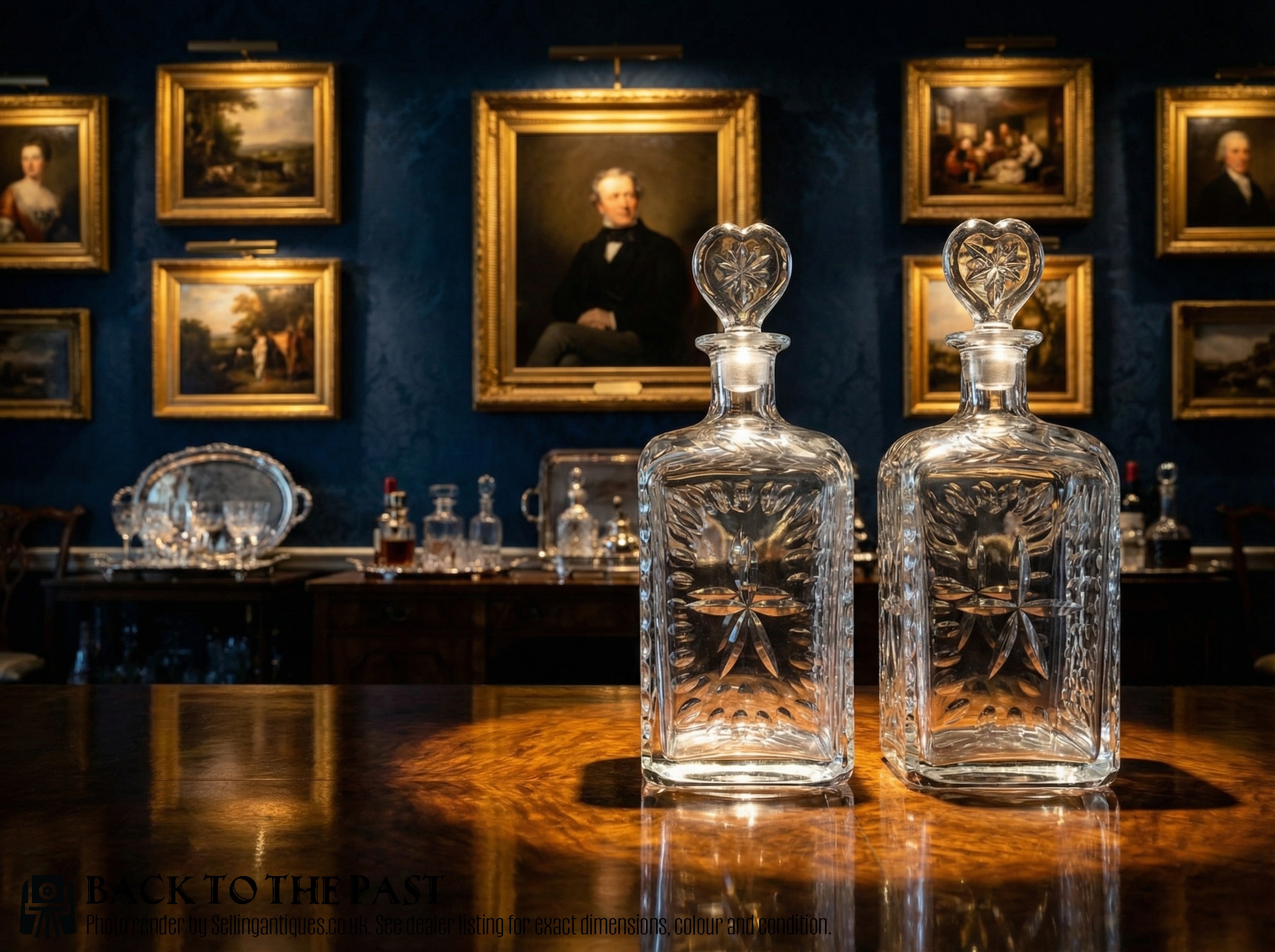
- Glassware decorated by holding the vessel against a rotating abrasive wheel to carve geometric facets. This technique maximises the refractive quality of lead crystal.
- Silver collar
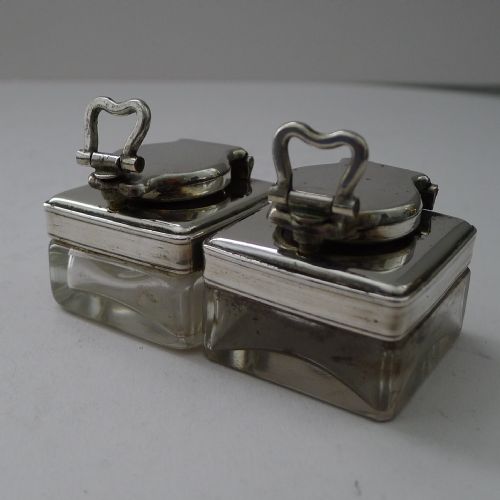
- A protective or decorative band of silver fitted around the neck of a scent bottle or decanter. It often holds a hinged lid or screw cap.
- Apothecary jar
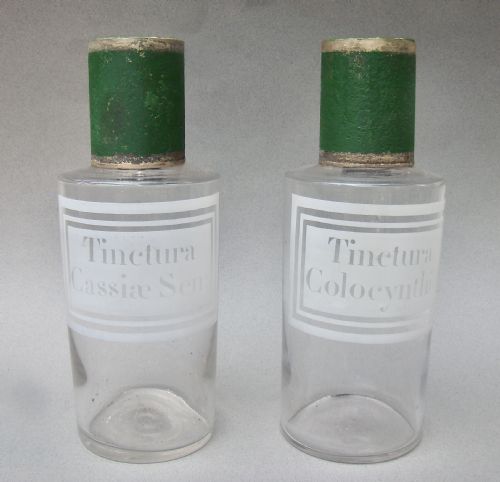
- A utilitarian glass container designed to store medicinal contents in a dispensary or chemist shop. Etched labels and ground glass stoppers are common characteristics.
Pair Victorian Glass Bottles: Frequently Asked Questions
How are these glass bottles cleaned safely?
Wash glass vessels by hand in lukewarm water using mild detergent, avoiding harsh abrasives that might scratch the surface. Metal mounts should be kept dry to preserve the original finish.
Allow them to air dry completely on a soft cloth before returning stoppers or caps to their respective bottles.
What is the difference between decanters and scent bottles?
Decanters are larger vessels designed for holding and serving wines or spirits at the table. Scent bottles are miniature containers meant for holding perfumes or colognes on a dressing table.
Both items appear in matched pairs across the nineteenth century but serve entirely different domestic functions.
How do I identify a Victorian period piece?
Examine the weight of the glass, the presence of hand-cut facets, and any associated silver hallmarks. Victorian examples often feature deep jewel tones like cranberry, green, and amethyst.
Match stylistic cues such as shaft and globe profiles or silver plate collars with the recorded manufacturing decades.
Can these glass bottles still be used daily?
Many decanters and cruet bottles remain fully functional for serving liquids or displaying dried botanicals. Care should be taken with antique stoppers to prevent chipping the glass rims.
Perfume bottles with silver mounts work well for display, though delicate stoppers require gentle handling.