
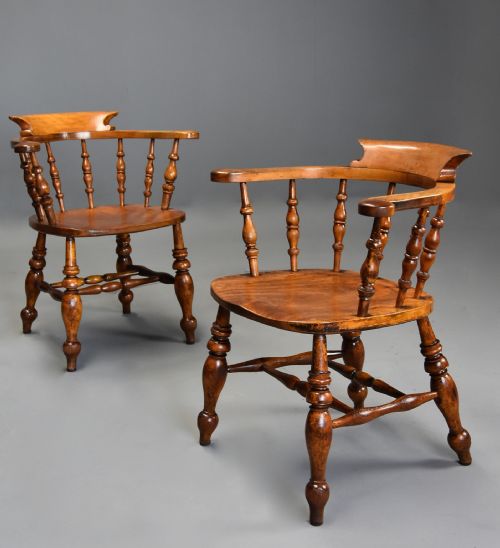
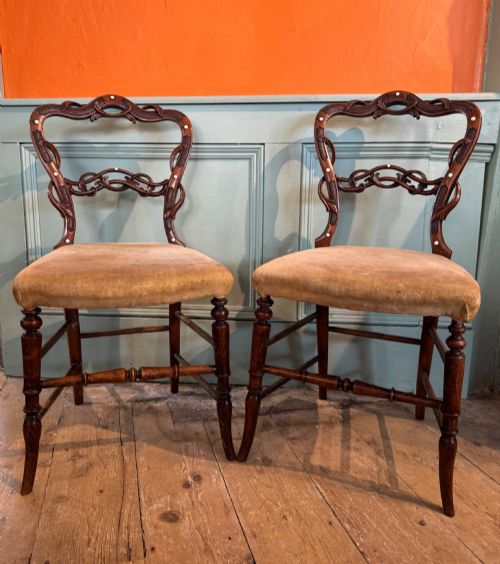
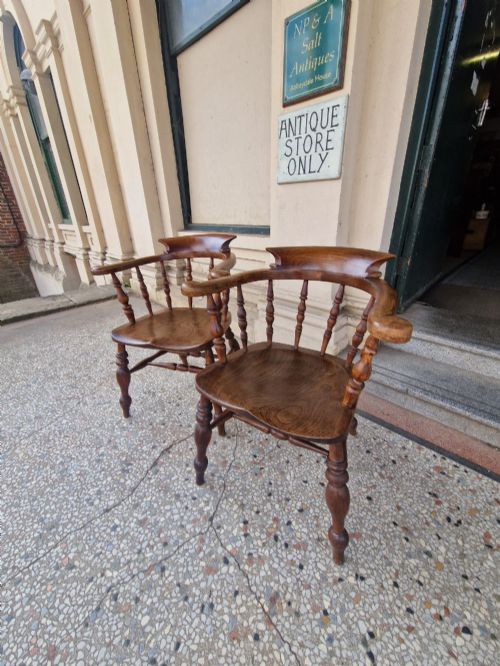
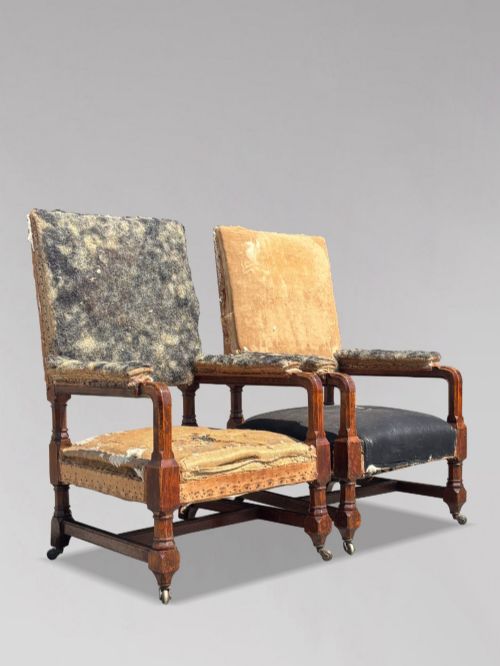
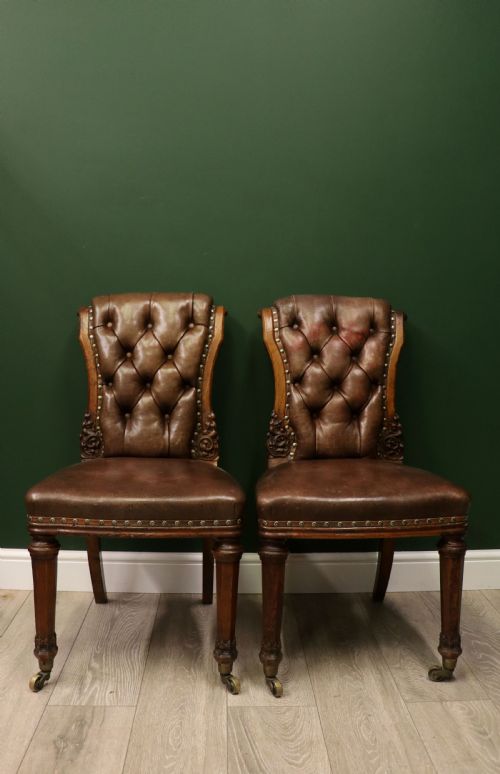
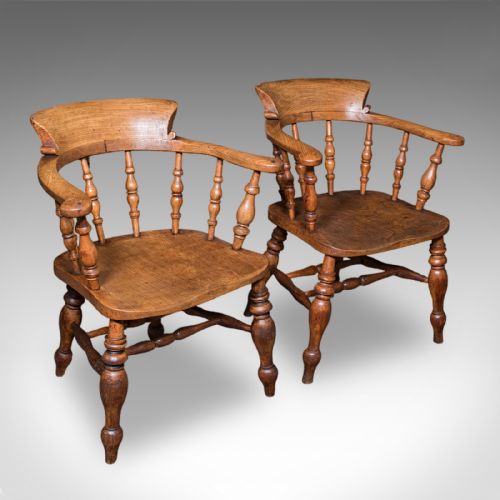
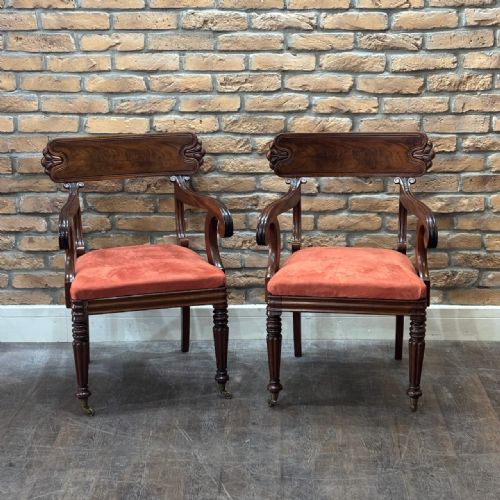
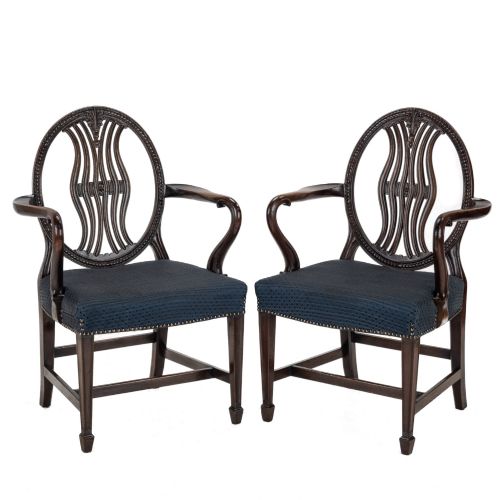
Pair Victorian Desk Chairs
Pair victorian desk chairs offer solid nineteenth-century construction and timber frames built for daily study and correspondence.
Pair Victorian Desk Chairs
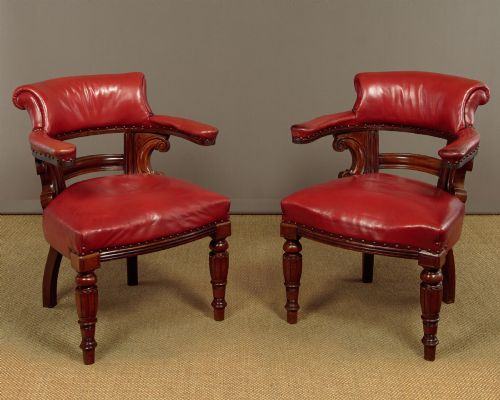
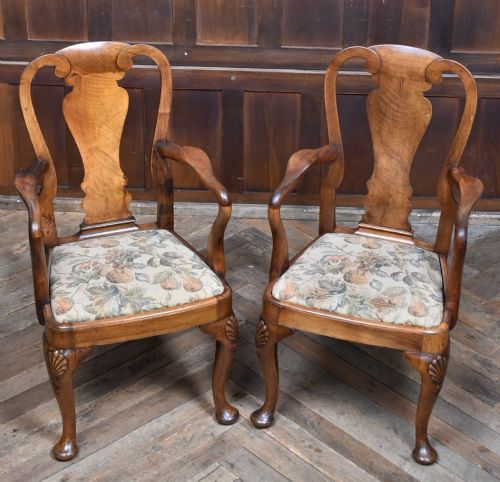
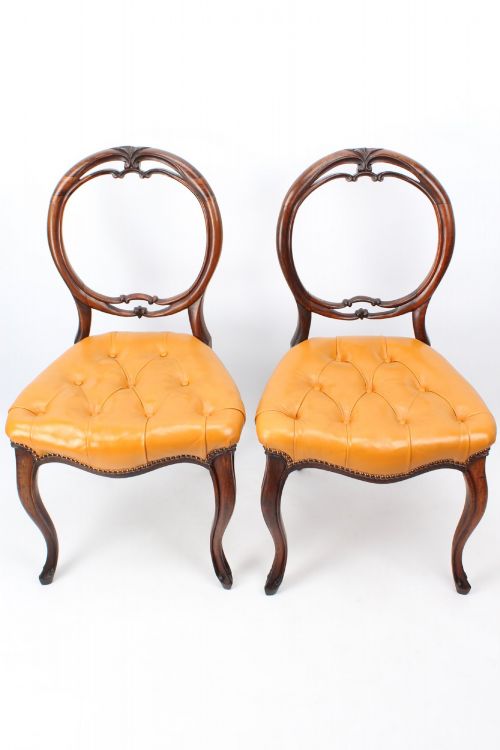
Pair victorian desk chairs encompass nineteenth-century seating designed for writing, reading, and administrative work in studies and libraries. Buyers encounter sturdy mahogany, walnut, and oak frames featuring upholstered leather pads, spindle backs, or carved wooden supports.
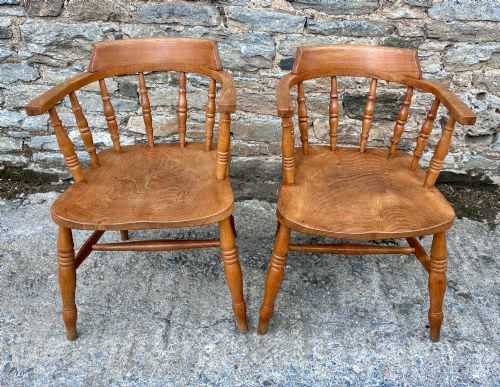
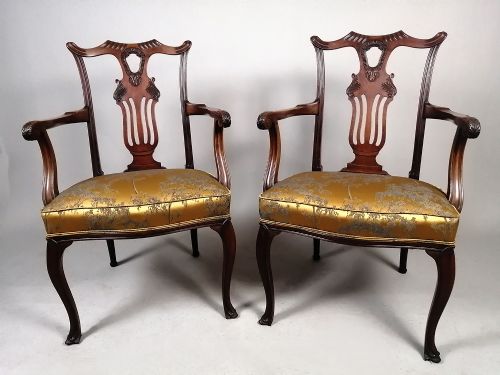
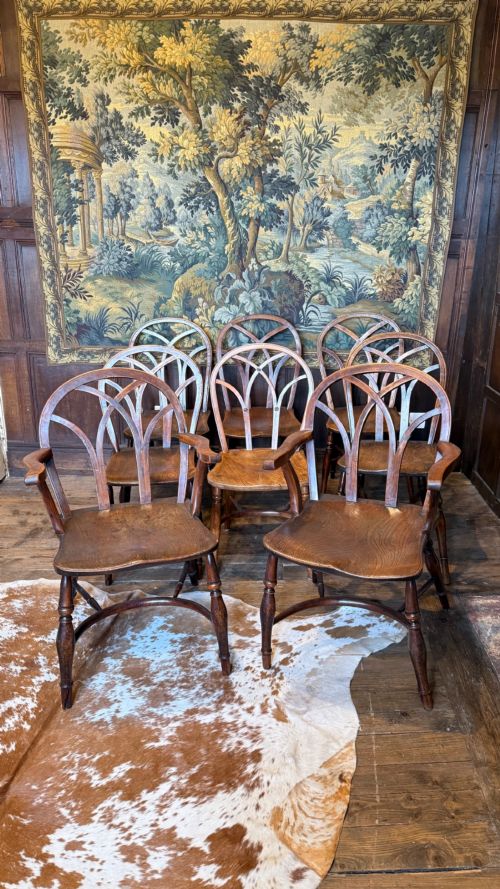
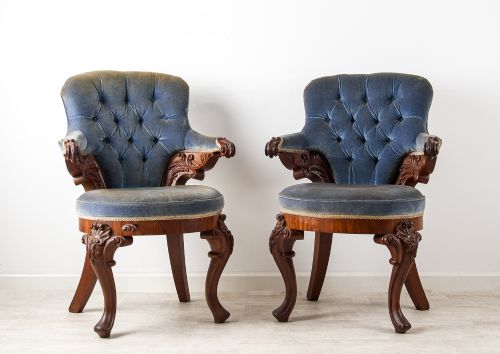
The selection ranges from robust captain's chairs in ash and elm to formal library armchairs reflecting Gothic Revival, Chippendale, or Regency influences. These matched duos provide functional seating with period character suited to home offices.
Most examples originate from the Victorian era and the late nineteenth century, built as paired sets for dual desks or partners' tables. Surviving specimens demonstrate the heavy utility demanded of nineteenth-century office furniture.
How They Were Made
Cabinetmakers utilised dense timbers including mahogany, walnut, oak, elm, and rosewood to construct durable chair frames that withstand heavy daily usage. Selected woods were frequently turned on lathes for spindles or hand-carved with motifs such as scroll backs and spider webs.
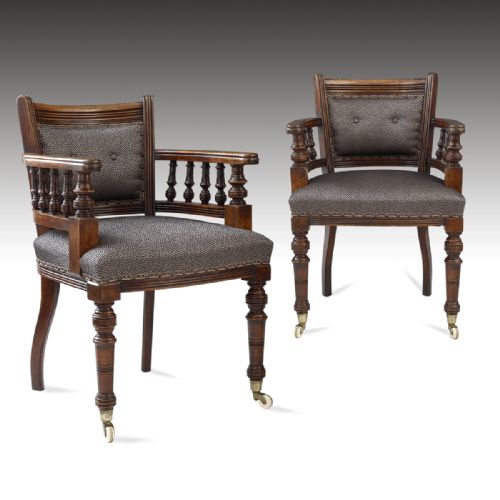
Upholstered versions incorporate leather inserts or fabric padding secured to wooden bases, occasionally supported by brass elements or revolving mechanisms. Traditional joinery methods ensure structural stability across the arms, legs, and backrests without modern fasteners.
What Varies in Quality
Construction density and timber selection separate standard utilitarian seating from finer library armchairs produced by established cabinetmakers. Superior examples exhibit crisper hand-carving on the woodwork, thicker grade mahogany or walnut, and carefully fitted leather upholstery.
The degree of matching within a pair influences desirability, particularly when subtle differences emerge in timber grain or turned components. Original patination on the wood surfaces and intact structural joinery distinguish well-preserved specimens from heavily restored pieces.
Gillows·J and T Scott·Gill and Reigate
The Pair Victorian Desk Chairs Glossary
- Captain's chair
- A sturdy wooden armchair featuring a rounded steam-bent top rail and spindle supports, commonly built in ash and elm. These forms evolved for stability and comfort during long hours of administrative work.
- Balloon back
- An oval-shaped wooden chair back resembling a balloon outline, frequently seen on nineteenth-century seating. This profile was achieved by steaming and bending timber into a continuous loop.
- Smoker's bow
- A low-backed Windsor variant with a curved arm rail, traditionally used in smoking rooms and offices. The design offers compact support whilst allowing freedom of movement.
- Gothic Revival
- A nineteenth-century design movement incorporating medieval architectural motifs such as pointed arches and quatrefoils into furniture. This style imparted a heavy, ecclesiastical character to library chairs.
- Patina
- The surface sheen and colour acquired by wood and leather through decades of handling, exposure, and age. Collectors value this natural indicator of historical authenticity.
Pair Victorian Desk Chairs: Frequently Asked Questions
Are pair victorian desk chairs comfortable for daily work?
Many nineteenth-century designs incorporate wide wooden seats or upholstered leather pads suited for extended periods of sitting at a modern desk.
Buyers often select cushioned library armchairs or robust captain's chairs to balance historical authenticity with practical daily use in a home office.
How do I identify a true pair of chairs?
True pairs share identical dimensions, timber species, turning patterns, and wear characteristics indicating they were made together in the same workshop.
Minor hand-carved variations can still occur in nineteenth-century handmade furniture, but the overall structural form and wood grain should match closely.
What timber types are most common?
Mahogany and walnut appear frequently in formal library and desk chairs, offering deep colour and a fine grain suited to carved decorative details.
Sturdier utilitarian versions utilise oak, elm, ash, or birch, providing the robust frame strength required for heavy office environments.
How do I care for antique leather upholstery?
Historic leather requires gentle cleaning and occasional conditioning to maintain flexibility and prevent the surface from drying out over time.
Keeping wooden frames away from direct heat sources protects both the timber joints and the integrity of the original or replacement upholstery.